
The best VPNs for Linux need to offer more than basic command-line support, with features like auto-connect, split tunneling, and an always-on kill switch. Linux users rely on various flavors of this operating system for their rock-solid security, flexibility, and control, yet most VPN providers deliver half-baked support at best. That forces you to choose between proper protection and a frustrating setup that disrupts our workflow.
After months of hands-on testing across Ubuntu, Fedora, Arch, and Debian, we pushed dozens of VPNs through real-world speed trials, leak checks, and streaming tests. Only a handful provide polished native GUI apps that feel as complete as their Windows or Mac counterparts, and one consistently crushed the competition with top-tier performance and zero compromises. Keep reading to see the full rankings and which VPN earns the top spot for Linux users.
Why Linux users need a VPN
Linux is known for its strong security and open-source architecture, but even a well-hardened system can’t protect your data once it leaves your device. A VPN for Linux adds an extra layer of privacy by encrypting your internet traffic and masking your IP address, helping you avoid some of the most common network risks:
- ISP traffic monitoring: Your internet service provider (ISP) can see your online connections and may keep records of your browsing activity. A VPN encrypts your traffic, making it much harder for your ISP to see what you’re doing online.
- Public Wi-Fi interception: Coffee shops, airports, and other public networks can expose your connection to snooping and man-in-the-middle attacks. A VPN encrypts your traffic before it travels across the network.
- Network throttling: Some ISPs and network administrators may slow down bandwidth-heavy activities such as streaming or file sharing. A VPN can make it harder to identify the type of traffic being used.
- Geographic IP restrictions: Streaming platforms, websites, and online services may restrict access based on your location. A VPN can give you an IP address from another region, helping you access services available there.
How to choose the best Linux VPN
When choosing a Linux VPN, there are several factors to consider to ensure you get the best service for your needs. Here are some tips to help you make the right choice:
- Check Linux GUI availability: Be sure the VPN you are interested in has a GUI (if desired). Note that all the Linux VPNs we recommend now have at least basic GUIs, which simplifies the selection process nicely.
- Check supported Linux distros: If you are using one of the most popular distros, this shouldn’t be an issue, but it is always worth checking. This table will help:
| VPN | Distro compatibility |
| NordVPN | Ubuntu, Debian, Fedora, Linux Mint, RHEL, Qubes OS |
| Surfshark | Ubuntu, Debian, Linux Mint |
| Proton VPN | Ubuntu, Debian, Fedora, Linux Mint, Arch |
| ExpressVPN | Ubuntu, Debian, Fedora, Linux Mint |
Look for a VPN with a dedicated Linux app: The fact that they all have Linux GUIs implies that all the VPNs we recommend here have dedicated Linux apps.
Check the VPN’s server network: A large network with servers spread across the planet is essential for unblocking streaming services and accessing the best content. Here are the current specs of each VPN’s server network:
| VPN | Server network |
| NordVPN | 7,800+ RAM-only servers across 126 countries |
| Surfshark | 4,500+ RAM-only, 10Gbps servers across 100 countries |
| Proton VPN | 20,500+ encrypted bare-metal servers across 148 countries |
| ExpressVPN | 3,000+ RAM-only TrustedServers across 113 countries |
Consider the VPN’s security features: Advanced security features, such as modern VPN protocols that use AES-256 or ChaCha20 encryption and an audited no-logs policy, are crucial for protecting your online activity. Look for VPNs that also offer features like a kill switch, private DNS, and regular security audits. Here’s how our recommendations stack up on security features:
| VPN | Encryption | Security features |
| NordVPN | AES-256 (OpenVPN), ChaCha20 (NordLynx/WireGuard), ML-KEM (post-quantum) | Audited no-logs, kill switch, private DNS, double VPN, Onion over VPN, Threat Protection Pro |
| Surfshark | AES-256 (OpenVPN), ChaCha20 / quantum-resistant algorithm (WireGuard) | Audited no-logs, kill switch, Private DNS, Dynamic MultiHop, CleanWeb 2.0 |
| Proton VPN | AES-256 (OpenVPN), ChaCha20 (WireGuard), post-quantum under development | Audited no-logs, kill switch, Secure Core (Multi-Hop), NetShield, open-source apps |
| ExpressVPN | AES-256 (OpenVPN), ChaCha20 (Lightway), ML-KEM (post-quantum), WireGuard (post-quantum) | Audited no-logs, Network Lock (kill switch), Threat Manager advanced script block |
Check the VPN’s speeds: Fast speeds are vital for streaming, torrenting, and online gaming. The VPNs recommended here are among the fastest in existence. Here are each VPN’s best result in our recent speed testing:
| VPN | Best speed |
| NordVPN | 892 Mbps |
| Surfshark | 752 Mbps |
| Proton VPN | 698 Mbps |
| ExpressVPN | 718 Mbps |
Check the VPN’s customer support: Live chat support is essential for resolving problems. 24/7 live chat support is ideal. FAQs and detailed setup guides help too.
Consider the VPN’s pricing: Look for a VPN that offers a 30-day money-back guarantee, allowing you to try the service risk-free.
Top Linux VPNs in 2026
The following VPNs are the best tools currently available to defend your data on Linux devices:
1. NordVPN — Best VPN for Linux
| Website | NordVPN.com |
| Based in | Panama |
| Logs | No logs (audited) |
| Price | $3.49/mo. |
| Support | 24/7 live chat |
| Refund | 30 days |
| Deal | 75% Off Coupon |
NordVPN stands out as the best Linux VPN due to its exceptional blend of speed, security, and user support. Known for its lightning-fast connection speeds, NordVPN utilizes the NordLynx protocol, built on the cutting-edge WireGuard technology, to deliver peak performance with minimal latency. This makes it ideal for you if you engage in bandwidth-intensive activities such as streaming, gaming, or large file transfers.
The NordVPN Linux VPN app is designed to provide robust security features and fast connection speeds, tailored specifically for Linux distros. There is both a CLI, and the new GUI, shown here:
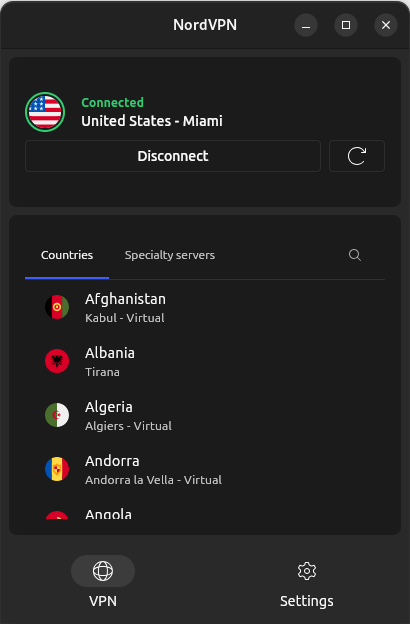
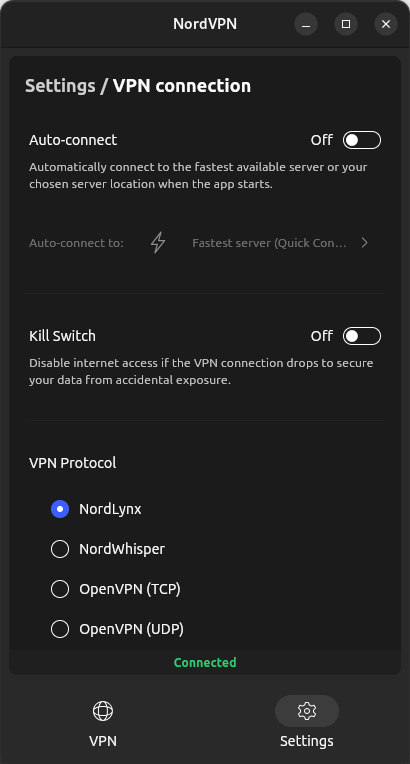
The GUI can perform most functions of the CLI, and will surely be 100% compatible with it soon. For the best security and privacy, we suggest you turn on Auto-connect, the Kill Switch, and NordLynx on the Settings/VPN connection page.
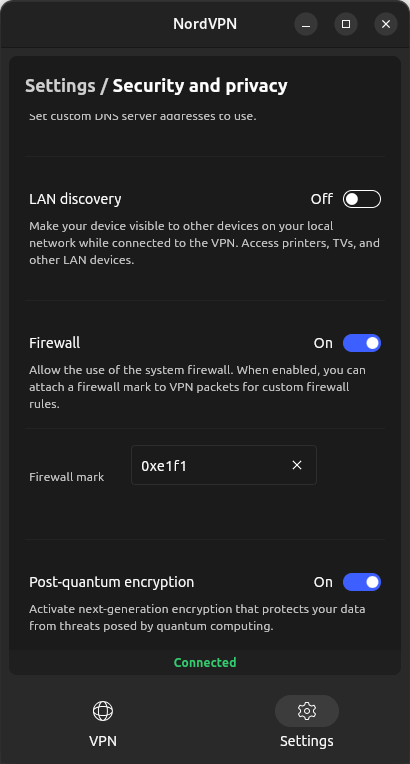
In addition, the NordVPN team recommends that you always enable Post-quantum encryption, located on the Settings/Security and privacy page.
To use either NordVPN Linux interface, you need to do a bit of work with the Linux CLI (command line interface). It isn’t hard, but having a bit of Linux experience helps a lot. That said, the NordVPN website has complete instructions for downloading, installing, and using the app. Here is a small portion of that instruction set:
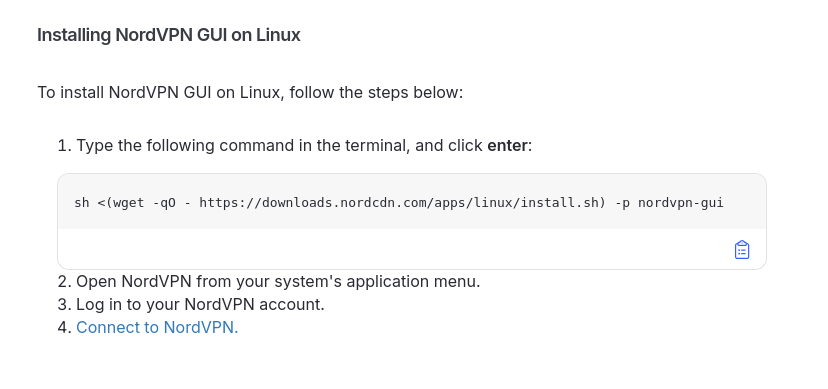
Impressive security and privacy features are another crucial aspect of NordVPN. We’re talking about industry-leading AES-256 and ChaCha20 encryption in its OpenVPN and NordLynx protocols, along with the aforementioned Post-quantum encryption, which works in conjunction with NordLynx. In addition, this is a continually-audited no-logs VPN. Those outside audits ensure that your data is secure and your privacy protected when you use NordVPN.
Other security and privacy features you will appreciate include, automatic kill switches in all apps, 100% RAM-only servers that store zero user data, and the Threat Protection feature that blocks ads, trackers, and malware. A nice additional feature for Linux users is the fact that the company has open-sourced the Linux client, so anyone with the appropriate skill level can inspect the code for problems.
If you use other devices and operating systems in addition to Linux, NordVPN has even more features to offer you.
See all NordVPN features here >>
NordLynx combines the highly-secure and extremely-fast WireGuard protocol with enhanced privacy technology, resulting in exceptional performance across all fronts (we rate it the best WireGuard VPN). With NordLynx, NordVPN is the fastest Linux VPN, turning in the best speed test result ever recorded in our lab:
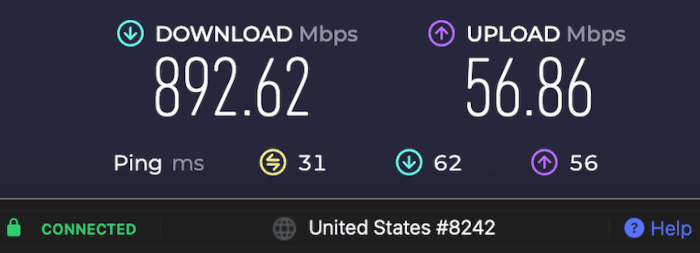
NordVPN’s server network contains a wide variety of specialized servers that few other VPNs can match. One type that even Surfshark doesn’t have is Onion Over VPN servers. These pass your traffic through both the NordVPN network and the Tor network, adding that networks anonymity to your connection, albeit with an impact on the speed of your connection.
The following table sums up the NordVPN server situation:
| NordVPN server stats | |
| Total servers | 7,800+ |
| Total locations | 224 |
| RAM-only | ✅ |
| Double VPN | ✅ |
| Onion Over VPN | ✅ |
| Obfuscated | ✅ |
| Dedicated IP | ✅ |
| Static IP | ✅ |
| P2P | ✅ |
NordVPN supports 10 simultaneous connections, and provides 24/7 live chat support and a 30-day money-back guarantee.
NordVPN pros and cons
+ Pros
- User-friendly and reliable apps
- Double VPN and Onion Over VPN servers
- Passed numerous 3rd-party audits
- Strong encryption standards with full support for WireGuard
- Works with Netflix and many streaming sites
- Threat Protection feature to block ads, trackers, and malware
- Professional 24/7 live chat support
- Consistently fast speeds
- Dedicated RAM-only servers with 10 Gbps bandwidth channels
- Post-quantum encryption
– Cons
- Best discounts only available with 2-year plans
NordVPN’s Cyber Deal is live:
Get 75% Off NordVPN with the coupon below + 3 months extra:
(Coupon is applied automatically; 30-day money-back guarantee.)
Get the full story on this VPN provider in our updated NordVPN review.
2. Surfshark — Best budget VPN for Linux
| Website | Surfshark.com |
| Based in | The Netherlands |
| Logs | No logs (audited) |
| Price | $2.49/mo. |
| Support | 24/7 live chat |
| Refund | 30 days |
| Deal | 87% Off Coupon |

Surfshark is an excellent option for any Linux user, particularly if you are on a budget. It offers significant discounts for longer subscription terms, and ranks as one of the best cheap VPNs. In addition, this VPN service is well-suited for Linux beginners due to its full graphical user interface (GUI) and easy installation process.
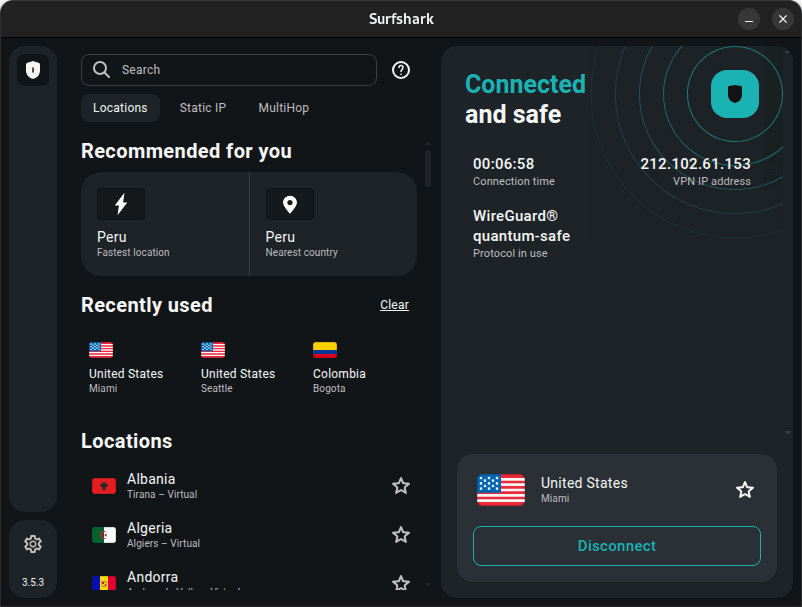
Surfshark gives you a wide range of advanced features. These include:
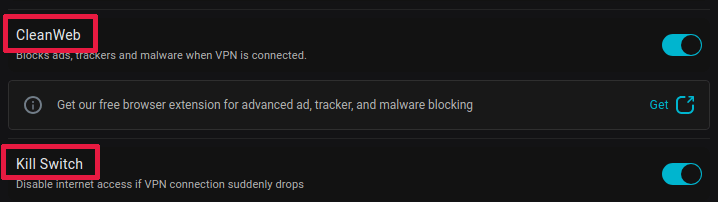
Automatic kill switches to protect your internet traffic in case of sudden disconnections, ensuring your data remains secure.
CleanWeb ad, tracker, and malware blocker, providing a cleaner and safer browsing experience.
WireGuard support for a balance of speed and security, making it a great choice for streaming and gaming.
Bypasser and Reverse Bypasser (split tunneling) to allow specific apps or websites to bypass the VPN, giving you more control over your internet traffic.
Cookie pop-up blocker, included in the Surfshark browser extension, to prevent annoying cookie consent requests.
Rotating IP to complicate tracking by hostile entities, enhancing your anonymity online.
MultiHop and Dynamic MultiHop are features that route your connection through multiple countries, adding an extra layer of security. Dynamic MultiHop is a unique feature that lets you decide which servers are included in the connection.
NoBorders mode to help you connect in restrictive regions, ensuring access to the open internet.
Camouflage Mode which makes your internet traffic look normal, preventing your ISP from knowing you’re using a VPN.
Private DNS and leak protection to ensure your internet traffic is not exposed to third parties.
24/7 live chat support for immediate assistance whenever you need it.
and more
A standout feature of Surfshark is its support for unlimited simultaneous connections, making it ideal for users with multiple devices. With elite skills at accessing geo-blocked content, it is also one of the best VPNs for Netflix.
See all Surfshark features here >>
Surfshark, like NordVPN, has a large server network, and both use some of those servers to provide advanced features most VPNs can’t match.
Double VPN servers pass your traffic through two servers, increasing both your security and privacy.
Obfuscated servers disguise your VPN traffic in order to bypass internet blocks erected by certain nations and other groups.
- Dedicated IP servers give you private use of a fixed (static) IP address. There are pros and cons to using a dedicated IP address, but if you need one, Surfshark can provide it. Using a dedicated address requires an additional fee.
Static IP servers provide you with a fixed IP address every time you connect to them. However that IP address will be shared with other NordVPN users, rather than dedicated to your exclusive use. NordVPN does not provide static IP servers.
P2P servers are optimized for peer-to-peer activities like torrenting. Surfshark is one of the best VPNs for torrenting.
The table below tells you everything you need to know about Surfshark’s servers and will make it easy to compare to other services:
| Surfshark server stats | |
| Total servers | 4,500+ |
| Total countries | 100 |
| RAM-only servers | ✅ |
| Double VPN (MultiHop and Dynamic MultiHop) | ✅ |
| Onion over VPN | ❌ |
| Obfuscated (No Borders mode) | ✅ |
| Dedicated IP | ✅ |
| Static IP | ✅ |
| P2P | ✅ |
Adding to Surfshark’s charms is its performance. In most of our tests, only NordVPN is faster. While it may not reach the peak speeds of NordVPN, Surfshark still offers fast speeds, with top speeds in excess of 750 Mbps, ensuring a smooth online experience.
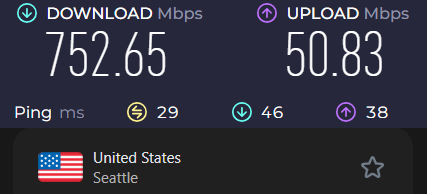
Summing it up, the Surfshark Linux app is fast, secure, and easy to use with its GUI interface. Throw in unlimited simultaneous connections, a low, low price, 24/7 live chat support, and a 30-day money-back guarantee, and Surfshark is clearly one of the best Linux VPNs.
Surfshark pros and cons
+ Pros
- Unlimited connections
- User-friendly apps for all devices and operating systems
- CleanWeb feature to block ads, trackers, and malware
- Works great with Netflix and many other streaming services
- 24/7 live chat support
- Strong encryption and security features (audited)
– Cons
- Limited support for VPN routers
- Above-average monthly prices
Surfshark VPN Coupon:
Get 87% off Surfshark VPN plus an additional 3 months extra with the coupon below:
(Coupon is applied automatically; 30-day money-back guarantee)
If this service appeals to you, check out our complete Surfshark VPN review.
3. Proton VPN — Premium Linux VPN for privacy
| Website | ProtonVPN.com |
| Based in | Switzerland |
| Logs | No logs (audited) |
| Price | $2.99/mo. |
| Support | Email + Chat |
| Refund | 30 days |
| Deal | 70% Off Coupon |
Proton VPN is another strong choice if you are a privacy-focused Linux user. Proton VPN offers a GUI VPN app that makes your life easier. However, installing the Linux app for Proton VPN (and NordVPN) involves some work in the terminal, making it more difficult to install than Surfshark for example. In addition, while the Linux app itself offers the most important features of Proton VPN, it is not nearly as attractive or user-friendly as the Proton VPN apps for Windows or macOS.
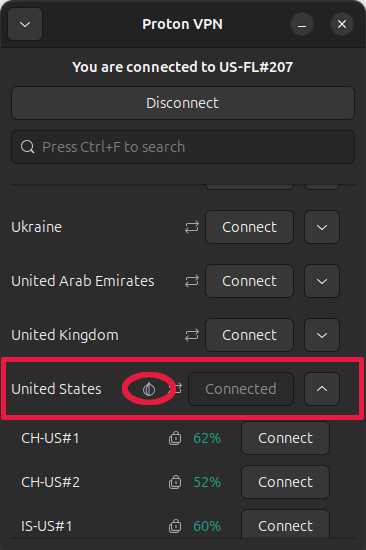
Selecting a country in the app (red box above) shows you the individual server locations within the country. It also displays icons of the specialty servers within that country, such as the Onion over VPN icon circled in red.
This service protects your privacy with its kill switch, Secure Core servers (a specialized type of Double VPN), an audited no-logs policy, the NetShield ad, tracker, and malware blocker, and the legal protection of its Swiss jurisdiction. As with the other services here, you can be sure that your online activities are not tracked or stored.
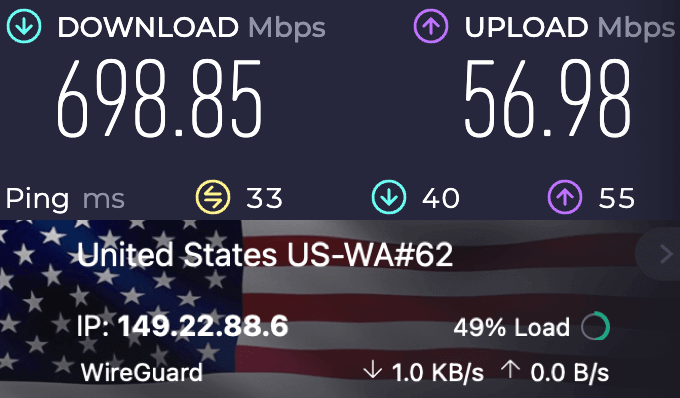
Performance-wise, Proton VPN has made significant improvements, achieving speeds of 698 Mbps in our speed test facility. With over 20,500 servers in 148 countries, Proton VPN ensures fast and reliable connections, making it a solid choice for you as a Linux user.
| Proton VPN server stats | |
| Total servers | 20,500+ |
| Total countries | 148 |
| RAM-only | ✅ |
| Double VPN (Secure Core) | ✅ |
| Onion Over VPN | ✅ |
| Obfuscated (Stealth VPN protocol) | ✅ |
| Dedicated IP | ✅ |
| Static IP | ❌, businesses only |
| P2P | ✅ |
Proton VPN supports up to ten (10) simultaneous connections. You also get live chat support during Swiss business hours, and a 30-day, prorated money-back guarantee. If Surfshark and NordVPN are not to your liking, Proton VPN can get the job done for you.
Proton VPN pros and cons
+ Pros
- Swiss-based privacy
- Open-source apps audited by independent security firms
- Secure Core servers route traffic through hardened nodes
- VPN Accelerator boosts long-distance US speeds
- Post-quantum encryption in the works
- Subscription plans bundle with Proton Mail, Proton Drive, Proton Sheets, and Proton Pass
- Linux CLI and refreshed GUI
- Smart TV and Apple TV apps now support NetShield
– Cons
- No 24/7 live chat
- Advanced tools have a steeper learning curve
Proton VPN Coupon:
Get 70% Off Proton VPN (drops the price to only $2.99/month) with the coupon below:
(Coupon is applied automatically; 30-day money-back guarantee)
Check out our complete Proton VPN review for more info.
4. ExpressVPN — Simple, solid Linux VPN
| Website | ExpressVPN.com |
| Based in | British Virgin Islands |
| Logs | No logs (audited) |
| Price | $2.99/mo. |
| Support | 24/7 live chat |
| Refund | 30 days |
| Deal | 80% Off Coupon |

ExpressVPN has long been one of the leading VPN services. Its VPN apps have always been reliable and secure, as well as easy to use. It has all the core security and privacy features, such as the Network Lock kill switch, 100% RAM-only servers, the Threat Manager ad, tracker, and malware blocker, and extensive outside audits of its no-logs policy and every other aspect of the service.
One reason that ExpressVPN remains so easy to use is that it has avoided adding many advanced features that most users don’t need. But that does not mean that ExpressVPN has not been innovating. In our testing with its custom Lightway VPN protocol, ExpressVPN achieved download speeds of over 700 Mbps, making it one of the faster VPNs on the market and a reliable option for streaming and other data-intensive activities.
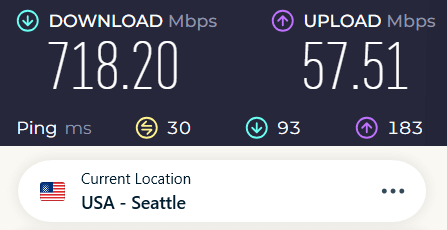
There was a time when ExpressVPN could not unblock BBC iPlayer. But the engineers at ExpressVPN resolved that problem and this is now one of the best VPNs for BBC iPlayer.
Until recently, a major drawback for ExpressVPN was its limitation of using a CLI interface in Linux. For a VPN that is as inherently easy to use as ExpressVPN, the complexity of a CLI could be jarring. But the ExpressVPN Linux app now runs in both CLI and a new graphic (GUI) form that offers the same ease of use as the versions for Windows and other operating systems.
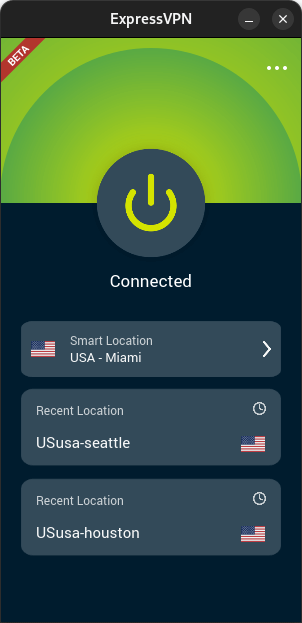
With the addition of this GUI interface for Linux, ExpressVPN´s app is now as easy to use in Linux as in other operating systems.
| ExpressVPN server stats | |
| Total servers | 3,000+ |
| Total countries | 113 |
| RAM-only | ✅ |
| Double VPN | ✅ |
| Onion Over VPN | ✅ |
| Obfuscated (Stealth VPN protocol) | ✅ |
| Dedicated IP | ✅ |
| Static IP | ✅ |
| P2P | ✅ |
ExpressVPN users can have up to eight simultaneous connections, or an unlimited number if you use the company’s Aircove router. With 24/7 live chat support, you can quickly resolve any issues, and its 30-day money-back guarantee makes test-driving this rapidly improving service risk-free.
ExpressVPN pros and cons
+ Pros
- User-friendly and secure apps for virtually any operating system or device
- Proprietary Lightway VPN protocol for advanced performance
- Post-quantum version of the WireGuard protocol for enhanced privacy and security
- Split tunneling feature (for macOS, Windows, and routers)
- Works with Netflix and most streaming services
- 24/7 live chat support
- Passed independent third-party audits for security and no-logs
- Extensive network of diskless servers
– Cons
- Fewer features than other leading VPNs
Need more info? Check out our complete ExpressVPN review.
How to set up a VPN on Linux
Setting up a premium VPN on Linux takes just a couple of minutes. Depending on how you like to work, you can use a desktop app or stick with the terminal:
Method 1: The graphical desktop (GUI) setup
- Download the package: Sign up with your chosen VPN provider and download its official Linux installation package from the provider’s website. Choose the .deb file for Debian/Ubuntu or .rpm for Fedora/Red Hat.
- Install the app: Double-click the downloaded package to open your distribution’s Software Center, then click Install.
- Open the VPN: Find the VPN app in your desktop applications menu, launch it, and sign in with your account.
- Connect: Pick a server in your preferred country or hit Quick Connect. Once connected, your VPN tunnel is up and running.
Method 2: The command line (CLI) setup
- Add the repository: Open your terminal with Ctrl+Alt+T and follow your VPN provider’s official instructions to add its package repository.
- Update and Install: Synchronize your package index manager and pull down the command-line interface tools by executing:
- For Debian/Ubuntu: sudo apt update && sudo apt install [vpn-app-name]
- For Fedora/RHEL: sudo dnf check-update && sudo dnf install [vpn-app-name]
- Log in to the client: Initiate the secure cloud authentication process straight from the command line by running the login command: nordvpn login or surfshark-vpn login.
- Connect via terminal: Execute the universal connection line to establish your tunnel through a standard high-speed server lane: vpn-app connect.
Fine-tuning your Linux VPN
A few simple tweaks can help you get better VPN performance, privacy, and reliability on Linux:
- Use a WireGuard-based protocol: Choose WireGuard or a provider-specific version such as NordLynx or Lightway for fast speeds and lower CPU usage than older protocols like OpenVPN.
- Prevent DNS leaks: Make sure your VPN’s built-in DNS leak protection is enabled. This stops systemd-resolved from sending DNS requests outside the encrypted VPN tunnel.
- Enable auto-connect: Set your VPN to start automatically with Linux. This keeps your connection protected from the moment your system boots.
- Use split tunneling: Route web traffic through the VPN while keeping local services such as NAS storage, network printers, and Docker containers on your regular LAN.
- Check IPv6 protection: If your VPN doesn’t support IPv6 leak protection, consider disabling IPv6 at the system level to prevent your real IP address from slipping through.
Apply these settings once, and your VPN becomes a seamless, always-on layer of protection that never slows down your workflow.
Free vs paid VPNs for Linux
Choosing between free and paid VPNs for Linux involves significant differences in privacy, performance, and features. Free VPNs often compromise user privacy and come with limitations that can hinder your online experience.
Free VPNs typically have fewer servers, slower speeds, and data usage restrictions, hindering regular online activities. Many also collect and sell user data, raising privacy concerns and making them impractical for users needing a reliable, secure connection. Investing in a paid service like those covered here is a superior option.
Boosting security with secure browsers
Using secure browsers is crucial for protecting your online activities from tracking and data collection. Popular secure browsers include Firefox with privacy settings and Brave for built-in ad and tracker blocking. These browsers enhance your online security by reducing the risk of data exposure.
Privacy-focused extensions further enhance the security features of your browser. Tools like uBlock Origin for ad-blocking and Privacy Badger for tracker blocking add another layer of protection. Using a secure browser with these extensions on your Linux box is a wise move.
The bottom line
In conclusion, the competition for the best VPN for Linux is tight, with our rankings changing every few months. Given the arrival of its new (and still improving) GUI, NordVPN has moved back into the #1 position as our top pick for the best Linux VPN. Get a great deal on this great VPN with this discount link.
While NordVPN is our top Linux VPN recommendation, Surfshark, Proton VPN, and ExpressVPN also offer excellent services. If NordVPN doesn’t fit your needs, one of these others surely will.
Linux VPN FAQs
Do Linux users really need to connect to a VPN?
Not necessarily, but a VPN for Linux can add a useful layer of privacy and security. It encrypts your internet traffic and hides your IP address, making it harder for ISPs, network snoops, or other third parties to monitor your online activity. It’s especially handy on public Wi-Fi or when you want extra privacy while browsing.
Are there full graphical GUI apps available for Linux VPNs?
Yes. Many leading Linux VPNs now offer dedicated graphical apps, so you don’t have to rely on terminal commands. Providers such as NordVPN, Surfshark, and ExpressVPN let you connect to servers, change settings, and manage your VPN connection through a familiar desktop interface.
Which Linux distributions are compatible with these VPN apps?
Most premium Linux VPNs support popular distributions such as Ubuntu, Debian, Fedora, and Linux Mint, with many offering official .deb or .rpm packages. If you use Arch, Gentoo, or another distro, you may still be able to set up a VPN manually using WireGuard or OpenVPN, depending on your provider.
Why do free VPNs often fall short for Linux users?
Free VPNs can come with data limits, fewer security features, and privacy concerns. Some may log user activity or lack important features such as a reliable kill switch, while others offer limited Linux support. If privacy and security are priorities, check the provider’s logging policy, security features, and Linux compatibility before signing up.

Use IP Vanish on mint . easy setup and works just fine
Have been a happy user of Mullvad VPN and IVPN on linux for years. While they aren’t great for streaming and trigger some captchas, the privacy features are quite good.