

Tor Browser 16.0 has been released for desktop and Android, introducing an optional privacy control that hides webpage titles from other applications.
The latest release also introduces redesigned settings and native support for 64-bit ARM Linux computers, adopting changes introduced in Firefox ESR 153, which now serves as its basis.
Developers also completed their annual review of upstream Firefox changes, examining and addressing more than 270 Bugzilla issues that could affect Tor Browser users’ privacy and security.
Tor Browser provides access to the Tor network, which routes connections through relays to help protect users’ privacy and circumvent censorship. Its browser-level protections also address risks such as fingerprinting, where websites use device and browser characteristics to distinguish visitors.
Hiding browsing activity from other apps
The new desktop privacy option tackles a separate source of information exposure: window titles. These normally reflect the webpage being viewed and, according to the announcement, other applications or the operating system can read them without special permissions.
Users can now replace those titles with “Tor Browser” through Settings → Privacy and security → Protections from third-party applications. This reduces the browsing information exposed through window names, although it does not provide comprehensive protection against software running on the device.
The feature remains disabled by default because developers have not finished evaluating possible compatibility problems, particularly for screen readers, alternative desktop managers, and application switchers.
The capability has also reached Firefox through the Tor Uplift Project. Advanced Firefox users can disable title exposure by setting privacy.exposeContentTitleInWindow and privacy.exposeContentTitleInWindow.pbm to false in about:config, covering normal and private windows, respectively.
Desktop settings have been reorganized into more specific categories, replacing the former General page. Tor-specific connection and security-level controls have also been rebuilt, while options that could weaken privacy or increase fingerprintability are hidden or accompanied by warnings. Existing preferences are preserved.
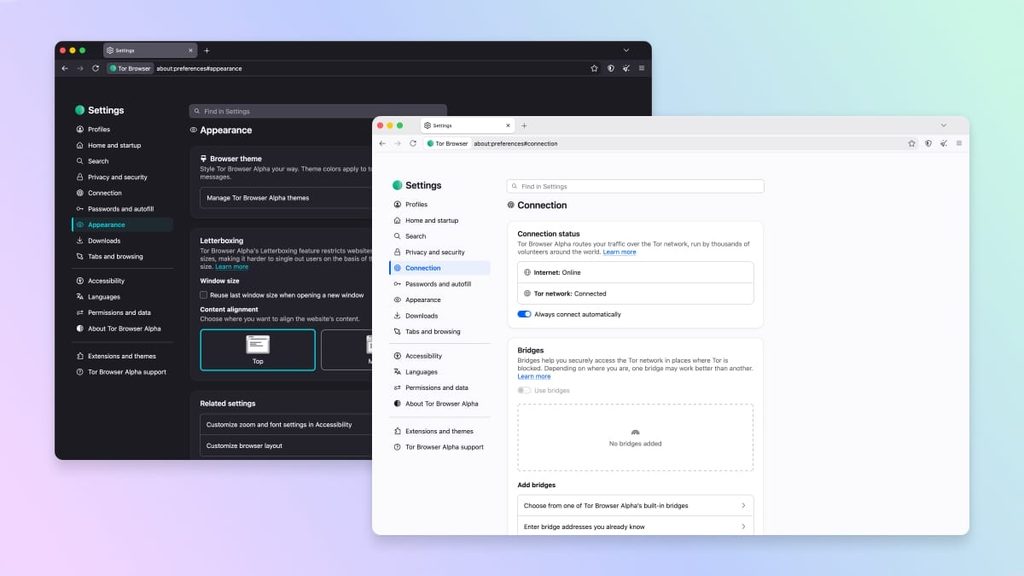
Tor
The bundled desktop manual now uses content from Tor’s newer Support portal and remains available offline, including when connection problems prevent access to online help.
Linux ARM support and Android updates
For Linux users, version 16.0 brings stable native support for AArch64 hardware, including Raspberry Pi systems and Apple Silicon Macs running Linux, following a year of testing. Support for 32-bit x86 Linux has ended. The project reports approximately 200 daily update checks from that platform, compared with roughly 4,000 at its 2019 peak.
On Android, more of the interface now uses Material Design 3 as developers adopt Jetpack Compose.
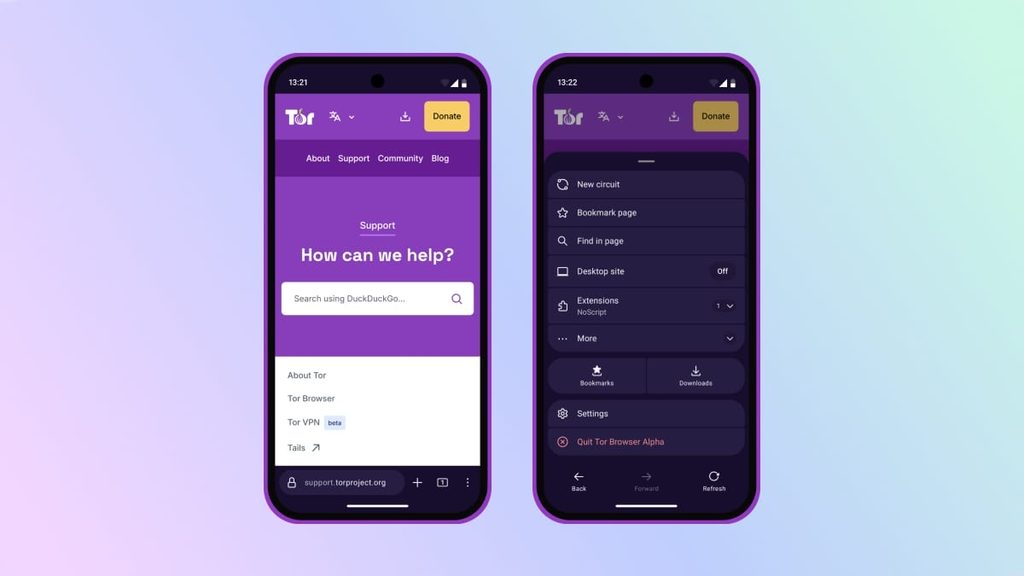
Tor
Looking ahead, Tor is developing a circuit panel that integrates site information and can display multipath connections. The panel is headed to the Alpha channel and will also bring circuit visualization to Android for the first time.



Leave a Reply