
Malicious scripts found on the BBC, Zoom, CNN, and other major websites were designed to steal payment card details, redirect cryptocurrency transfers, and load code linked to two iPhone exploit kits.
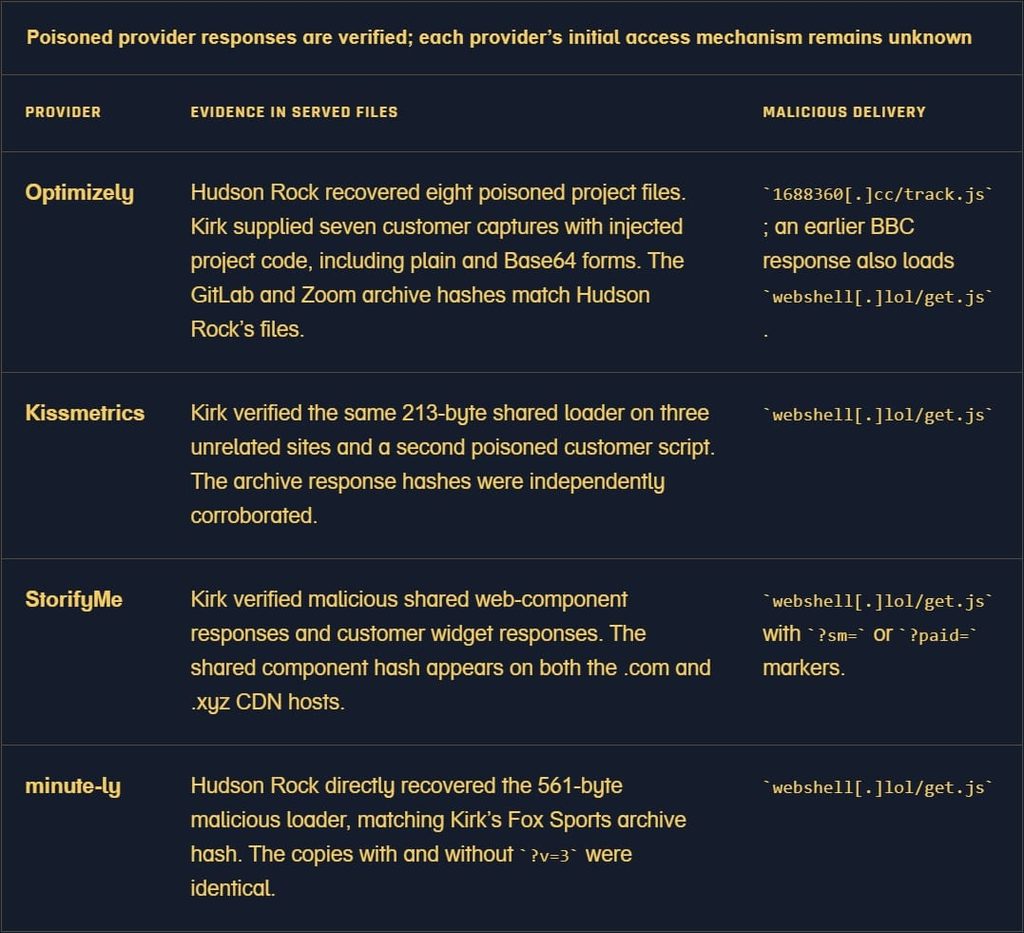
Researchers traced the code to files served by four third-party providers.
Hudson Rock published its findings after Kirk, a security researcher at Ohey, flagged the activity and shared archived browser scans. The team recovered eight malicious Optimizely files and a loader from video platform Minute-ly. Kirk’s captures also showed modified scripts and widgets served by Kissmetrics and StorifyMe. The combined evidence links 21 websites to malicious files between November 13 and 16, including the public HSBC UAE website, GitLab’s marketing site, and Fox Sports.
Optimizely lets companies test different versions of their webpages. In this incident, malicious JavaScript appeared alongside legitimate testing code in customer project files. In a broader sweep of Optimizely scripts, Report URI researcher Scott Helme identified 188 modified files associated with 178 organizations. How the attackers gained access to the projects remains unclear. Salesforce stated it disabled the scripts as a precaution while investigating unauthorized changes.
Hudson Rock
From payment theft to iPhone targeting
One payload could replace cryptocurrency addresses displayed on a page or copied to the clipboard, potentially diverting a payment. It could also intercept card numbers, expiry dates, and security codes from payment forms the script could access. Under certain conditions, it could collect cookies readable by JavaScript and capture an image of the visible webpage. Helme reported finding blockchain transactions he attributed to the theft. The number of affected visitors and the extent of any payment card theft remain unknown.
Several scripts also directed browsers to infrastructure associated with the Coruna and DarkSword iOS exploit kits. In two scans of GitLab’s marketing site, researchers received code linked to the kits after configuring the scanner to identify itself as Safari on an iPhone. The scanner ran Chrome, so the tests established what the server delivered.
The BBC and HSBC UAE files also contained an embedded copy of the financial-theft payload that could run if the external download failed. Blocking the attacker’s server could therefore leave some malicious behavior intact until the modified third-party script was removed.
Website operators should verify that visitors are receiving clean copies of affected scripts and check whether payment or sign-in pages loaded them during the incident. Visitors who entered payment details should follow any exposure notice from the site and contact their card issuer if they spot unfamiliar charges.



Leave a Reply