Finding the best no-logs VPNs can be harder than it sounds, as almost every VPN claims to have a “strict no-logs policy.” It is an easy marketing slogan to print, and unfortunately, it is often a lie.
Over the years, we’ve seen VPNs hand over user data under government pressure or fail security audits because they were secretly logging connection metadata. If your provider stores even a small amount of data, your digital footprint is never truly safe.
We wanted to remove the guesswork. To find the VPNs you can trust, my team looked beyond the marketing and reviewed the latest independent audits, court records, and server architectures.
Out of dozens of popular VPNs, only seven could truly prove their no-logs claims. Through independent audits, court-tested privacy, or RAM-only server infrastructure, these providers earned their place on our list.
What is a no-logs VPN?
A no-logs VPN routes your internet traffic through encrypted tunnels without recording or storing your online activity. If a government agency, hacker, or other third party gains access to the VPN’s servers, a true zero-logs policy means there is no user data available to collect.
A recent Europol operation against First VPN highlights why choosing a trusted VPN matters. The rogue service, which was widely used by ransomware groups, was dismantled after investigators seized its infrastructure. It serves as a reminder that verified, independently audited VPN providers are the safest choice.
To protect your privacy, a legitimate VPN should never collect these three types of data:
- Activity logs: Browsing history, DNS requests, app activity, or downloaded files.
- Connection logs: Connection times, your real IP address, or your assigned VPN IP.
- Identifiable usage data: Bandwidth or server usage statistics that could be used to identify individual users.
Finding a privacy-friendly jurisdiction is becoming more difficult as governments introduce stricter surveillance laws. For example, the Electronic Frontier Foundation (EFF) tracks new regulations that could reduce online anonymity by imposing stricter identity verification requirements.
As Yahoo Tech recently reported, data privacy remains under pressure. A verified no-logs VPN helps ensure your online activity isn’t stored in the first place.
A true zero-logs VPN removes the human element from data handling. By using RAM-only servers instead of traditional hard drives, providers make it impossible to store your activity data permanently. Once your session ends, all temporary data is automatically wiped.
How we test no-logs claims
Our reviews go beyond the sales pitch. Our team systematically verifies every security metric to ensure these anonymous VPN services keep your data safe.
To verify every VPN, we follow these three steps:
- Reading the audit reports: We study the full text of each provider’s latest no-log policy audit to see exactly what parts of their system the external engineers checked.
- Running live leak tests: We test every app for data leaks to ensure your real location and browsing footprints never slip past the encrypted tunnel.
- Checking real court cases: We track international data requests and local data retention rules to see how these companies handle real-world government pressure.
Best no-logs VPNs
These are the only seven anonymous VPN services that have verified their no-logs policies through independent audits, court cases, or both.
NordVPN: Verified by six no-logs VPN audits
| Website | NordVPN.com |
| Based in | Panama |
| Logs | No logs (audited) |
| Price | $3.49/mo. |
| Support | 24/7 live chat |
| Refund | 30 days |
| Deal | 75% Off Coupon |
NordVPN is one of the most trusted no-logs VPNs, backed by multiple independent audits. Based in Panama, it operates outside the 5/9/14-Eyes surveillance alliances and benefits from strong privacy laws with no mandatory data retention requirements.
NordVPN offers a wide selection of apps covering all major operating systems and devices. We primarily tested out the Windows VPN app, Linux, Android, and iPhone VPN apps. Overall, NordVPN delivers excellent speeds and more privacy and security features than most other VPNs. In our latest round of testing, it performed well across every category.
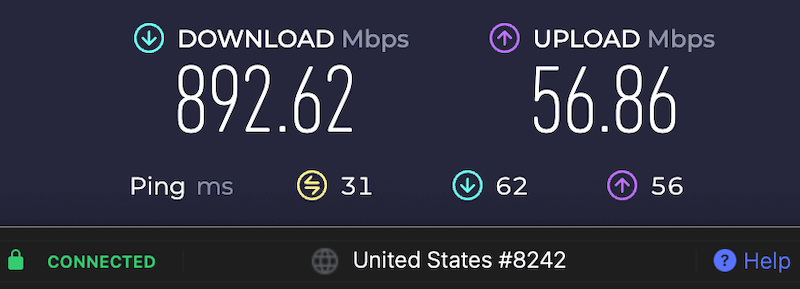
NordVPN uses the NordLynx protocol, which is based on the WireGuard VPN protocol. NordLynx delivers faster speeds and stronger security than previous VPN protocols. During our WireGuard vs OpenVPN testing, NordVPN delivered consistently fast speeds, hitting as much as 892 Mbps. Overall, it is the fastest VPN we’ve tested to date:
Powerful privacy features
NordVPN uses the strongest encryption standards and includes built-in leak protection (VPN kill switch) across all VPN apps. Additionally, NordVPN takes advantage of its network of 9,300+ servers in 149 countries to offer advanced privacy and security features like these:
- Post-quantum encryption: Integrated natively into the NordLynx protocol to protect your traffic against future quantum-computing decryption threats.
- Double VPN (multi-hop): Routes and encrypts your internet traffic through two separate physical servers across different countries.
- Onion over VPN: Combines your VPN tunnel with the anonymizing Tor network for maximum routing obscurity.
- Obfuscated servers: Disguise your VPN signature to appear as ordinary HTTPS traffic, allowing you to bypass strict web blocks in restricted regions like China or the UAE.
- Nationwide US coverage: Operates physical or virtual server hubs spanning all 50 US states for optimized regional routing.
- Threat Protection Pro: An advanced ad, tracker, and malware blocker that isolates malicious files and scripts before they reach your device.
- Dedicated IP servers: Provides a private, static IP address at an additional monthly cost to help you avoid annoying CAPTCHAs.
- P2P optimized network: Specialized high-speed server tracks optimized for safe torrenting and fast file-sharing.
See all NordVPN features here >
During my latest tests, NordVPN’s Windows app was clean, fast, and easy to navigate. Finding specialty servers took just a few clicks.
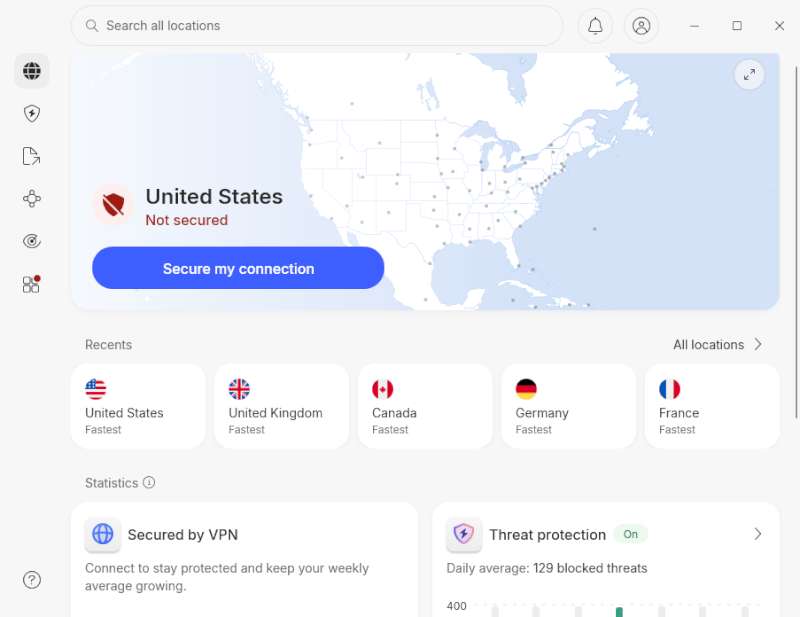
If you want extra privacy, you can enable the built-in Double VPN feature directly from the server list for an additional layer of encryption. You’ll also find a similar feature in Surfshark and Proton VPN.
NordVPN passed six independent no-logs audits
To back up its no-logs claims, NordVPN undergoes regular independent audits. To date, it has successfully passed six comprehensive no-logs audits by leading global auditing firms:
- PricewaterhouseCoopers (PWC) AG: Conducted NordVPN’s foundational no-logs audits in 2018 and 2020, establishing baseline validation for their software configurations and network policies.
- Deloitte: Took over the annual cycle to complete successive bare-metal audits across 2022, 2023, 2024, and their most recent milestone published in February 2026.
The rigorous scope of the audits
These independent audits go far beyond paperwork. Auditors receive deep access to verify the following:
- Server infrastructure: Physical and virtual servers, including Double VPN, Onion over VPN, and obfuscated servers.
- Operations and staff: Interviews with engineers and network teams to confirm there are no manual logging practices.
- Logs and systems: Reviews of logs, databases, and server configurations to identify any hidden data collection.
Infrastructure upgrades: 100% RAM-disk and colocation
NordVPN was one of the first VPN providers to migrate its entire network to RAM-only servers, eliminating the need for traditional hard drives. Because RAM cannot permanently store data, any server restart or power loss instantly wipes all session information, making data recovery virtually impossible.
The company has also completed the rollout of its self-owned (colocated) server network. Instead of renting hardware from third-party data centers, NordVPN owns and manages its own infrastructure, providing several security benefits:
- Total hardware control: Complete ownership of the data pipeline prevents unauthorized physical tamper risks.
- Zero rental risks: Eliminates reliance on commercial host providers who might have weak security protocols.
- Isolated data pipeline: Delivers a significantly higher baseline of infrastructure security for end users.
In short, NordVPN continues to make impressive strides in privacy and security while remaining one of the fastest VPNs we have tested.
Security audits and Bug Bounty program
NordVPN goes beyond no-logs audits by regularly testing its apps and infrastructure through independent cybersecurity firms like VerSprite. These assessments include penetration tests that evaluate its servers, applications, and network security against real-world attacks.
The company also runs an active public Bug Bounty program, rewarding security researchers who discover vulnerabilities before they can be exploited. This extra layer of independent testing helps NordVPN stay ahead of emerging threats and is still uncommon among commercial VPN providers.
NordVPN remains one of the safest choices for a no-logs VPN. By combining Panama’s privacy-friendly laws with RAM-only servers and native post-quantum encryption, it offers outstanding protection. Whether you’re browsing, downloading files, or streaming Netflix and Prime Video, NordVPN delivers fast, secure performance backed by a verified no-logs policy.
NordVPN pros and cons
+ Pros
- User-friendly and reliable apps
- Double VPN and Onion Over VPN servers
- Passed numerous 3rd-party audits
- Strong encryption standards with full support for WireGuard
- Works with Netflix and many streaming sites
- Threat Protection feature to block ads, trackers, and malware
- Professional 24/7 live chat support
- Consistently fast speeds
- Dedicated RAM-only servers with 10 Gbps bandwidth channels
- Post-quantum encryption
– Cons
- Best discounts only available with 2-year plans
Get the latest 75% NordVPN discount with our coupon:
NordVPN’s Cyber Deal is live:
Get 75% Off NordVPN with the coupon below + 3 months extra:
(Coupon is applied automatically; 30-day money-back guarantee.)
Surfshark: Audited zero-logs privacy with unlimited connections
| Website | Surfshark.com |
| Based in | The Netherlands |
| Logs | No logs (audited) |
| Price | $2.49/mo. |
| Support | 24/7 live chat |
| Refund | 30 days |
| Deal | 87% Off Coupon |
Launched in 2018, Surfshark has made a name for itself in the VPN space. Fast, secure, and full of advanced features, Surfshark is also very inexpensive. Even better, it allows unlimited simultaneous device connections on a single subscription, which makes it ideal if you need a VPN for multiple devices.
Navigating the jurisdiction and 14-Eyes
Surfshark operates from the Netherlands, which is part of the Nine Eyes and 14 Eyes alliances. However, the country has no mandatory data retention laws requiring VPN providers to store user activity. As an EU-based company, Surfshark also benefits from GDPR protections and a privacy-focused server architecture designed to minimize stored data.
We tested Surfshark across several operating systems and found its Linux GUI app to be a major advantage. Unlike many VPNs that require command-line setup on Linux, Surfshark offers a simple desktop interface similar to its Windows app.
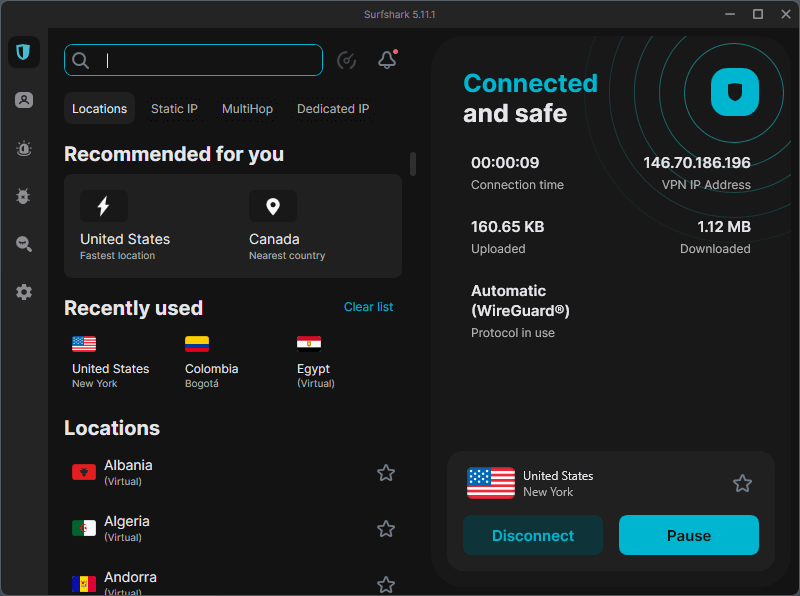
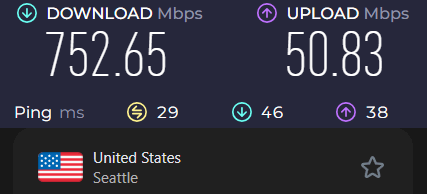
Performance is one of Surfshark’s biggest strengths. With 10 Gbps servers and the WireGuard protocol, it regularly reaches speeds above 750 Mbps, making it excellent for streaming, torrenting, and large file transfers.
Documented zero-logs proof
Surfshark backs up its no-logs claims through regular independent audits. Deloitte recently completed an assurance review of Surfshark’s infrastructure, examining its backend systems, server configurations, and databases.
The audit confirmed that Surfshark does not store activity logs or permanent connection data. While temporary connection timestamps may be used to prevent abuse, they are automatically deleted after 15 minutes once your session ends.
Advanced privacy features
Surfshark operates a diskless server architecture across its 4,500+ servers. Since the network runs on volatile RAM, temporary data and connection caches are automatically destroyed after any server reboot or power loss.
Beyond standard encryption, Surfshark includes several built-in privacy tools:
- Alternative ID and number: Generates fake personas, email aliases, and masked phone numbers to block spam and hide your real identity during sign-ups.
- FastTrack acceleration: Dynamically routes traffic around global network bottlenecks to eliminate “VPN rush hour” lag.
- Everlink protection: Prevents IP leaks by maintaining a seamless, encrypted tunnel handoff when switching between Wi-Fi and mobile data.
- Dedicated IP options: Provides a static, private IP address to stop annoying CAPTCHA prompts without compromising your encryption.
- Camouflage mode: Masks your VPN signature to look like regular, unproxied web traffic to bypass workplace and school network blocks.
- NoBorders mode: Automatically kicks in on restricted networks to show you a curated list of servers specifically engineered to bypass local firewalls.
- Bypasser (split tunneling): Lets you choose exactly which applications route through the encrypted VPN tunnel and which connect directly to your local internet.
See all Surfshark features here >
As for advanced features, most of Surfshark’s offerings are similar to those of NordVPN. They include things like diskless servers with 10 Gbps data channels, the CleanWeb ad and malware blocker, and a variety of specialized server types. Two recent innovations taking Surfshark beyond even NordVPN’s capabilities are the IP Rotator and Dynamic MultiHop features.
If you want an ultra-fast, cheap, no-logs VPN that protects unlimited devices at once, Surfshark is a no-brainer.
Surfshark pros and cons
+ Pros
- Unlimited connections
- User-friendly apps for all devices and operating systems
- CleanWeb feature to block ads, trackers, and malware
- Works great with Netflix and many other streaming services
- 24/7 live chat support
- Strong encryption and security features (audited)
– Cons
- Limited support for VPN routers
- Above-average monthly prices
Claim our exclusive reader discount below to unlock maximum savings and extra coverage:
Surfshark VPN Coupon:
Get 87% off Surfshark VPN plus an additional 3 months extra with the coupon below:
(Coupon is applied automatically; 30-day money-back guarantee)
Proton VPN: Verified by successive audits and protected by Swiss privacy laws
| Website | ProtonVPN.com |
| Based in | Switzerland |
| Logs | No logs (audited) |
| Price | $2.99/mo. |
| Support | Email + Chat |
| Refund | 30 days |
| Deal | 70% Off Coupon |
Proton VPN has cemented its reputation as a powerhouse among anonymous VPN services. Developed by the elite team of scientists behind Proton Mail, this service is headquartered in Geneva, Switzerland.
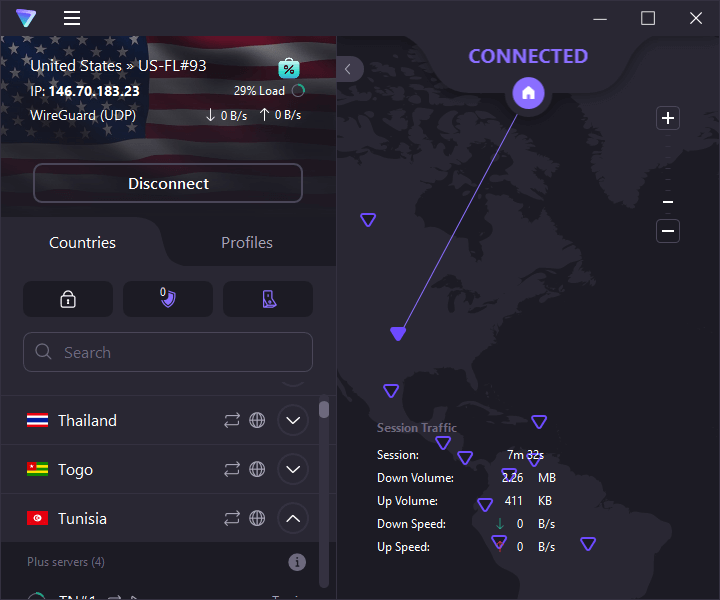
During our hands-on testing, Proton VPN performed well across Windows, Android, and macOS. Connections remained stable with virtually no dropouts, while WireGuard delivered consistently fast speeds. It also had no trouble unblocking Netflix, Prime Video, and Hulu for smooth streaming.
Jurisdiction and Swiss data retention rules
Proton VPN benefits from being based in Switzerland, one of the world’s strongest privacy jurisdictions. The country sits outside the US and EU intelligence alliances and does not require commercial VPN providers to retain user data. This legal framework helps Proton VPN maintain its strict no-logs policy.
Advanced privacy features
Proton VPN now operates more than 20,600 high-speed servers across 148 countries. Its global network is backed by several advanced privacy and security features built directly into the app:
- Secure Core infrastructure (double VPN): Chains your active session by passing traffic through physical, armored underground bunkers in Switzerland, Iceland, or Sweden before routing to your final destination country.
- NetShield ad blocker: A network-level DNS filter that isolates malicious scripts, web trackers, and commercial ad domains before they load on your device.
- Tor over VPN: Routes traffic natively into the onion routing network without requiring a separate Tor browser configuration.
- Stealth protocol: Rewrites data packet headers to disguise active VPN signatures as basic, unproxied HTTPS web browsing to defeat deep packet inspection.
Proton VPN passed an independent no-Logs audit
To verify its no-logs policy, Proton VPN undergoes regular independent audits by the cybersecurity firm Securitum. Auditors review its infrastructure, configuration files, and deployment systems to confirm that Proton VPN does not store activity logs, such as browsing history or DNS requests, or connection logs, such as IP addresses and session timestamps.
Proton VPN’s no-logs policy has also been tested in real-world situations. Through its public Transparency Reports, the company shows how it responds to legal requests from authorities. When investigators requested user information tied to server activity, Proton VPN was unable to provide it because the required data had never been logged.
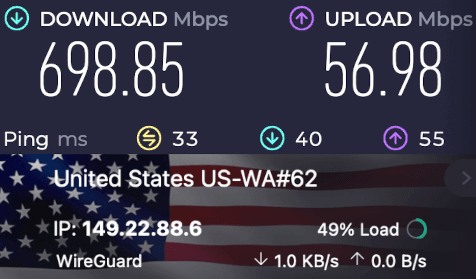
Proton VPN has come a long way. In previous reviews, we criticized its inconsistent speeds and limited streaming support. Today, both have improved dramatically. As our latest Proton VPN vs NordVPN comparison shows, it’s now faster, more reliable, and an excellent choice for streaming. Proton VPN has firmly established itself as one of the top no-logs VPNs.
If you want a highly secure, audited, zero-logs VPN backed by a rock-solid reputation in the privacy community, Proton VPN is a superb choice.
Proton VPN pros and cons
+ Pros
- Swiss-based privacy
- Open-source apps audited by independent security firms
- Secure Core servers route traffic through hardened nodes
- VPN Accelerator boosts long-distance US speeds
- Post-quantum encryption in the works
- Subscription plans bundle with Proton Mail, Proton Drive, Proton Sheets, and Proton Pass
- Linux CLI and refreshed GUI
- Smart TV and Apple TV apps now support NetShield
– Cons
- No 24/7 live chat
- Advanced tools have a steeper learning curve
Take advantage of 75% off NordVPN with our coupon:
Proton VPN Coupon:
Get 70% Off Proton VPN (drops the price to only $2.99/month) with the coupon below:
(Coupon is applied automatically; 30-day money-back guarantee)
ExpressVPN: Audited TrustedServer infrastructure and court-proven verification
| Website | ExpressVPN.com |
| Based in | British Virgin Islands |
| Logs | No logs (audited) |
| Price | $2.99/mo. |
| Support | 24/7 live chat |
| Refund | 30 days |
| Deal | 80% Off Coupon |
ExpressVPN remains one of the most trusted names in anonymous VPN services. Based in the privacy-friendly British Virgin Islands, the provider benefits from a jurisdiction with no mandatory data retention laws for VPN companies. This strong legal foundation helps ExpressVPN maintain its strict privacy approach.
Lightway protocol and post-quantum engineering
During our hands-on testing across Windows, macOS, and mobile devices, ExpressVPN delivered fast, stable connections. Its proprietary Lightway protocol is designed for speed, quick reconnections, and reliable performance.
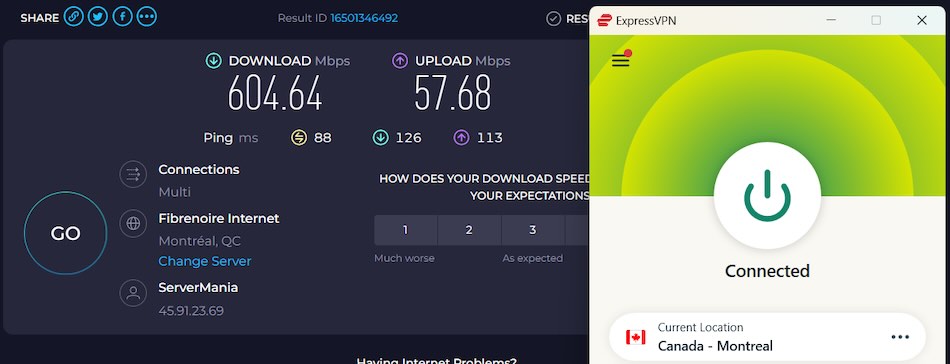
In our hands-on tests, ExpressVPN’s Lightway protocol delivered impressive speeds, reaching 604.64 Mbps when connected to a Montreal, Canada server. This shows ExpressVPN can provide strong performance without compromising privacy.
ExpressVPN has also added post-quantum cryptography to Lightway, helping protect encrypted tunnels against future “Harvest Now, Decrypt Later” threats.
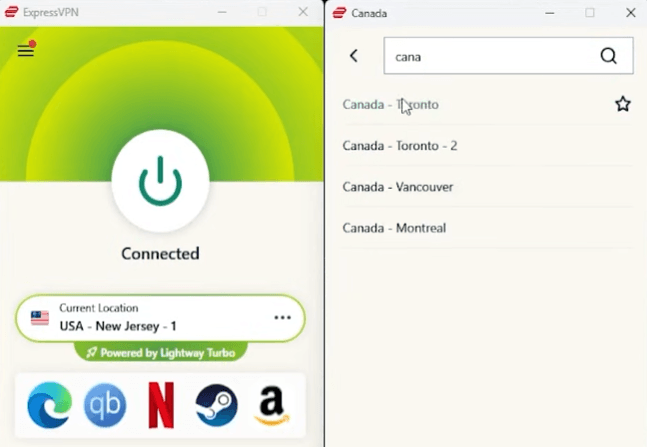
ExpressVPN delivers one of the most user-friendly VPN apps we tested. Its simple interface makes finding high-speed servers, switching locations, and unblocking global streaming services effortless.
Privacy infrastructure and technical specs
ExpressVPN stands out with hardware solutions like the Aircove Router, designed to secure every smart device on your home network. Its apps also include a whole variety of built-in privacy features:
- TrustedServer security: The entire fleet runs exclusively on volatile RAM memory instead of traditional hard drives, guaranteeing no logs are physically written to disk.
- ExpressKeys password manager: A built-in, highly secure credential vault included natively with all active subscriptions to protect your digital accounts.
- ExpressMailGuard Relay: A private email relay system designed to mask your real email address and block incoming trackers from advertising profiles.
- ExpressAI protection tier: A privacy-first consumer AI module built inside isolated confidential computing environments to prevent data leakage during search tasks.
- Network Lock (kill switch): Instantly stops all incoming and outgoing internet traffic if your underlying VPN connection temporarily drops, preventing accidental data leaks.
Documented zero-logs proof
ExpressVPN backs its no-log policy with regular independent audits from leading security firms, including KPMG and Cure53. These reviews confirm that ExpressVPN does not store usage logs, such as browsing history or destination data, or permanent connection logs like IP addresses and session details.
Its zero-logs design has also been tested in the real world. When Turkish authorities seized an ExpressVPN server during an investigation, the diskless TrustedServer architecture contained no usable user data, proving there was nothing available to recover.
Turkish police seize ExpressVPN server (but no data)
The ultimate proof of ExpressVPN’s zero-logs architecture came when Turkish authorities attempted to obtain user data during an active investigation. After ExpressVPN confirmed it had no logs to provide, investigators physically seized a server from a local data center. However, the raid uncovered no usable user information, as the diskless TrustedServer architecture is designed to prevent data from being stored permanently.
ExpressVPN may cost more than some competitors and offer fewer customization options than NordVPN, but its proven reliability makes it worth the investment. With splendid streaming support, strong privacy features, and a stable network, it remains one of the best premium VPNs.
ExpressVPN pros and cons
+ Pros
- User-friendly and secure apps for virtually any operating system or device
- Proprietary Lightway VPN protocol for advanced performance
- Post-quantum version of the WireGuard protocol for enhanced privacy and security
- Split tunneling feature (for macOS, Windows, and routers)
- Works with Netflix and most streaming services
- 24/7 live chat support
- Passed independent third-party audits for security and no-logs
- Extensive network of diskless servers
– Cons
- Fewer features than other leading VPNs
Take advantage of 84% off ExpressVPN and 4 extra months using the coupon below:
ExpressVPN Coupon:
Sign up for the 2-year plan and get 4 months added to your subscription for free.
(Coupon is applied automatically)
IPVanish: RAM-only servers, verified privacy, and unlimited connections
| VPN | IPVanish |
| Based in | USA |
| Logs | No logs (audited) |
| Price | $2.19/mo. |
| Support | Email and Chat |
| Refund | 30 days |
| Website | IPVanish.com |
IPVanish has grown into a strong contender among anonymous VPN services, focusing on speed, privacy, and unlimited connectivity. Its biggest advantage is unlimited simultaneous device connections, allowing households to protect multiple smartphones, PCs, and streaming devices under one account.
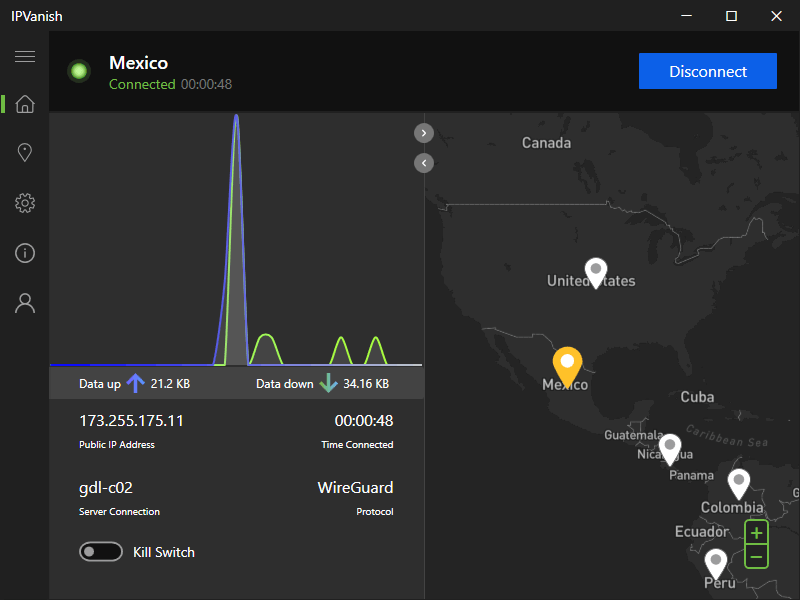
In our tests, we found that IPVanish provides fast and reliable connection speeds, especially when using the WireGuard protocol. This makes it an excellent choice for users who demand high-speed internet for streaming.
US jurisdiction and data requests
Unlike competitors operating out of a classically defined privacy-friendly jurisdiction, IPVanish is based in the United States. This position places it directly under the legal reach of the 5-Eyes intelligence alliance and domestic federal surveillance programs.
Fortunately, despite being based in the US, IPVanish maintains a strict zero-logs policy. Since there are no mandatory data retention laws for VPN providers, the company is not required to store user activity or connection logs.
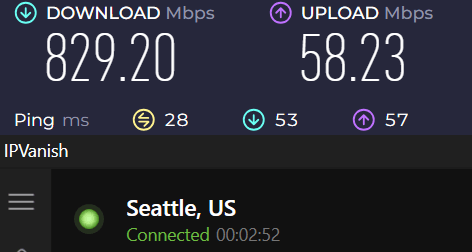
During our hands-on speed tests using the WireGuard protocol, IPVanish delivered fast and reliable performance. The service supports 10 Gbps server connections, providing smooth speeds for gaming, streaming, and large file downloads.
With more than 3,400 servers across 150+ locations, IPVanish also performed well for streaming. In our tests, it successfully unblocked Netflix, Disney+, and BBC iPlayer with stable, buffer-free playback.
Advanced Privacy Infrastructure and upgrades
IPVanish has fully transitioned to a RAM-only server network to strengthen user privacy. Since nothing is written to physical hard drives, connection data is automatically wiped whenever a server restarts or powers off.
IPVanish packs a range of advanced features into its desktop and mobile apps:
- Network-level kill switch: Instantly cuts off your underlying internet connection if the encrypted VPN tunnel drops, preventing accidental data leaks.
- Scramble OpenVPN traffic: Obfuscates standard OpenVPN packets to disguise your encrypted traffic as standard HTTPS data, bypassing workplace blocks.
- Custom split tunneling: VPNs with split tunneling offer flexible control by routing selected apps through the VPN while keeping others connected to your local ISP.
- Native router application support: Simplifies home network deployments, allowing you to easily configure the software at the router stage to protect smart TVs and gaming consoles.
IPVanish’s verified no-logs policy
To reinforce its commitment to privacy, IPVanish now undergoes regular independent no-logs audits conducted by Schellman Compliance, LLC. These reviews verify that the service does not store activity logs, such as browsing history or downloads, or connection logs like IP addresses, session times, or connection records.
IPVanish pros and cons
+ Pros
- Strong security features, multiple VPN protocols, and a kill switch
Extremely fast and reliable connection speeds
Wide range of reliable apps
Unlimited simultaneous connections
- Audited, no-logs policy
Ability to unblock popular streaming services like Netflix, Disney+, and BBC iPlayer
– Cons
- No cryptocurrency payment options
- Based in the United States
See the latest IPVanish deal below and save 83% on a 2-year plan:
IPVanish Coupon:
Get 83% off IPVanish on 2-year plans with the coupon below:
(Coupon is applied automatically)
OVPN: No-logs protection backed by court cases
| VPN | OVPN |
| Based in | Sweden |
| Logs | No logs |
| Price | $4.22/mo. |
| Support | Email & Chat |
| Refund | 10 days |
| Website | OVPN.com |
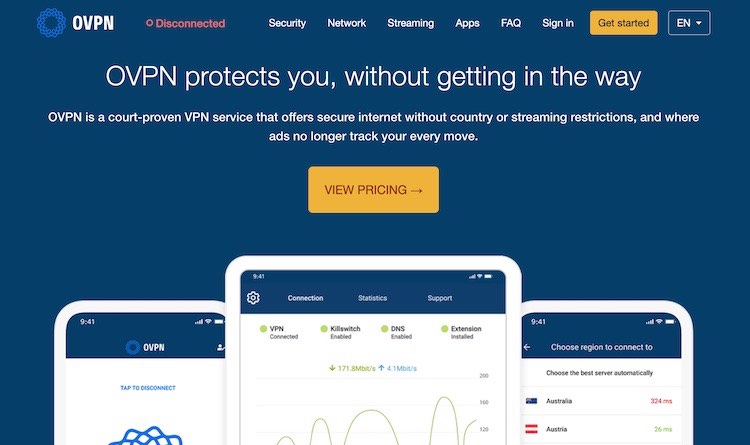
OVPN has carved out a legendary reputation among premium anonymous VPN services by focusing on radical hardware transparency. As part of the Pango Group, OVPN keeps its strong security infrastructure while gaining access to a more stable global network.
Sweden’s jurisdiction and GDPR
Headquartered in Stockholm, Sweden, OVPN operates within a privacy-focused legal framework. While Sweden participates in international intelligence-sharing agreements, local laws do not require commercial VPN providers to store customer metadata. As an EU-based provider, OVPN also follows strict GDPR requirements, strengthening its position as a privacy-friendly VPN service.
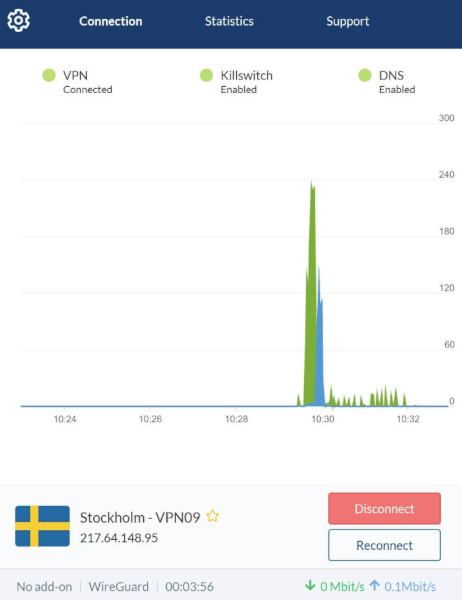
OVPN’s desktop apps deliver a smooth experience across Windows, macOS, and Linux. The clean interface provides useful routing details for power users, while the Linux GUI makes setup simple by removing the need for traditional command-line configurations.
Privacy-focused infrastructure
OVPN takes a different approach from many VPN providers by avoiding rented virtual servers from cloud providers. Instead, it operates a fully self-owned bare-metal server infrastructure designed for greater control and security.
Its client includes several advanced features built directly into the app:
- Hardened RAM-disk operation: The entire server fleet runs strictly on volatile memory pools without traditional hard drives, ensuring data vanishes instantly if power is cut.
- Insurance against subpoenas: OVPN uniquely maintains a dedicated legal defense insurance policy specifically to cover the court costs required to fight external third-party data demands.
- Dynamic MultiHop routing: Chains your encryption path across two separate physical server locations to obscure your digital footprint from deep packet inspection.
- NetClean ad blocker: A powerful network-level tracker and malware domain blocker that filters out malicious scripts before they hit your browser.
- Anonymous account registration: Allows users to generate an account without an email address, accepting physical cash and cryptocurrencies to protect their identity during sign-up.
OVPN wins court case proving no-logs claims
Unlike competitors that rely solely on a standard paperwork no-log policy audit, OVPN holds the ultimate privacy badge: its zero-logs architecture has been proven true in a court of law.
One of the strongest proofs of OVPN’s privacy claims came through a real-world legal battle. When a copyright organization requested user information tied to an IPv4 address, OVPN demonstrated in court that its infrastructure does not store browsing logs, download records, IP details, or session timestamps.
The case was dismissed in OVPN’s favor, reinforcing its verified no-logs approach:
To summarize the verdict, the Rights Alliance and their security experts have not been able prove any weaknesses in OVPN’s systems that could mean that logs are stored. OVPN therefore wins the information injunction as our statements and evidence regarding our no log VPN policy have not been disproven. The movie companies also need to pay OVPN’s legal fees.
If you want a highly specialized, technically transparent VPN whose zero-logs architecture has been successfully tested in a real-world courtroom battle, OVPN is an outstanding choice.
OVPN pros and cons
+ Pros
- Designed for maximum user privacy and security
- Dedicated apps for Windows, macOS, Linux, Android, iOS, and support for other devices
- No IP address or DNS leaks detected
- Support for streaming and torrenting
- Lots of configuration options
- Monthly transparency reports
- Multiple payment methods including anonymous payments
– Cons
- Small server network with few locations
- Above average prices
Mullvad: Account anonymity and a WireGuard-exclusive architecture
| VPN | Mullvad |
| Based in | Sweden |
| Logs | No logs |
| Price | $5.86/mo. |
| Support | |
| Refund | 30 days |
| Website | Mullvad.net |
Mullvad remains one of the most trusted anonymous VPN services, built around privacy, simplicity, and transparency. Based in Gothenburg, Sweden, the provider avoids traditional VPN marketing tactics, with no multi-year discounts or limited-time sales. Instead, Mullvad keeps a simple flat pricing model that has stayed consistent since launch.
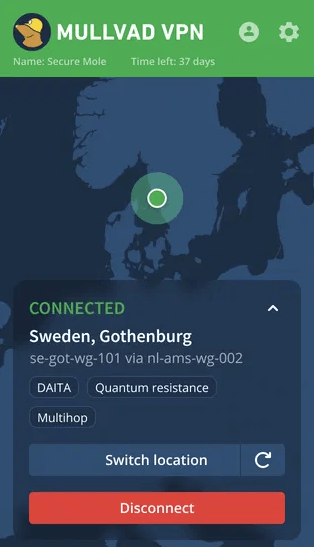
During our testing, Mullvad’s Windows VPN app stood out with its simple layout and easy-to-use interface:
Account-number-only registration
Mullvad takes privacy further than most VPN providers by removing the traditional account registration process. You do not need an email address, name, or phone number to create an account.
Instead, the service generates a random 16-digit account number that works as your only identifier. For anonymous payments, users can pay with privacy-focused cryptocurrencies like Monero or even send cash directly to Mullvad’s Swedish office.
The shift to a WireGuard-exclusive infrastructure
Mullvad’s performance is built around a 100% WireGuard-exclusive network, replacing the older OpenVPN protocol entirely. Its custom GotaTun implementation, written in Rust, helps improve efficiency across desktop and mobile apps. The main limitation is the lack of port forwarding, which may affect P2P torrent seeding speeds for advanced users.
Advanced privacy infrastructure and flaws
Mullvad operates an entirely diskless, RAM-only server infrastructure. Because volatile memory requires constant power to hold cached footprints, a server seizure instantly wipes all data lines from existence.
The client includes several built-in privacy tools:
- Mullvad browser integration: A highly hardened browser developed in tandem with the Tor Project to combat canvas fingerprinting and browser exploits.
- Bridge Mode (shadowsocks obfuscation): Routes traffic through separate shadowsocks proxies to slip past deep packet inspection firewalls in highly restrictive regions.
- Quantum-resistant tunnels: Implements cutting-edge post-quantum pre-shared keys to safeguard active routing tunnels from future supercomputer decoding threats.
- Streaming and usability constraints (the trade-off): Mullvad’s privacy-first approach comes with some streaming limitations. Its recycled shared IP addresses can trigger CAPTCHA checks and often struggle to unblock platforms like Netflix and Hulu.
Zero-logs proof and police raids
…the configuration is sound and did not display signs of any direct customer information.
Assured Security Consultants’ audit report
To verify its no-logs policy, Mullvad undergoes regular independent audits from security firms Cure53 and Assured AB. These reviews confirm that the provider stores no usage logs, browsing activity, timestamps, bandwidth data, or IP mapping information.
Mullvad’s privacy claims were also tested in the real world when Swedish authorities attempted to seize user data from its offices. Because its diskless infrastructure stores no customer information, there was no data available to hand over.
If your primary objective is absolute, uncompromised anonymity with cash-payment options and zero identity requirements, Mullvad is an unmatched privacy tool.
Mullvad pros and cons
+ Pros
- Strong privacy and security features
- Dedicated apps for Windows, macOS, Linux, Android, and iOS
- No IP address or DNS leaks detected
- Audited
- Accepts private payments
– Cons
- Smaller server network
- Above average prices
- Captcha issues affect usability
- Does not work well for streaming
Logging red flags
Not every zero-logs claim tells the full story. The best way to protect your privacy is to separate marketing promises from real-world security measures.
A clear comparison table helps separate trustworthy VPN providers from higher-risk services in seconds:
| No-logs green flags (SAFE) | Logging red flags (AVOID) |
| ✅ RAM-only servers: Volatile memory structures that permanently wipe data upon reboot. | ❌ Hard-drive storage: Magnetic or solid-state drives that write persistent files to disk. |
| ✅ Independent annual audits: Public infrastructure reviews by respected firms like Deloitte or KPMG. | ❌ Zero external verification: Blind-trust models with no third-party inspection reports. |
| ✅ Privacy-friendly jurisdiction: Based in regions completely outside major global intelligence syndicates. | ❌ 5/9/14-eyes alliance HQ: Subject to local laws that force secret data-logging taps. |
| ✅ Proven warrant canaries: Real-time transparency pages actively tracking government data requests. | ❌ Missing transparency reports: Total silence on whether they have received data subpoenas. |
| ✅ Anonymized registration: Random account tokens that accept cash or decentralized crypto. | ❌ Mandatory identity ties: Requires full names, home addresses, or phone verification. |
Many lower-quality or free VPN services use vague privacy policy wording that allows them to collect user metadata while still appearing to honor their privacy promises.
Watch out for these three loopholes:
- Connection metadata: Some VPN providers avoid logging browsing history but still collect your IP address, connection timestamps, and bandwidth data, creating detailed connection logs that can reveal your identity.
- Aggregated data claims: Some services claim to only store anonymous statistics, but stored data can be combined with other information to identify users.
- Ownership changes: A VPN’s privacy standards can change after a company acquisition, especially if ownership moves to a less privacy-friendly jurisdiction.
The safest VPN services combine independent audits, diskless server infrastructure, and strong privacy protections to keep user data secure.
Free VPN risks
According to the CyberInsider VPN warning list, popular free options hide massive security risks. For instance, Hotspot Shield was caught injecting advertising code into user traffic, while Hola VPN actively stole and resold its users’ bandwidth.
Furthermore, independent reporting published by Hacker News exposes widespread security failures across store applications. A landmark academic study testing 281 popular free Android VPN apps found that software accounting for over 2.4 billion combined installs routinely leaked DNS requests, transmitted plain-text data, or tracked users for advertisers. If you are not paying for the software, your data is the product.
If you want a safer free option, look for trusted freemium VPN services like Proton VPN, which apply strict privacy and data retention rules across both free and premium plans.
Why do you need a VPN
While this guide focuses on VPN logging policies, it is also important to understand your internet service provider (ISP). Without encrypted traffic, your ISP can see and record much of your online activity, including your browsing habits and connection details.
The US Federal Trade Commission (FTC) investigated the issue of internet service providers collecting user data and came to some alarming conclusions. In a detailed report, they found that all major internet service providers in the US are collecting vast amounts of user data and also sharing this data with a wide network of third-party groups, particularly advertisers.
These companies are collecting the following data:
- Every single website domain you visit, alongside precise session timestamps.
- Granular browser fingerprinting data, device operating systems, and network configurations.
- The total inventory of connected IoT smart devices running on your home router network.
- Real-time geographic location coordinates extracted via mobile cellular towers and public Wi-Fi handoffs.
The solution is to use a VPN at all times. If you do, your ISP will only know that you are connected to a VPN, with no way to see what you are actually doing online. Since using a VPN is legal in almost every jurisdiction on Earth, this is perfectly safe and legal.
An internet service provider is not your only adversary, however. There are many other hackers that make the news every week for ransomware and exploiting network vulnerabilities. Needless to say, you need protection when going online today.
Choose a verified no-logs VPN
With millions of users relying on privacy tools, demanding hard evidence to back up a provider’s zero-tracking claim is more important than ever.
To be fair, tracking minimal telemetry to prevent network abuse isn’t a deal-breaker if documented with total honesty. The real risk stems from lower-tier apps using “strict zero logs” as an unverified corporate slogan while quietly hoarding detailed connection logs.
Because the commercial privacy sector lacks a single, binding definition of zero-logging, the burden of proof falls entirely on technical transparency. Choosing anonymous VPN services that subject their bare-metal hardware to a recurring, independent no-log policy audit is critical to eliminate guesswork.
If you want to skip the trial and error, NordVPN remains our top pick. With a privacy-friendly jurisdiction, diskless server infrastructure, and post-quantum encryption, it provides a strong privacy foundation to keep your usage data secure.
No-logs VPNs FAQs
No tool offers absolute anonymity, but anonymous VPN services make your digital footprints practically impossible to trace back to your identity. By wrapping your traffic in military-grade encryption, they blind web trackers and network snoopers. To maximize your upfront privacy, choose providers that generate random account tokens and accept anonymous cash or cryptocurrency payments.
A no-log policy audit is an independent inspection where elite firms like Deloitte verify a provider’s zero-tracking claims. Auditors get full, bare-metal access to server configurations, codebases, and backend databases. They perform deep technical scans to confirm that the server fleet physically cannot collect or store your private network signatures.
The core difference comes down to infrastructure metadata versus your actual web activity. Connection logs map out localized network blueprints such as your account sign-in timestamps, total bandwidth allocation, and your real home IP address. Conversely, usage logs track your precise web movements, capturing your exact browsing history, destination URLs, application downloads, and DNS requests. A trustworthy, audited service must maintain a strict zero-retention framework across both tracking categories to keep your identity safe.
Local data retention rules dictate whether a government can legally force a technology company to log, archive, and surrender user data. If your provider is based inside an aggressive global surveillance alliance, local courts can issue secret directives forcing them to tap and monitor your traffic. Sticking to a privacy-friendly jurisdiction ensures your VPN provider is legally shielded from invasive monitoring laws, keeping your data entirely out of reach from state-sponsored surveillance mandates.

I’ve been looking into no-logs VPNs for privacy and security while browsing. It’s important to choose one that’s truly reliable and has a good reputation.
I’ve been researching VPNs for a while, and it’s great to see a detailed guide on no-logs VPNs. It’s so important to prioritize online privacy these days!
I think VPNs should commit to annual audits. I’ve seen this now with NordVPN, which is the reason I went with it. In terms of trust, it seems ProtonVPN and NordVPN are ahead of the others. ExpressVPN used to previously be a leader in the trust category, but then they got bought out by some very sketchy people.
Express VPN is now owned by an Israeli billionaire. So yeah. How can a green card holder or student trust this list?
Hey Sam, yes we’ve covered the situation of Kape Technologies buying ExpressVPN when it happened a few years ago. But go with whatever VPN you trust. Kape also owns CyberGhost and Private Internet Access. Go with whatever VPN you trust.
Former ExpressVPN user here, this was also a red flag for me too and the main reason I switched VPNs. Using NordVPN now with no issues, and it’s also a lot faster than ExpressVPN with the serves I use (mainly USA and Canada).