
Finding the best VPNs with port forwarding support is the only real way to escape sluggish P2P throttles, drop your online gaming ping, and get reliable remote access for home servers.
The annoying catch? Most mainstream providers have killed off this feature due to security concerns, leaving power users stranded with sluggish P2P speeds or nightmarish manual workarounds.
We tested the market to find the few private VPNs that still support port forwarding, focusing on connection speeds, security, and ease of use.
How we test
Port forwarding can look great on paper, but the real test is whether it works when you actually need it. We put each VPN through the same hands-on checks to find out.
Here’s what we look at:
- Port forwarding: We set up custom ports on a local router and use tools such as CanYouSeeMe.org to check whether they’re genuinely open and reachable from the internet.
- P2P performance: We compare torrent download and seeding speeds with and without port forwarding enabled to see whether the feature makes a measurable difference.
- Gaming ping: We test latency and connection stability during gameplay, including on busy regional servers where a good connection can make a noticeable difference.
- Security and leaks: We use Wireshark to monitor network traffic and check that port forwarding doesn’t expose the real IP address or leak DNS requests.
How to set up port forwarding
While settings vary slightly by provider, use this universal 4-step setup:
- Turn on port forwarding: Open your VPN app and look under Network or Connection settings for the Port Forwarding option.
- Note your port number: If the VPN assigns a port automatically, copy the number it gives you.
- Add it to your software: Open your torrent client or other compatible app and enter the number in its Port field.
- Check UPnP settings: If your VPN recommends disabling UPnP, turn it off in your software to avoid conflicting port configurations.
Best VPNs with port forwarding
Every VPN below supports port forwarding, but the setup varies. Some offer it directly, while others use add-ons or dedicated servers.
Let’s see how they compare.
Proton VPN – Best for Windows
| Website | ProtonVPN.com |
| Based in | Switzerland |
| Logs | No logs (audited) |
| Price | $2.99/mo. |
| Support | Email + Chat |
| Refund | 30 days |
| Deal | 70% Off Coupon |
Proton VPN offers port forwarding to Windows users with a paid subscription. Its firewall blocks incoming ports by default, while port forwarding lets you route specific traffic through. This supports P2P file transfers (BitTorrent) and online gaming over a VPN.

Enabling port forwarding is simple from the main window. It’s available on P2P servers, so choose a location that supports P2P, click the Port Forwarding icon, and switch it On.
Proton VPN uses automatic port forwarding to keep setup simple. It assigns a dynamic port for each session, which can help with firewalls but may cause issues with remote access or apps that need a fixed port. Once enabled, Proton VPN connects you to an available P2P server, assigns a random port, and activates the firewall automatically.

The Proton VPN support center provides setup guides for popular apps. Its port forwarding process is also relatively straightforward, though providers such as Private Internet Access use a different setup.
Beyond port forwarding, Proton VPN is known for strong security and privacy features. Its Secure Core network adds an extra layer of protection by routing traffic through multiple VPN servers, but our tests found that this can slow connection speeds.
Proton VPN takes several steps to make VPN port forwarding safer, including using a firewall and blocking unauthorized remote access.
Its audited no-logs policy adds another layer of privacy, while the company’s Swiss headquarters place it under Switzerland’s privacy laws. We’ve also seen Proton VPN and NordVPN complete no-logs audits in recent years.
Proton VPN also offers a large server network for torrenting, streaming, and everyday browsing. Here are its latest server stats:
| ProtonVPN Servers: | |
|---|---|
| Total Servers | 20,600+ |
| Total Countries | 148 |
| Secure Core servers | 125 |
| Tor-over-VPN servers | ✅ |
| See the latest Proton VPN server stats > |
Proton VPN’s Support Center offers detailed guides for setting up port forwarding. Email support is available, while live chat is limited to Swiss business hours. In our experience, the support team was helpful and quick to respond.
Overall, Proton VPN combines port forwarding with strong security, an audited no-logs policy, and a large global server network. Its straightforward setup makes it a practical option for users who need port forwarding.
Proton VPN pros and cons
+ Pros
- Swiss-based privacy
- Open-source apps audited by independent security firms
- Secure Core servers route traffic through hardened nodes
- VPN Accelerator boosts long-distance US speeds
- Post-quantum encryption in the works
- Subscription plans bundle with Proton Mail, Proton Drive, Proton Sheets, and Proton Pass
- Linux CLI and refreshed GUI
- Smart TV and Apple TV apps now support NetShield
– Cons
- No 24/7 live chat
- Advanced tools have a steeper learning curve
Looking to save? Get 70% off Proton VPN with this special deal:
Proton VPN Coupon:
Get 70% Off Proton VPN (drops the price to only $2.99/month) with the coupon below:
(Coupon is applied automatically; 30-day money-back guarantee)
OVPN – Privacy-focused VPN
| VPN | OVPN |
| Based in | Sweden |
| Logs | No logs |
| Price | $4.22/mo. |
| Support | Email & Chat |
| Refund | 10 days |
| Website | OVPN.com |
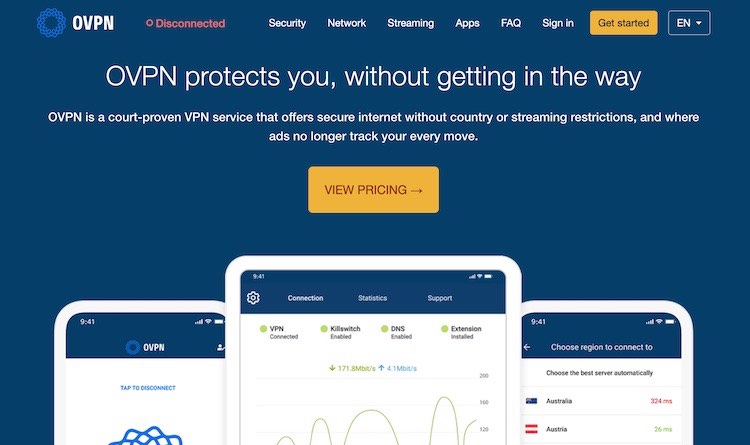
With support for up to 7 open ports, OVPN is a handy option for gaming, torrenting, and other apps that need incoming connections. Setup is simple, while its built-in firewall keeps the rest of your connection closed, allowing only the ports you choose.

OVPN hasn’t relied on a traditional third-party no-logs audit. Instead, its no-logs policy was put to the test in a Swedish court case after movie companies sought information about a user. The court found that the evidence did not establish that OVPN stored logs, and OVPN won the case.
OVPN says its servers run without hard drives and have logging disabled at the software level, making it technically difficult to create or retain user activity logs.
Beyond privacy, OVPN is easy to use for everyday activities. Its apps are beginner-friendly, P2P torrenting is supported across the network, and streaming works well with major services.
OVPN also offers 3-year plans, with occasional discounts for longer subscriptions. Its simultaneous connection limits have also increased: the 1-month plan supports 4 devices, the 12-month plan supports 5, and the 3-year plan supports up to 7 devices at once.
OVPN’s main drawbacks are:
- Small network: OVPN has 96 servers in 32 cities, so coverage is more limited than with larger VPN providers.
- No live chat: Customer support is available through other channels, but there’s no live chat for quick questions.
- Short refund period: OVPN offers a 10-day money-back guarantee, which is shorter than the 30-day periods offered by many VPNs.
With strong privacy features and flexible port forwarding, OVPN gives users plenty of control without making the setup overly complicated.
OVPN pros and cons
+ Pros
- Designed for maximum user privacy and security
- Dedicated apps for Windows, macOS, Linux, Android, iOS, and support for other devices
- No IP address or DNS leaks detected
- Support for streaming and torrenting
- Lots of configuration options
- Monthly transparency reports
- Multiple payment methods including anonymous payments
– Cons
- Small server network with few locations
- Above average prices
AirVPN – Flexible port forwarding
| VPN | AirVPN |
| Based in | Italy |
| Logs | No logs |
| Price | $3.10/mo. |
| Support | Email & Forum |
| Refund | 3 days |
| Website | AirVPN.org |
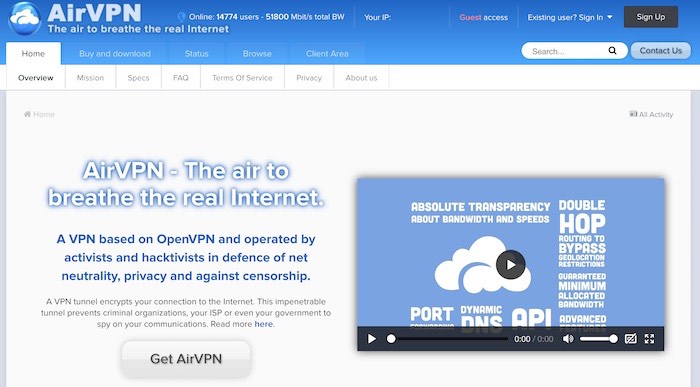
AirVPN is built with advanced users in mind, and its port forwarding is a major strength. You can forward up to 20 ports for P2P, gaming, self-hosted services, and other apps that need incoming connections. It supports OpenVPN and WireGuard, plus Dynamic DNS and port monitoring.
AirVPN adds one extra step: port forwarding is managed through its web-based Client Area, not the VPN app. Reserve your ports on the website, then enter the assigned port number in your torrent client or other compatible software. It takes a little more setup, but gives you plenty of control over forwarded connections.
Beyond port forwarding, AirVPN focuses heavily on privacy and security. Its apps support major operating systems and include leak protection and a kill switch. The service also uses physical servers and supports P2P traffic across its network, making it a good fit for users who value privacy and control over simplicity.
AirVPN has a few limitations, especially if you want a VPN that works smoothly out of the box. Its apps take some getting used to, while streaming support is limited compared with VPNs built for unblocking services. Netflix, Prime Video, and Disney+ can be particularly difficult to access.
Other drawbacks include:
- No third-party no-logs audit: AirVPN has not undergone an independent audit of its no-logs policy.
- Italy-based: AirVPN is based in Italy, which is part of the 14-Eyes intelligence-sharing alliance.
- Smaller network: AirVPN has 514 physical servers across 23 countries, giving it less global coverage than many larger VPN providers.
- Five simultaneous connections: You can connect up to 5 devices at once, which may be limiting for larger households or users with many devices.
Overall, AirVPN packs plenty of useful features into a privacy-focused service, with port forwarding standing out as one of its biggest strengths.
AirVPN pros and cons
+ Pros
- Secure applications with strong encryption
- Great reputation and track record
- Some advanced features available
- No logs policy
– Cons
- VPN apps are not user-friendly
- Speeds are variable
- Support is hit or miss
- Limited refund policy
ExpressVPN – Router port forwarding
| Website | ExpressVPN.com |
| Based in | British Virgin Islands |
| Logs | No logs (audited) |
| Price | $2.99/mo. |
| Support | 24/7 live chat |
| Refund | 30 days |
| Deal | 80% Off Coupon |

ExpressVPN takes a different approach to port forwarding than the other VPNs in this roundup. Its port forwarding feature is available on supported routers running ExpressVPN, including Aircove, but the forwarded traffic does not pass through the VPN tunnel.
Instead, it opens ports on your router’s internet connection, allowing devices on your local network to be accessed from the internet. Your ISP must also support port forwarding, so connections using Carrier-Grade NAT may not work.

This means ExpressVPN’s port forwarding isn’t designed to bypass CGNAT or open incoming ports through the VPN server. It also won’t provide the port-forwarding benefits that some users want for torrenting or other services over a VPN connection. The feature is better suited to remote access to devices and services on your home network.
The service also uses its Lightway protocol for fast connections and supports streaming across major platforms. Its network has grown to 113 countries and 214 server locations, giving users plenty of locations to choose from.
ExpressVPN also offers 24/7 live chat and a 30-day money-back guarantee. Its current subscription options vary by plan, so pricing should be checked against the specific offer being promoted.
For users who specifically need VPN-based port forwarding for P2P, gaming, or incoming connections, ExpressVPN isn’t designed for that use case. For those who mainly want a fast, privacy-focused VPN with router support and remote access to devices on their home network, its router port forwarding can still be useful.
ExpressVPN pros and cons
+ Pros
- User-friendly and secure apps for virtually any operating system or device
- Proprietary Lightway VPN protocol for advanced performance
- Post-quantum version of the WireGuard protocol for enhanced privacy and security
- Split tunneling feature (for macOS, Windows, and routers)
- Works with Netflix and most streaming services
- 24/7 live chat support
- Passed independent third-party audits for security and no-logs
- Extensive network of diskless servers
– Cons
- Fewer features than other leading VPNs
ExpressVPN Coupon:
Sign up for the 2-year plan and get 4 months added to your subscription for free.
(Coupon is applied automatically)
Selecting a safe VPN
A good port-forwarding VPN should make it easy to open the ports you need while keeping your connection secure. Here’s what to look for:
- Port type: Check whether you need a permanent static port or can use a dynamic port that changes each session.
- Port fail defenses: Look for server-side firewall protection that helps prevent attackers from using open ports to expose your real IP address.
- App firewalls: The VPN should block incoming traffic by default and only allow the specific ports you choose to open.
- Leak protection: Make sure it includes IPv6, DNS, and WebRTC leak protection, plus a reliable kill switch to protect your data if the VPN connection drops.
- P2P optimization: For torrenting, look for VPNs with fast servers, plenty of bandwidth, and solid P2P performance without unnecessary throttling.
- Technical support: Port forwarding can sometimes take a little troubleshooting, so responsive support through live chat or tickets can save you some headaches.
Technical deep dive
Network address translation (NAT) firewalls help protect your network by blocking unsolicited incoming connections. Port forwarding essentially creates an approved doorway through that barrier, letting incoming traffic reach a specific device or application:
- Packet forwarding: The VPN server receives incoming packets and forwards them to the designated device or application through the configured port.
- Direct connections: Allowing external devices to connect directly can improve peer-to-peer transfers and help keep gaming and other connections more stable.
- Exposure risks: Opening an inbound port also means giving up some of the protection NAT provides. A software firewall can help block unwanted traffic from reaching your device.
In short, port forwarding can improve connection speed and reliability, but the fastest VPNs still need to balance performance with security.
Dynamic vs static VPN ports
How your VPN handles port forwarding affects how much setup you need to do each time you connect:
- Dynamic ports: Some providers, such as Proton VPN, assign a different port when you connect. This can work well for privacy, but you may need to update your torrent or game client with the new port after reconnecting.
- Static ports: Services such as AirVPN can assign a permanent port to your account, so it stays the same between connections. This is useful for services that need to remain reachable, such as remote-access applications or a home server.
If you want a port that stays put, static forwarding is the simpler option. With dynamic ports, you may get a little more setup work each time you reconnect.
The Port Fail leak
Port forwarding comes with a lesser-known security concern called the Port Fail vulnerability. It can happen when multiple users share the same VPN server, and one user is able to access another user’s forwarded port. In some setups, an attacker could use this to send traffic toward another device and potentially uncover its real IP address.
Fortunately, VPN providers can take steps to prevent this. Server-side firewall rules can isolate users from one another, stopping them from accessing or routing traffic through each other’s forwarded ports. So, if you’re using a VPN with port forwarding, solid server isolation is an important privacy feature to look for.
Bypassing ISP CGNAT firewalls
Carrier-Grade NAT (CGNAT) is increasingly common with mobile networks and some high-speed ISPs. It lets providers share a limited pool of public IPv4 addresses between many customers, but it can also get in the way of port forwarding.
With CGNAT, your router doesn’t have its own public IP address, so regular port forwarding on your home router may not work. A VPN with port forwarding can work around this by giving you a forwarded port on the VPN server, allowing incoming connections to reach your device through the VPN tunnel instead.
That makes port-forwarding VPNs particularly useful if your ISP puts you behind CGNAT and you can’t open ports directly on your own network.
Free vs paid port forwarding VPNs
Free VPNs often limit advanced features such as port forwarding because they require additional server capacity and support. If you need reliable inbound connections, a paid VPN is more likely to offer the necessary controls and performance.
| Free VPNs | Paid VPNs | |
| Port mapping access | 🔴 Blocked or paywalled | 🟢 Supported up to 20 lines |
| Connection speeds | 🔴 Heavily throttled; slow P2P speeds | 🟢 Unthrottled 10 Gbps capacity |
| Server security | 🔴 No server-side user isolation | 🟢 Hardened firewalls |
| Data protection | 🔴 Risk of data logging or sales | 🟢 Audited no-logs |
| Data allowances | 🟡 Restricted to generic manual settings | 🟢 Streamlined in-app configurations |
The biggest difference is control. Free VPN apps may restrict port forwarding altogether, while paid VPNs are more likely to give you the server options, bandwidth, and security features needed for reliable connections. If you’re using port forwarding for activities such as P2P transfers, gaming, or remote access, those extra features can make a noticeable difference.
The bottom line
A VPN with port forwarding can help get around NAT restrictions and make connections smoother for things like P2P transfers, gaming, and remote access. The catch is that not every VPN supports it, and providers handle forwarded ports in different ways:
- Proton VPN: A simple option if you want dynamic port forwarding without a lot of extra setup.
- AirVPN: A good fit for users who want more control, including static ports and advanced configuration options.
- OVPN: Worth considering if privacy is a priority and you also need port forwarding for P2P connections.
Free VPNs and proxies often limit features like port forwarding, so VPNs with free trials can be a useful way to test what’s included before signing up.
Port forwarding FAQs
VPN port forwarding can introduce some extra security risks because it opens an inbound connection that NAT would normally block. That doesn’t automatically make it unsafe, but it’s important to use a provider with strong server-side isolation and firewall controls to help prevent other users from accessing your forwarded ports.
No. NordVPN does not support port forwarding on its consumer VPN service. The company has cited security concerns, including the risk of vulnerabilities such as Port Fail, as a reason for not offering the feature.
No. Surfshark does not currently support port forwarding on its VPN service. This means you can’t set up inbound port forwarding through Surfshark, so you’ll need a provider that specifically supports the feature if you need it
Yes. Port forwarding can help your console or PC get around strict NAT restrictions, making it easier to connect with other players or host multiplayer game servers. It won’t necessarily reduce your ping, but it can help with connection issues caused by restrictive NAT settings.
Standard router port forwarding usually won’t work behind Carrier-Grade NAT (CGNAT) because your ISP shares one public IP address among multiple customers. A VPN with port forwarding can work around this by routing incoming connections through the VPN tunnel instead.
No. You don’t need a dedicated IP to use port forwarding. A dedicated IP gives you a static address, but a port-forwarding VPN can still handle incoming P2P connections through a shared server IP and your assigned port.
Static ports keep the same port number between connections, which is useful for services that need to stay reachable, such as a home server. Dynamic ports assign a new port number when you connect, so you may need to update your software settings each time.

What a great comparison. One provider is down, the other doesn‘t offer port forwarding.
We’re in the process of updating this now. Check back in the coming days.
AirVPN is the real winner here. No idea why it isn’t even mentioned. Maybe because they don’t do affiliate marketing?
We’ll be adding AirVPN to this with the next update.