
A new study shows that the Argon2id password hashing algorithm dramatically increases the cost of offline password cracking by neutralizing much of the advantage offered by modern GPUs.
The study by Specops researcher David Ketler examines how Argon2id performs against modern password-cracking hardware and whether advances in GPUs continue to reduce cracking times as they have with older hashing algorithms such as bcrypt, SHA-256, and MD5.
Specops Software is a Sweden-based identity and password security company whose products help organizations enforce password policies, detect compromised credentials, and secure Active Directory environments. The company’s password research frequently measures how evolving hardware impacts the effectiveness of password hashing algorithms and enterprise password policies.
GPU advantage largely disappears with Argon2
Unlike older hashing algorithms, Argon2 was specifically designed to be memory-hard, forcing every password guess to consume a significant amount of memory. This prevents attackers from achieving the massive performance gains that GPUs typically provide when cracking traditional password hashes.
Argon2 won the Password Hashing Competition in 2015 and is now widely regarded as the recommended choice for password storage. The researchers focused on Argon2id, the hybrid variant that balances protection against GPU-based attacks with resistance to side-channel attacks.
To evaluate real-world cracking performance, Specops tested an eight-GPU system equipped with Nvidia RTX 5090 graphics cards, representing high-end hardware available to attackers today. The company also conducted the same tests on a single AMD EPYC 9B14 server processor to determine whether expensive GPU hardware still offered a meaningful advantage.
The results showed surprisingly little difference between the two platforms.
Specops
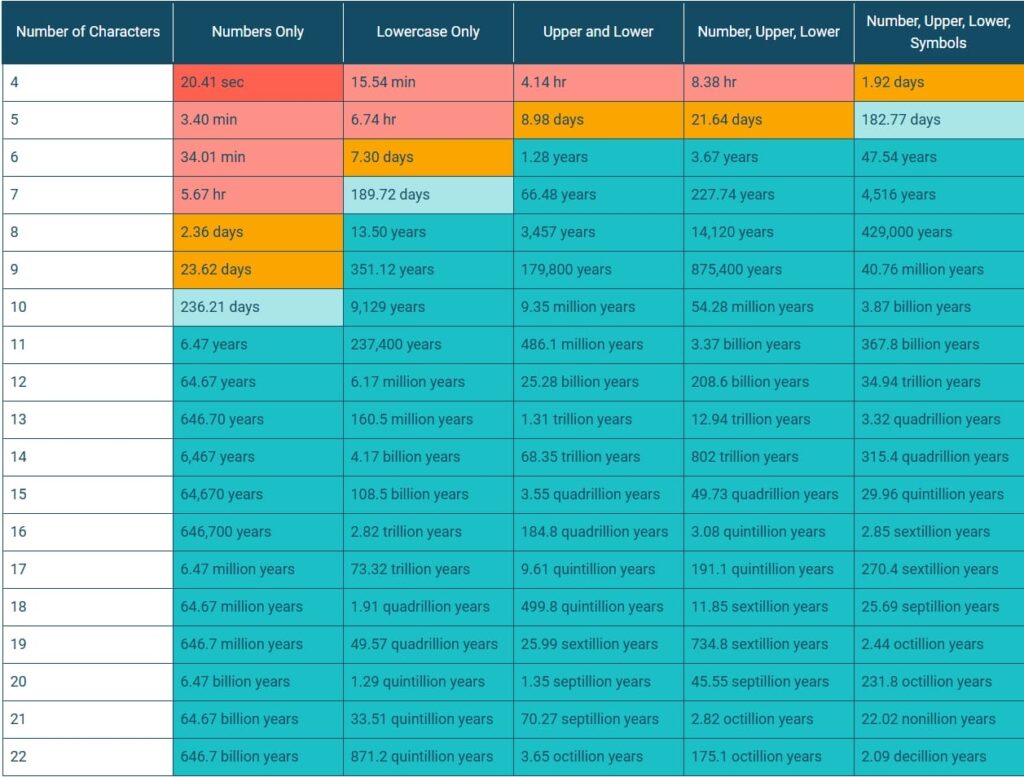
While the eight RTX 5090 system achieved approximately 490 password hashes per second against Argon2id, the single EPYC processor produced similar performance. The findings contrast sharply with previous generations of password hashing, where increasingly powerful GPUs significantly accelerated brute-force attacks.
Hundreds of millions of times slower than SHA-256
The study also compared Argon2 against SHA-256 using identical hardware.
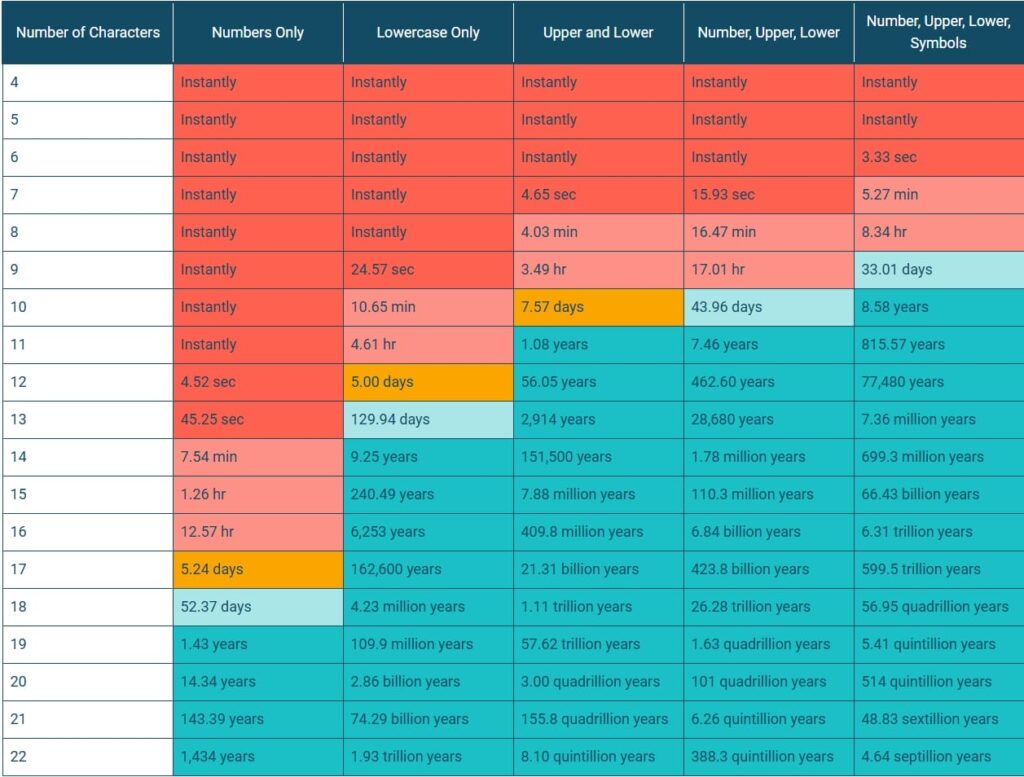
According to Specops, the RTX 5090 system reached roughly 221 billion SHA-256 hashes per second, compared to just 490 Argon2id hashes per second, making Argon2 approximately 451 million times slower to crack.
The difference becomes increasingly dramatic as password length grows.
Specops
For example, an eight-character password containing uppercase and lowercase letters would require an estimated 3,457 years to brute-force when protected by Argon2id, compared to about 4 minutes if stored using SHA-256. Passwords incorporating numbers and symbols rapidly push estimated cracking times into hundreds of thousands or even millions of years.
Despite the impressive results, Specops cautions that users should not interpret Argon2 as eliminating the risk of password cracking.
Modern password cracking rarely involves testing every possible password combination. Instead, attackers rely on leaked password databases, dictionaries, mutation rules, and targeted wordlists to prioritize the most likely passwords first. These techniques can dramatically reduce the number of guesses required to recover weak or predictable credentials.
Perhaps more importantly, many attacks bypass password cracking altogether.
If attackers obtain passwords through phishing campaigns, information-stealing malware, credential stuffing, or previous data breaches, they never need to recover the password from its hash.



Leave a Reply