

Meta is expanding its AI age-estimation technology worldwide on Instagram to identify teenagers who registered with adult birthdays and automatically apply Teen Account protections.
The company’s announcement also outlines its use of Apple’s age-range signals in Australia, alongside renewed calls for mandatory age verification and parental consent at the app-store level.
Meta, which operates Instagram, Facebook, Messenger, and Threads, uses Teen Accounts to limit who can contact young users, what content they encounter, and how much time they spend on its apps.
The global expansion is expected to bring millions more Instagram users into those protections. Meta says its AI can identify suspected teenagers even when their accounts list an adult date of birth.
Similar technology is continuing to roll out on Facebook, while a global launch on Threads is planned for later this year.
Going beyond declared birthdays
The expansion means the birthday someone enters when registering will not necessarily determine how Meta treats their account. If its technology identifies the user as a likely teenager, the company can apply restrictions intended for younger users.
However, the announcement does not detail the signals the AI uses, provide accuracy figures, or explain how misclassified users can challenge a decision. It also does not specify retention periods for information generated through age estimation.
Those omissions leave questions about how Meta balances identifying teenagers with minimizing data collection and correcting errors.
Meta links the rollout to a recent agreement with 52 attorneys general across US states, territories, and the District of Columbia. The company says it is strengthening technology to detect accounts belonging to children under 13 and identify teenagers aged 13–17.
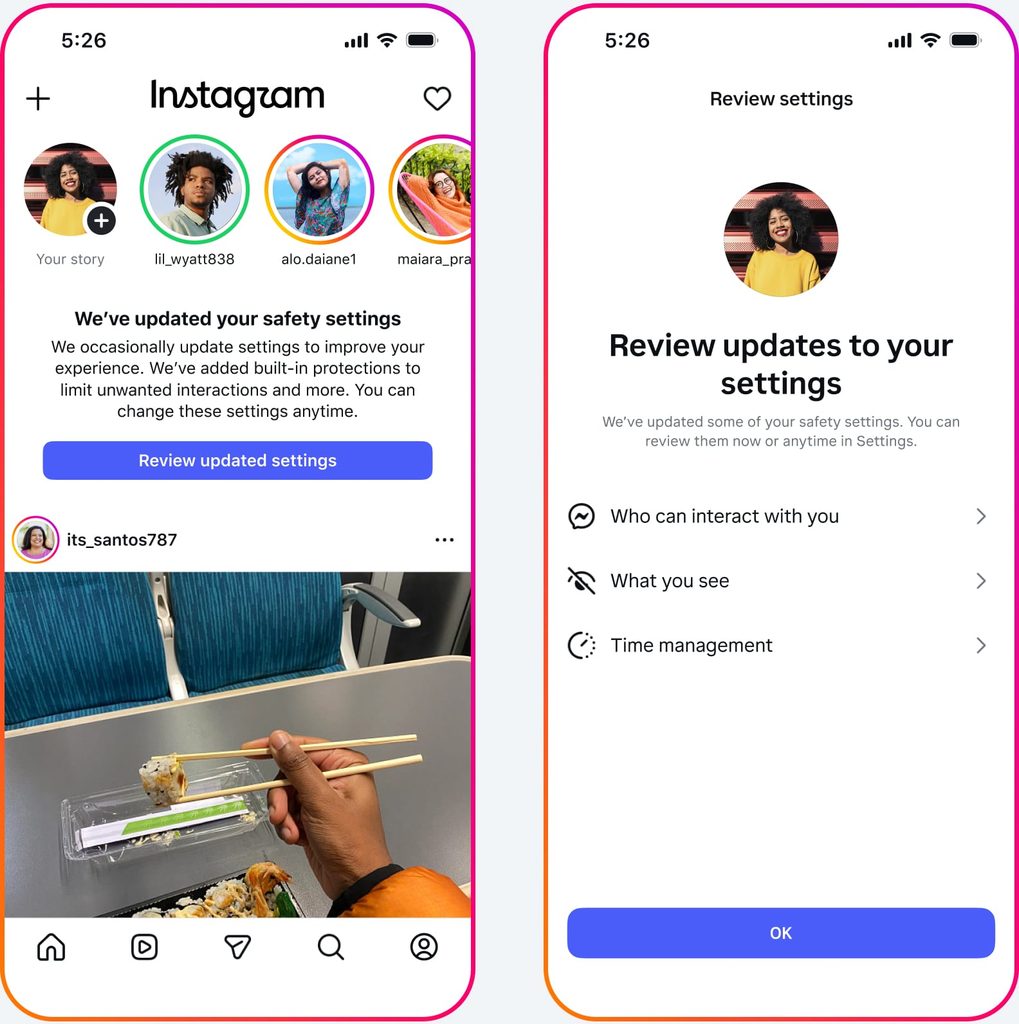
Starting this month, US parents will also receive an Instagram in-feed video explaining its approach.
Apple signals and the privacy trade-off
In Australia, Meta has begun using Apple’s age-range signal as an additional source of age information.
Apple’s documentation explains that the feature lets apps request an age bracket without receiving someone’s exact birthday. Parents or guardians control sharing for children and teens in a Family Sharing group.
The distinction limits the information disclosed, but does not prevent developers from combining the signal with other information. Apple explicitly says app developers may associate the response with personal data they collect separately.
Meta argues that a consistently shared device-level signal would be more privacy-preserving than having each platform independently verify users’ ages. It wants legislation requiring app-store age verification and parental consent, with developers’ own age-estimation systems acting as a backstop.
Meta says its use of Apple’s signal is voluntary and argues that optional participation produces inconsistent protections.
Parents using Apple’s feature can review sharing preferences under Settings → their name → Personal Information → Age Range for Apps. Apple offers Ask First, Always, and Never options, although legal requirements restrict those choices in some regions.



Leave a Reply