

DuckDuckGo has introduced advanced reasoning models to its Duck.ai platform, giving users access to more capable AI systems designed for complex problem-solving while maintaining its privacy-first approach.
The announcement adds support for GPT-5 mini (available to free users) and GPT-5.2 (available through a paid subscription), marking a notable expansion of the platform’s AI capabilities. Alongside the new models, Duck.ai now allows users to inspect how an answer was generated, including intermediate reasoning steps and links to external web sources used during the process.
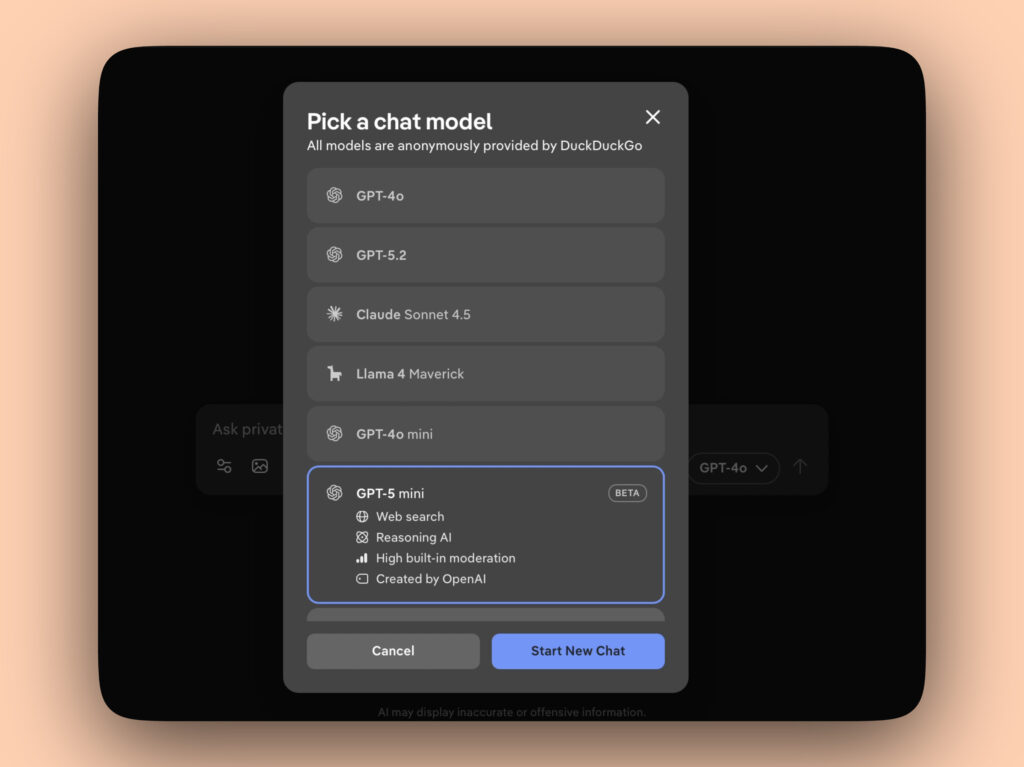
DuckDuckGo
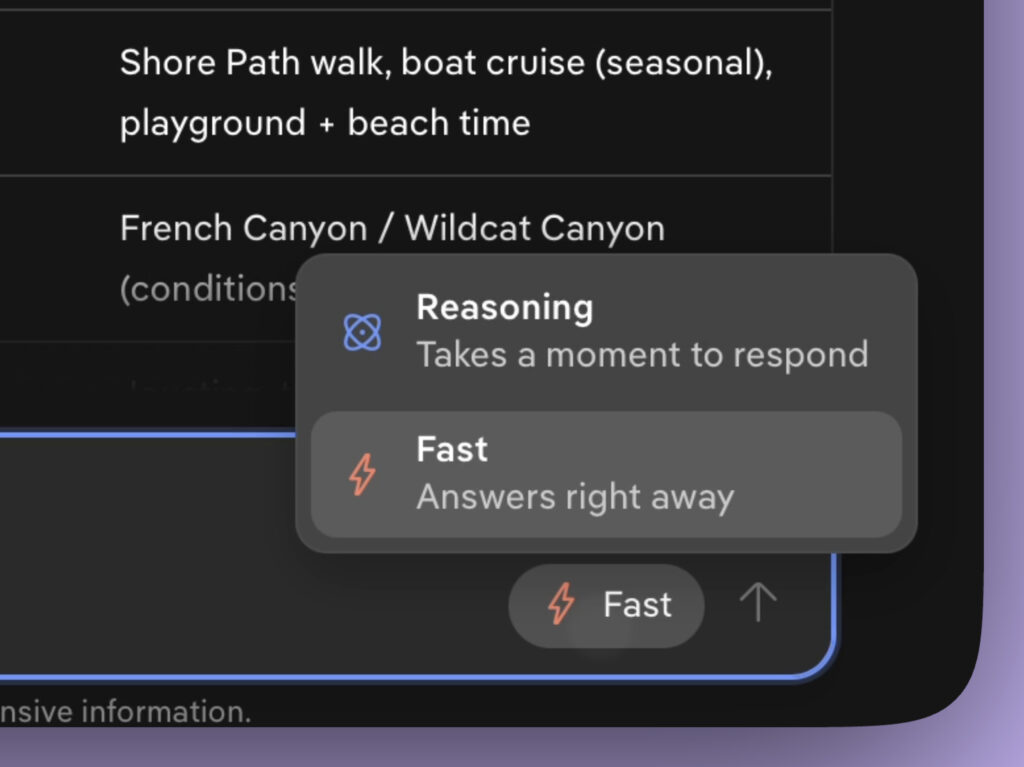
Unlike traditional AI models that generate responses immediately, reasoning models follow a more deliberate process. They first reinterpret the user’s query, explore possible approaches, and, when needed, retrieve additional information from the web before composing a final answer. This structured workflow typically results in slower responses, but DuckDuckGo says it significantly improves accuracy and usefulness for complex tasks such as multi-step planning, code debugging, and research across multiple sources.
To give users more control, DuckDuckGo has introduced a toggle for GPT-5.2 that enables or disables this deeper reasoning mode within the same conversation. This allows users to switch between faster, conventional responses and more computationally intensive reasoning outputs depending on their needs. The company notes that while reasoning models provide more thorough answers, they may not be necessary for simple or time-sensitive queries.
DuckDuckGo is a privacy-focused search engine provider founded in 2008, known for minimizing data collection and avoiding user tracking. In recent years, it has expanded into AI-powered tools under the Duck.ai platform, positioning itself as an alternative to mainstream AI services that often require user accounts and may use interaction data for model training. Duck.ai integrates models from multiple providers, including OpenAI, Anthropic, Meta, and others, while anonymizing user requests through proxying and stripping identifying metadata.
The addition of reasoning models builds on a series of recent Duck.ai updates, including real-time voice chat and AI-powered image editing, both of which are designed with strict privacy safeguards. As with previous features, DuckDuckGo emphasizes that AI interactions are optional and that user data is not stored or used to train underlying models. Any data shared with third-party providers is subject to contractual limits, including deletion requirements and restrictions on reuse.
Users interested in trying the new models can access them directly through Duck.ai, with feedback options available under the platform’s settings menu.
For those using Duck.ai, it is advisable to enable reasoning mode selectively, particularly when handling sensitive decisions, technical troubleshooting, or research tasks, and to review cited sources to validate outputs.



Leave a Reply