
A malvertising operation dubbed MoldyRoost used more than 480 ad domains to target iPhone users in over 47 countries.
On a vulnerable iPhone, simply loading the page behind one of the ads can trigger an attack capable of stealing cryptocurrency wallet recovery phrases, saved passwords, and private messages.
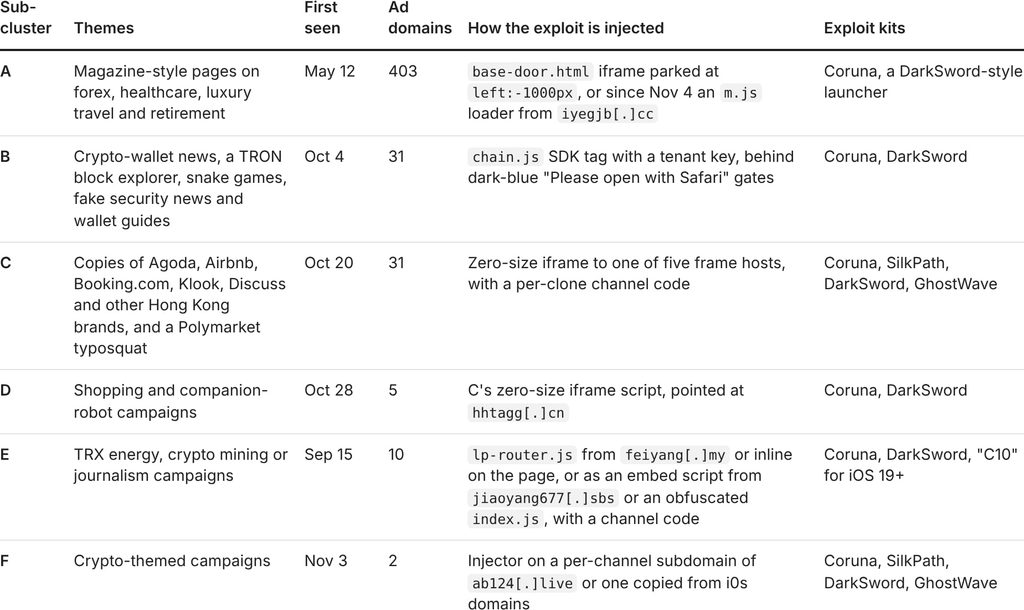
Ad security firm Confiant tracked six clusters of activity between May 12 and November 17, 2026, after finding source code left exposed on one of the operation’s servers, showing how the attackers tied stolen data to the ad campaigns that brought victims in.
Confiant
A fake travel ad can hide an iPhone exploit
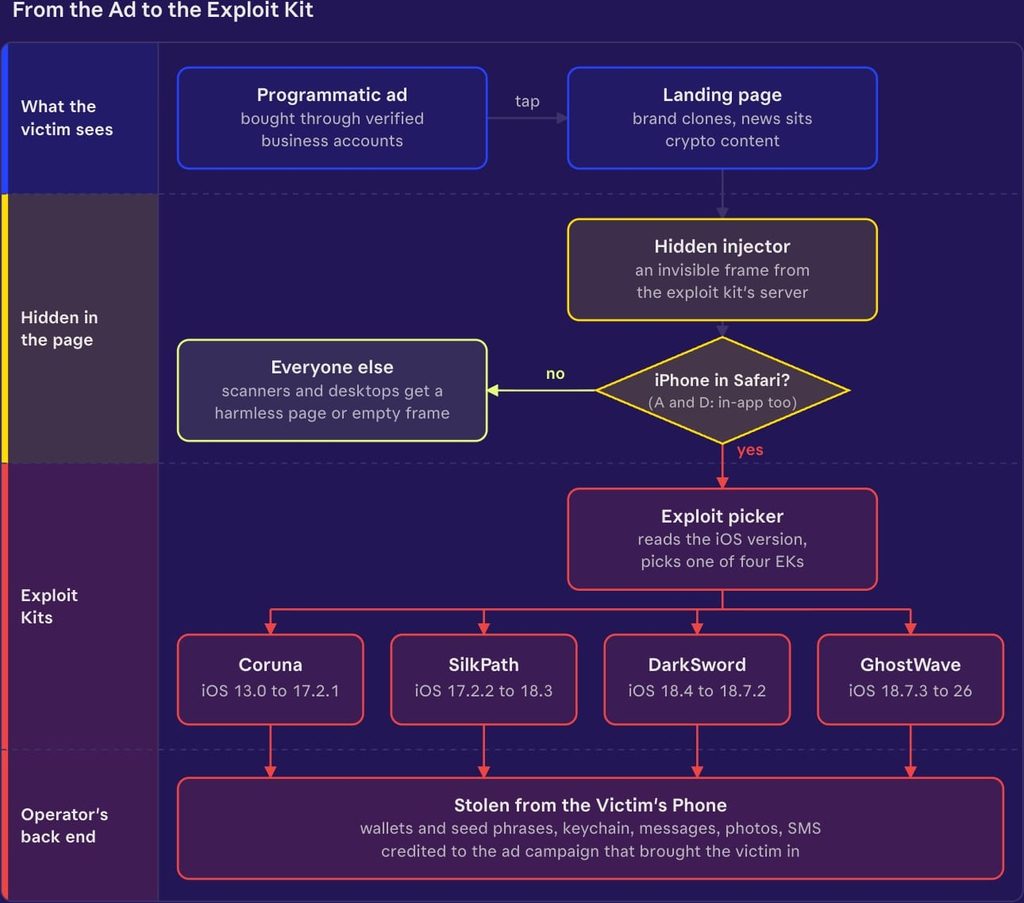
MoldyRoost buys ads through automated ad platforms and uses a technique called cloaking to control who sees the malicious content. The landing pages can show ordinary content to visitors on other devices while secretly loading an exploit matched to a visitor’s iOS version. Some campaigns can also reach users through browsers built into apps such as Facebook and Instagram.
One Cantonese-language ad sent users to a copy of Agoda’s Hong Kong website. As the travel site appeared to load, a hidden frame launched the attack. A progress bar stalled anyone who tapped the page before sending them to the real Agoda site. Other campaigns used fake Cloudflare verification screens to keep visitors on the page while the exploit ran in the background.

Confiant
Spyware-grade exploits repurposed for crypto theft
The campaign uses Coruna and DarkSword, two iPhone exploit kits that Google documented in March. Coruna targets iOS 13.0 through 17.2.1, while DarkSword supports iOS 18.4 through 18.7. Apple had patched all six vulnerabilities used by DarkSword by the release of iOS 26.3.
Both kits also appeared in the separate November 16 Optimizely supply-chain attack, which delivered them through hijacked website scripts.
Coruna can search notes and images for wallet recovery phrases and QR codes and target apps such as MetaMask, Phantom, and Trust Wallet. DarkSword can collect wallet data alongside iMessage, WhatsApp, and Telegram data, saved Wi-Fi passwords, and location history. The exposed code showed that the operators updated their tools when wallet apps changed and built separate payloads so the backend could credit stolen data to the right campaign. Confiant said the design could support affiliates, though it remains unclear who runs each cluster.
Confiant
Confiant also found references to two other exploit kits, SilkPath and GhostWave, and code that routes devices running iOS 26 down a separate path. The researchers recovered no iOS 26 exploit code and could not verify whether those paths could compromise a device.
iPhone users should install the latest iOS update available for their device under Settings → General → Software Update and enable automatic updates. When an ad leads to a familiar service, open the official app or go directly to the service’s website.



Leave a Reply