

HUMAN Security says it disrupted BADBOX 3.0, an ad fraud operation that used compromised streaming boxes to play hidden video ads and sell access to their owners’ home internet connections.
At its peak, the operation generated roughly 40 billion requests a day, inviting advertisers to bid for ad placements.
That was more than triple the volume of the previous record holder, VASTFLUX, and accounted for more than 4% of the connected TV ad traffic HUMAN monitored at the time. HUMAN called it the largest publicly disclosed ad fraud operation by bid volume.
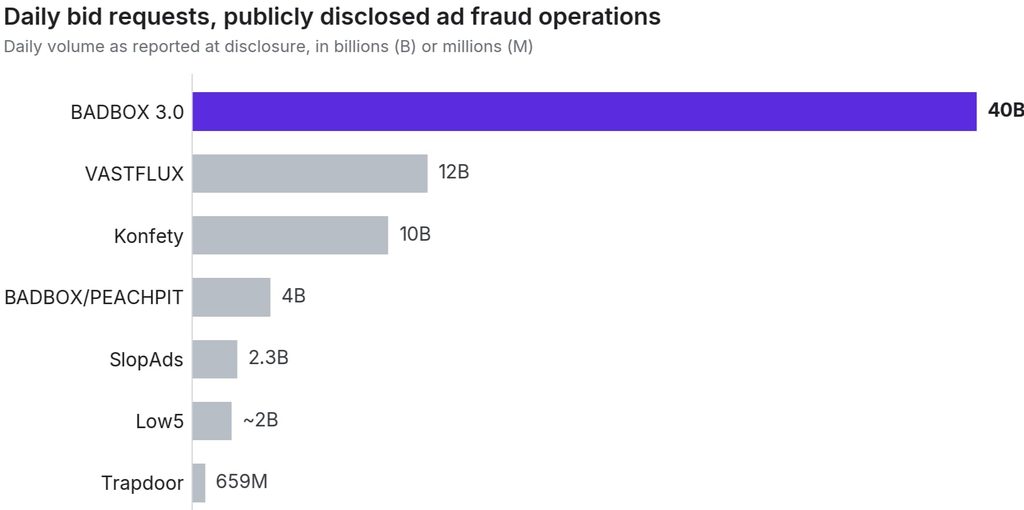
HUMAN’s Satori team traced the operation to a backdoor packaged as a system app. The backdoor fetched fraud modules from public code repositories, where researchers found tools from earlier BADBOX campaigns alongside new ones. By mid-2026, the team had spotted a surge in ad requests claiming to come from a legitimate streaming app.
The affected hardware consisted mainly of inexpensive, off-brand streaming boxes made in China and sold internationally. They ran versions of the Android Open Source Project without Google Play Protect certification. Satori linked the malware catalog to Chinese electronics manufacturer TXCZ, citing a company domain that hosted payloads and supplied hidden-ad settings, as well as modules that checked for TXCZ-specific device properties.
Hidden ads and rented home connections
The malware played video ads outside the visible screen while sending requests that impersonated legitimate streaming apps. To advertisers, the requests looked like opportunities to reach viewers using familiar apps on home internet connections. In one impersonated app’s case, about 80% of US requests came from IP addresses that researchers flagged as residential proxy exits.
HUMAN also found fabricated requests that claimed a streaming service had inserted an ad into a viewer’s stream. In those cases, the supposed viewer device did not exist, and no ad played.
The same malware catalog could enroll compromised boxes in any of 11 residential proxy networks without the owners’ consent. Those services let customers route traffic through someone else’s home connection, using the owner’s bandwidth and public IP address. Ten networks were commercially available. HUMAN says the eleventh, PXYEDGE, is a rebrand of IpMoYu, a proxy network the BADBOX operators ran in the previous campaign.
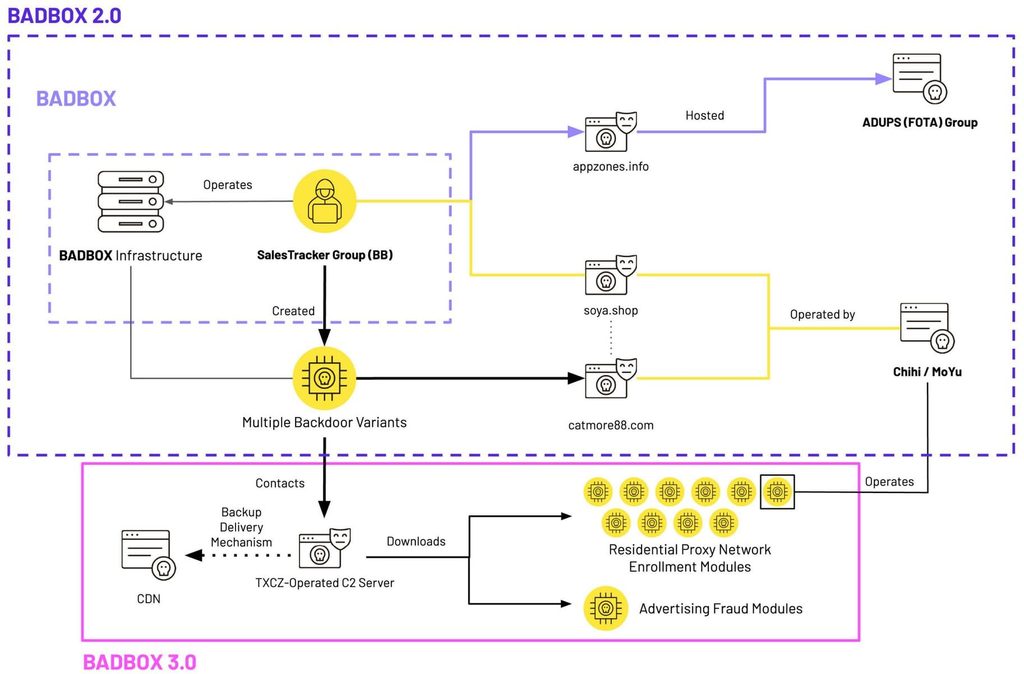
A separate Google-led takedown of the XCPE botnet also hit several domains that controlled parts of BADBOX 3.0, according to HUMAN. Google said XCPE had enrolled more than 1.3 million set-top boxes.
HUMAN recommends buying streaming boxes from established brands and using official app stores. If your box has the Google Play Store, check its certification under Profile → Settings → About. Google also maintains a list of certified devices through the store.



Leave a Reply