
WhatsApp has introduced a new security feature designed to make users think twice before starting conversations with unfamiliar phone numbers.
The new “trust warning,” first spotted by WABetaInfo, appears before a chat is opened and provides contextual information that could help users identify potential scams.
The warning is being rolled out to users on both Android and iOS as part of Meta’s broader effort to reduce scams that exploit trust and social engineering. Unlike existing protections that react after suspicious activity begins, the new prompt intervenes before the first message is sent.
WhatsApp is the world’s largest messaging platform, serving more than two billion users globally. The service has increasingly focused on anti-fraud protections in recent years as scammers continue to abuse messaging platforms to impersonate friends, family members, businesses, and customer support representatives.
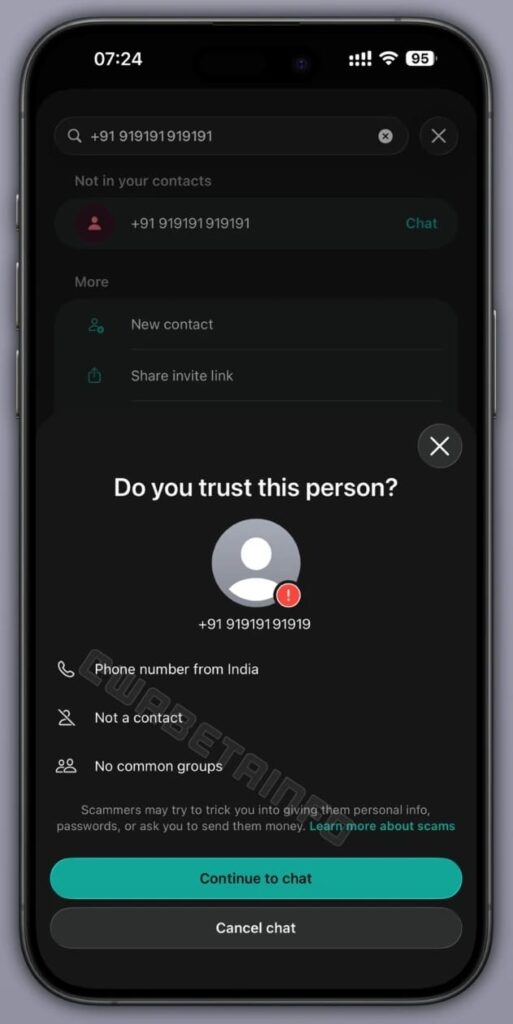
The new prompt appears when a user attempts to start a conversation with a phone number they have never messaged before and that WhatsApp does not recognize as trusted.
Instead of opening the chat immediately, WhatsApp displays a confirmation screen showing information intended to help users evaluate whether the person is legitimate. The warning may include:
- The country where the phone number is registered.
- Whether the number is already saved in the user’s contacts.
- Whether the two users share any WhatsApp groups.
Users can then choose either to continue the conversation or cancel without sending a message. The other party is not notified that the warning was displayed or that the user decided not to proceed.
Many scams rely on urgency and impulsive decision-making. By briefly interrupting the process of contacting an unfamiliar number, WhatsApp aims to provide users with enough context to recognize warning signs before engaging.
Rolling out now
The trust warning is currently rolling out to users running the latest versions of WhatsApp for Android and iOS. Meta has not publicly detailed the exact criteria used to determine when the warning is shown, although registration in a different country and the absence of an existing relationship appear to be among the signals considered.
To stay protected, users should verify unexpected new numbers through an independent channel before initiating a conversation, especially if someone claims to have changed their phone number. Calling the person using a previously known number, confirming through mutual contacts, or otherwise verifying their identity can help prevent impersonation and social engineering attacks.



Leave a Reply