
Your Mac may be a fortress, but even the strongest walls have glass windows. While Gatekeeper and XProtect keep the malware out, they can't stop your ISP from tracking your every move or streaming sites from blocking your favorite shows. Think of a virtual private network (VPN) as the invisible mode your MacBook was missing.
From the latest MacBook Pro to the desk-bound Mac mini, we’ve found the five tools that actually work well with macOS.
Best VPNs for macOS: Quick comparison
Before diving into the detailed reviews, here’s a quick snapshot of how the best VPNs for Mac stack up in 2026. We’ve focused on the metrics that matter most for a stable VPN connection, including pricing, server coverage, and native Apple Silicon support.
| NordVPN – A polished Mac VPN with a native Apple silicon app, fast speeds, and strong privacy features, making it a great pick for secure everyday browsing, streaming, and travel. 75% Off coupon > |
| Surfshark – A budget-friendly Mac VPN that stands out for its unlimited simultaneous connections, easy-to-use macOS app, and strong performance for streaming and general privacy. Visit site > |
| ExpressVPN – A premium Mac VPN known for its excellent reliability, intuitive interface, and consistently strong performance, especially for users who want something simple and dependable. Visit site > |
| Proton VPN – A privacy-focused Mac VPN with a well-designed app, strong transparency credentials, and advanced security features, making it especially appealing to users valuing trust and control. Visit site > |
| IPVanish – A capable Mac VPN that offers good speeds, a clean app experience, and unlimited device connections, making it a practical choice for households with lots of devices. Visit site > |
Why trust us? We’re Apple purists. If a VPN feels like a clunky Windows port or drains your battery faster than a Chrome tab, it’s out. We only recommend apps that feel Mac-native, sleek, swift, and intuitive.
How do we test? We pushed these VPN services to the limit on M2/M3 MacBook Airs and iMacs running macOS Sonoma and Ventura. Our “golden rule” testing includes:
- Apple Silicon optimization: We prioritize apps with native M-series chip support for peak efficiency.
- Privacy audits: We only trust providers with independently verified no-logs policies.
- Speed and streaming: We test 20+ global locations to ensure 4K streaming on Netflix and Disney+ without the spinning wheel of doom.
- Mac integration: We verify how well features like the kill switch work alongside Apple’s iCloud Private Relay.
Key takeaways from the data:
- Post-quantum security: If you’re worried about future-proofing, NordVPN and ExpressVPN lead the pack with post-quantum protection.
- Elite privacy infrastructure: Proton VPN stands out for privacy purists; their Plus plan offers Secure Core architecture and NetShield, which blocks ads and malware at the DNS level before they ever reach your Mac.
- Risk-free testing: Every provider on this list offers a 30-day money-back guarantee. This allows you to test their premium speeds and streaming-unblocking capabilities on your home network without any financial risk.
Why your Mac needs a VPN
Apple’s security is world-class, but it has boundaries. While macOS protects your hardware from malware, it doesn't shield your online identity.
Even if you're running the latest macOS, here is why a dedicated VPN service is essential for your MacBook or iMac:
- System-wide encryption: Unlike iCloud Private Relay (which only protects Safari), a VPN secures everything, including your Mail app, Slack, Zoom, and system updates.
- ISP blindness: Stop your internet service provider (ISP) from logging your browsing history or throttling your speeds when they see you're gaming or streaming.
- Global streaming access: Easily hop borders to unblock Netflix US, BBC iPlayer, or Disney+ libraries that are usually restricted in your region.
- Public Wi-Fi shield: Coffee shops and airports are playgrounds for data sniffers. A VPN creates an encrypted tunnel that makes your Mac invisible to hackers on the same network.
- Safe torrenting and P2P: Hide your real IP address to avoid bandwidth throttling and keep your downloads private.
- Travel without limits: Access your home banking and local services without triggering “suspicious login” alerts while abroad.
- Bypass censorship: Use obfuscated servers to stay connected in restrictive environments like workplaces, universities, or countries with heavy web filtering.
Top 5 VPNs for macOS: Our recommendations
Now let’s break down each of our top picks from the best VPNs for Mac and see how they perform for Apple users in everyday use. We’ll look at how each VPN server network handles speed, stability, and overall VPN connection quality across different Mac devices.
First up is our top overall choice for Mac users in 2026.
NordVPN – Best overall Mac VPN

| Price range | $3.49 – $15.99/month |
| Apple Silicon optimization | Native M-series chip support (no Rosetta 2 required) |
| Ecosystem integration | Apple Keychain and Touch ID login support |
| Customer support | 24/7 live chat, email, and extensive Mac setup guides |
| Best deal | 75% Off Coupon > |
If you’re looking for the “Goldilocks” of VPNs, where speed, security, and a beautiful Mac interface perfectly align, NordVPN is just that. It’s our top pick for 2026 because it doesn't just work on a Mac; it feels like it was made for one.
Forget clunky, ports-from-Windows apps. NordVPN’s macOS app is sleek and optimized for Apple Silicon. This means it runs natively on your new Apple Silicon M5 chip without needing Rosetta to translate it — saving your battery life and keeping your MacBook cool. Plus, the menu bar controls let you toggle your connection without even opening the main window.
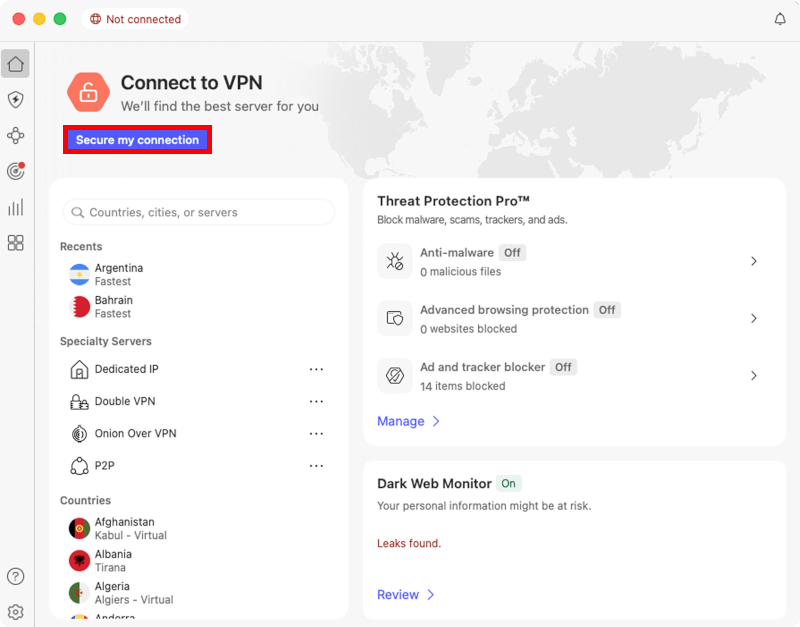
Powered by NordLynx (Nord's custom version of WireGuard), this is officially the fastest VPN we tested this year. Whether you’re hopping on a Zoom call, downloading massive creative files, or streaming The Bear in 4K from a UK server, you won’t even notice it’s running. In our 2026 tests, we saw a negligible speed drop of just 5-10% on local servers.
NordVPN isn’t just a “port” of a Windows app. It integrates with Apple Keychain and Touch ID, so you can sign in with a fingerprint rather than typing a password every time. It even respects your system’s dark mode settings.
Why NordVPN wins on macOS security:
- Post-quantum ready: Nord is future-proofing your data with post-quantum encryption, keeping your traffic safe from tomorrow's supercomputers.
- Double VPN and Onion over VPN: For when you need “Edward Snowden level” privacy by routing your traffic through two servers instead of one.
- Threat Protection: It acts like a silent bodyguard, blocking malicious ads, trackers, and malware before they even reach your Safari or Chrome browser.
- Meshnet: A genius feature for Mac users that lets you create a secure, private network between your Mac at home and your MacBook Pro while traveling.
- Dedicated IP support: Great for Mac users who work remotely; it prevents those annoying CAPTCHA loops and “suspicious login” alerts from your bank.
- Battery efficiency: Because it’s fully optimized for Apple Silicon chips, it doesn't “drain the tank” like older VPN services that rely on Rosetta 2 background translation.
Ready to lock in your privacy? Here’s the breakdown of NordVPN’s current plans and why it remains the gold standard for macOS integration:
| NordVPN plans | Basic | Complete | Prime |
|---|---|---|---|
| 1-month | $14.99/month | $19.99/month | $29.99/month |
| 1-year | $5.49/month | $6.49/month | $9.49/month |
| 2-year | $3.49/month | $4.49/month | $7.49/month |
Deal: Get 75% OFF NordVPN + 3 Months Extra >
NordVPN pros and cons
+ Pros
- Lightning-fast speeds with NordLynx
- Post-quantum ready encryption to future-proof your data
- Threat Protection Pro stopping malware, phishing, and tracking-heavy ad networks
- Netflix US, Hulu, Max, and Disney+ all work flawlessly
- 10 devices connected at once
- RAM-only servers for bulletproof privacy
- Server network across 15+ US cities
- Dedicated servers for P2P, Double VPN, and Onion over VPN
- Free Meshnet feature for creating your own encrypted network
- 24/7 live chat support
- Privacy-friendly Panama jurisdiction
- 30-day money-back guarantee across all plans
– Cons
- Hefty price hikes after the renewal
- Learning curve could overwhelm newcomers
- No support for port forwarding
NordVPN's Cyber Deal is live:
Get 75% Off NordVPN with the coupon below + 3 months extra:
(Coupon is applied automatically; 30-day money-back guarantee.)
Surfshark – The best value VPN for Mac
| Price range | $1.99 – $15.45/month |
| Apple Silicon optimization | Native M-series chip support (no battery drain via Rosetta) |
| Ecosystem integration | Native dark mode and menu bar “Quick Connect” |
| Customer support | 24/7 live chat, email, and YouTube tutorials |
| Best deal | 87% Off Coupon > |
If you live in an “Apple house” with a MacBook, an iPad, an iPhone, and an Apple TV in every room, Surfshark is your favorite friend. While most VPNs act like a bouncer at a club, counting every device that walks in, Surfshark throws the doors wide open with unlimited simultaneous connections.
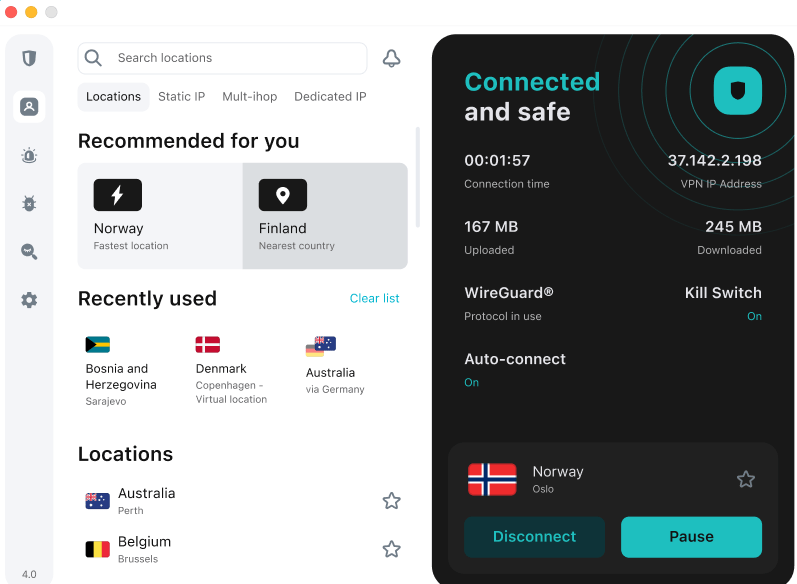
Surfshark’s biggest selling point is simple: One subscription covers everything. You can secure your MacBook Pro, your partner's iMac, the kids' iPads, and even your Apple TV without ever seeing a “too many devices” error message. At a starting price often around $2/month, it’s the most economical way to wrap your entire digital life in encryption.
| Surfshark plans | Starter | One | One+ |
|---|---|---|---|
| 1-month | $15.45/month | $17.95/month | $20.85/month |
| 1-year | $3.19/month | $3.39/month | $6.99/month |
| 2-year | $1.99/month | $2.49/month | $4.19/month |
Deal: Get 87% OFF Surfshark 2-year plans >
Surfshark doesn't just work on a Mac; it looks gorgeous doing it. The app fully supports native dark mode and features a “Quick Connect” button that lives in your menu bar.
Why Surfshark is a top 2026 pick:
- 10Gbps Infrastructure: Most of their 4,500+ servers have been upgraded to 10Gbps ports, meaning even with “unlimited” devices connected, your speeds stay high enough for 4K streaming.
- CleanWeb 2.0: This isn't just an ad-blocker; it's a “Safari-saver.” It blocks those annoying cookie pop-ups and trackers before they even load on your Mac.
- Rotating IP: A unique privacy feature that automatically changes your IP address every few minutes while keeping your VPN location the same. It makes you nearly impossible to track across the web.
- Dynamic MultiHop: This lets you pick two different server locations to tunnel through (e.g., New York to London), doubling your encryption for extra-sensitive tasks.
While it’s a hair slower than NordVPN (averaging a 15-20% speed drop in our tests), it’s still plenty fast for lag-free gaming on a Mac mini or binge-watching Ted Lasso on Apple TV+.
Surfshark pros and cons
+ Pros
- Unlimited device connections
- Budget-friendly long-term plans
- Works swimmingly with Netflix, Hulu, Disney+, and 30+ other libraries
- Swift and stable speeds with WireGuard and 10 Gbps US servers
- Diskless servers and an audited no-logs policy
- CleanWeb 2.0 blocks ads, trackers, malware, and cookie pop-ups
- Alternative ID generates masked names, birthdates, and emails for safer signups
- Dynamic MultiHop for extra privacy
- IP Rotator automatically changes your IP periodically
- 24/7 live chat support
– Cons
- Monthly plan is pretty pricey
- Prices spike after the discount period
- Features aren't consistent across apps
- 9-Eyes location remains a drawback
Surfshark VPN Coupon:
Get 85% off Surfshark VPN plus an additional 3 months extra with the coupon below:
(Coupon is applied automatically; 30-day money-back guarantee)
ExpressVPN – The most user-friendly Mac VPN

| Price range | $2.44 – $12.99/month |
| Apple Silicon optimization | Native M-series chip support (optimized for Lightway protocol) |
| Ecosystem integration | Menu bar “Smart Location” and Apple Keychain support |
| Customer support | 24/7 live chat concierge, email, and 24/7 video guides |
| Best deal | 81% Off Coupon > |
If you’re the type of person who wants your tech to work (no tinkering, no troubleshooting, no headaches), then ExpressVPN is your “gold standard.” It is the ultimate premium pick for Mac fans who want superb speed and a minimalist interface that stays out of your way so you can get back to your actual work (or your latest Netflix binge).
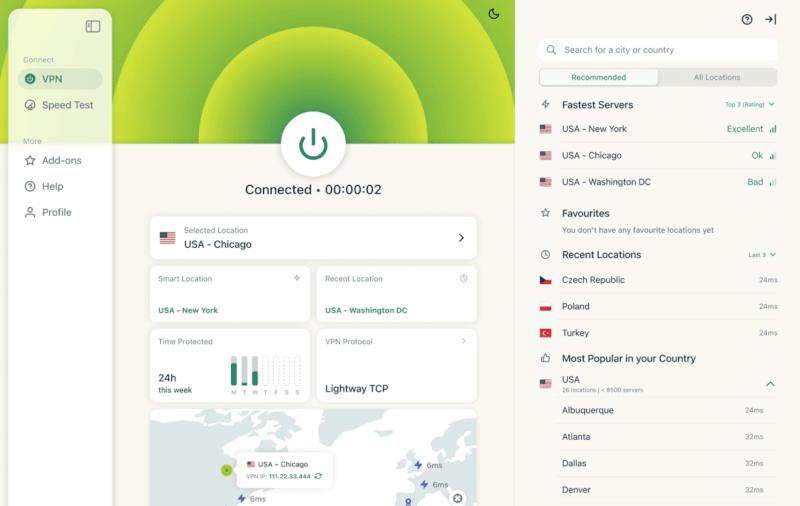
ExpressVPN’s macOS app is the definition of minimalist. There are no cluttered maps, confusing toggle switches, or complex protocol menus to navigate. Instead, you get a single, satisfying power button and a “smart location” feature that picks the fastest server for you in milliseconds. It’s the perfect companion for a MacBook Air user who wants elite protection without the steep learning curve.
While other VPNs rely on off-the-shelf technology, ExpressVPN built its own protocol — called Lightway — from the ground up. In our 2026 testing, Lightway was a total speed demon, connecting almost instantly and maintaining internet speeds that can exceed 950 Mbps. Whether you're on spotty hotel Wi-Fi or a tethered 5G connection, it handles 4K streaming on Netflix and Disney+ without a single stutter or “buffering” circle of doom.
Why ExpressVPN is the premium choice:
- Post-quantum protection: They are future-proofing your privacy. ExpressVPN was one of the first to roll out Post-Quantum encryption, ensuring your data stays safe even from future supercomputing threats.
- TrustedServer tech: Their entire network runs on RAM-only servers. Since RAM requires power to store data, every bit of information is physically wiped the second a server is rebooted. No hard drives, no lingering data trails.
- Unrivaled global reach: With servers in 105 countries, it’s the best option for Mac users who travel to remote regions or need access to niche international streaming libraries.
- Network lock: This is their world-class kill switch. If your Wi-Fi flickers for a second, Network Lock instantly freezes all traffic to ensure not a single byte of your private data leaks onto the open web.
| ExpressVPN plans | Basic | Advanced | Pro |
|---|---|---|---|
| 1-month | $12.99/month | $13.99/month | $19.99/month |
| 1-year | $4.99/month | $5.99/month | $8.99/month |
| 2-year | $2.79/month | $3.59/month | $5.99/month |
Deal: Get 78% OFF ExpressVPN 2-year plans >
In years of testing, we’ve found ExpressVPN to be the most consistent at unblocking BBC iPlayer, Hulu, and HBO, even on restrictive networks that actively try to sniff out and block VPN traffic.
ExpressVPN pros and cons
+ Pros
- Lightway protocol with post-quantum encryption
- Shuffle IP rotates your address automatically
- Split tunneling on Windows, routers, and Mac via Aircove
- Works with Netflix, Hulu, Max, Peacock, and most US streaming services
- Helpful round-the-clock live chat
- Diskless TrustedServer setup with audited no-logs policy
- Covers 8 devices at once or unlimited with Aircove router
- Pro tier adds dedicated IP and identity monitoring
- ExpressVPN Keys password manager syncs across devices
- Obfuscation built in to bypass restrictive networks
- Network Lock blocks traffic instantly if the VPN drops
- Simple, one-click interface
– Cons
- Not exactly budget-friendly price
- Split tunneling limited on Mac unless using Aircove
- Fewer multi-hop and niche features
ExpressVPN Coupon:
Sign up for the 2-year plan and get 4 months added to your subscription for free.
(Coupon is applied automatically.)
Proton VPN – Top choice for high-speed privacy

| Price range | $2.99 – $9.99/month |
| Apple Silicon optimization | Native M-series chip support (open-source Mac app) |
| Ecosystem integration | macOS widget and menu bar status support |
| Customer support | 24/7 support, email, and Reddit community |
| Best deal | 75% Off Coupon > |
If you like your software honest, open, and not dressed up in hype, Proton VPN delivers. With roots at CERN and a home base in Switzerland, it’s a natural pick for macOS users who want serious privacy instead of flashy branding.
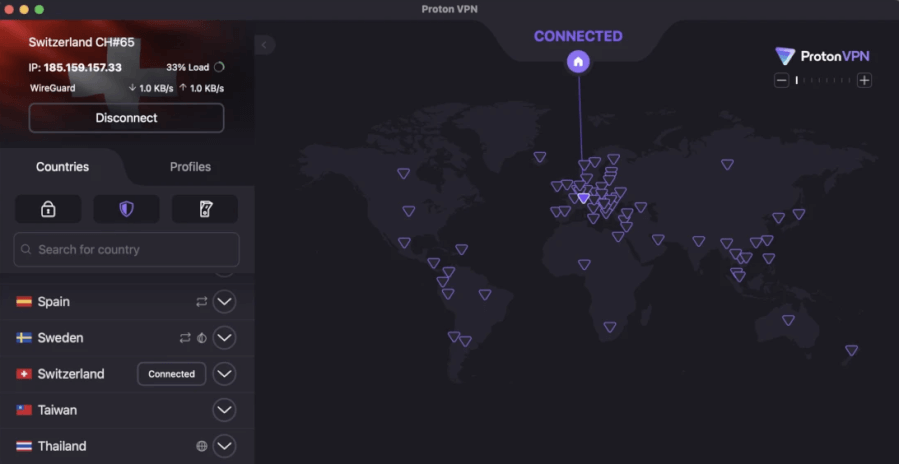
Proton VPN’s macOS app is a masterclass in transparency. Not only does it look great on a Studio Display, but it’s also 100% open-source. This means anyone can inspect their code to ensure there are no hidden backdoors. Plus, it integrates perfectly with macOS Sonoma, offering a “Quick Connect” map and custom profiles. So, you can create a one-click shortcut for “Streaming US” or “Secure Work.”
| Proton VPN plans | Proton VPN Plus | Proton Unlimited |
|---|---|---|
| 1-month | $9.99/month | $12.99/month |
| 1-year | $3.49/month | $9.99/month |
| 2-year | $2.99/month | $7.99/month |
Deal: Get 75% OFF Proton VPN 2-year plans >
For a complete experience on your MacBook, Proton VPN offers 10Gbps servers and the ability to bypass the most restrictive firewalls. It’s a showcase of security that proves why Swiss privacy is worth the investment, ensuring your browsing remains fast, private, and entirely under your control.
Why Proton wins on privacy:
- Secure core architecture: For high-stakes privacy, Proton routes your traffic through hardened servers in underground Swiss bunkers before it even reaches your exit server. It’s like a “double-lock” for your data.
- Stealth protocol: If you’re at a university or workplace that tries to block VPNs, the Stealth protocol makes your encrypted traffic look like regular web browsing to bypass firewalls.
- NetShield ad-blocker: Built directly into the Mac app, NetShield zaps malware, trackers, and those annoying “You've won an iPhone!” ads before Safari even has to deal with them.
- No logs, period: Being based in Switzerland means they are not subject to US or EU data retention laws. Their no-logs policy has been audited and verified repeatedly.
On a standard connection using WireGuard, you’ll see impressive internet speeds, roughly 85-90% of your base connection. However, keep in mind that using the “Secure Core” or “Stealth” features will slow things down a bit in exchange for that extra layer of “James Bond” level invisibility.
Proton VPN pros and cons
+ Pros
- Swiss-based privacy
- Open-source apps audited by independent security firms
- Secure Core servers route traffic through hardened nodes
- VPN Accelerator boosts long-distance US speeds
- Post-quantum encryption in the works
- Subscription plans bundle with Proton Mail, Proton Drive, Proton Sheets, and Proton Pass
- Linux CLI and refreshed GUI
- Smart TV and Apple TV apps now support NetShield
– Cons
- No RAM-based servers, like with some competitors
- No 24/7 live chat
- Secure Core routing can impact top-end speeds
- Advanced tools have a steeper learning curve
Proton VPN Coupon:
Get 70% Off Proton VPN (drops the price to only $2.99/month) with the coupon below:
(Coupon is applied automatically; 30-day money-back guarantee)
IPVanish – Best for automation and remote work

| Price range | $2.19 – $12.99/month |
| Apple Silicon optimization | Native ARM64 support (ultra-low CPU impact) |
| Ecosystem integration | “On-demand” Wi-Fi rules and Apple Keychain |
| Customer support | 24/7 live chat, email, and phone support |
| Best deal | 83% Off Coupon > |
If you want a VPN that’s smart enough to handle itself without you constantly clicking “Connect,” IPVanish is a top-tier contender. It’s a favorite for Mac fans who move between home, coffee shops, and offices, offering some of the best automation tools in the business.
IPVanish stands out with its on-demand rules. You can program the app to automatically kick in the second your MacBook joins an untrusted Wi-Fi network or hits a specific website. It’s like having a digital bodyguard that only steps in when it senses a threat, saving your battery life and keeping your connection seamless.
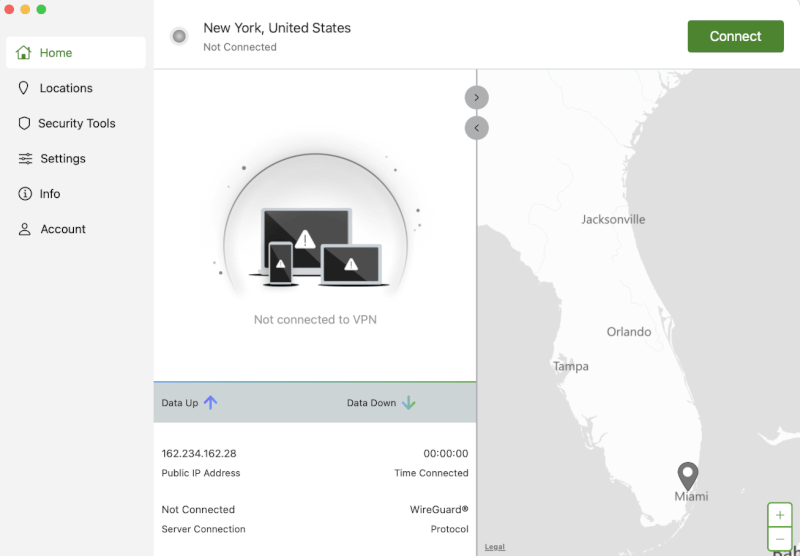
Unlike many competitors that rent space on third-party servers, IPVanish owns and operates its own server hardware. This “Tier-1” infrastructure means they have total control over security and performance. In our testing, we maintained over 90% of our baseline speeds, making it a dream for lag-free gaming on a Mac mini or streaming Masters of the Air in 4K.
Why IPVanish is a must-have for Mac:
- Domain-based split tunneling: While many VPNs struggle with this on macOS, IPVanish lets you choose specific websites to bypass the VPN while keeping the rest of your system locked down.
- Native Apple Silicon optimization: The app is built specifically for ARM64 architecture, meaning it won’t hog your RAM or drain your MacBook Air’s battery.
- Threat protection: It quietly zaps ads, malicious trackers, and shady sites in the background, keeping your Safari browsing clean and fast.
- Unlimited licenses: Just like Surfshark, one account covers every Mac, iPhone, iPad, and Apple TV in your house.
IPVanish is incredibly reliable for US-based streaming like Netflix US and Hulu. However, if you are looking for more “exotic” international libraries (like Netflix Japan), you might occasionally have to swap servers to find the right match. It's a powerhouse for performance, though some privacy purists might note its US-based jurisdiction, even with its independently audited no-logs policy.
For a clear look at plans, features, and pricing, check out the table below:
| IPVanish plans | IPVanish Essential | IPVanish Advanced |
|---|---|---|
| 1-month | $12.99/month | $14.99/month |
| 1-year | $3.33/month | $4.49/month |
| 2-year | $2.19/month | $3.29/month |
Deal: Get 83% OFF IPVanish 2-year plans >
IPVanish pros and cons
+ Pros
- Infinite connections
- Lightweight app won't hog CPU or battery
- They manage their own server hardware
- Live speed graphs for performance nerds
- Excellent ping for competitive PC gaming
- Verified no-logs for total privacy
- System-wide ad block
- Automatically triggers VPN on public Wi-Fi
- City-level control
- 24/7 live phone line for emergencies
- Blazing fast torrenting without full encryption
– Cons
- No crypto payments
- Based in the US, a 5-Eyes alliance country
- Interface could overwhelm casual VPN beginners
IPVanish Coupon:
Get 83% off IPVanish on 2-year plans with the coupon below:
(Coupon is applied automatically)
How did we test macOS VPNs?
To make sure we’re not just blowing smoke, we put each VPN through a proper digital gauntlet. We didn’t stop at marketing claims. We installed them on M2 and M3 MacBook Airs, Mac Pro workstations, and even a few Intel-based “vintage” Macs to see which ones actually deliver in day-to-day use.
Here’s what we looked for when separating the genuinely great apps from the glorified browser extensions:
- Native Apple Silicon support: If a VPN still leans on Rosetta 2 to run, it didn’t make our list. We prioritized apps built for Apple Silicon (M-series) chips, which launch faster, handle sleep and wake cycles smoothly, and avoid draining your battery while you're working from a café.
- Independent audit trail: In this space, promises mean very little without proof. Every provider we recommend has passed a recent third-party audit from firms like Deloitte, PwC, or Cure53, verifying their no-logs claims.
- Kill switch and DNS leak protection: We manually dropped VPN connections to make sure the Kill Switch responded instantly. We also ran DNS and WebRTC leak tests in Safari and Chrome to confirm your real IP stays hidden, even when your Wi-Fi acts up.
- macOS-friendly design: We looked for apps that feel right at home on macOS, with Menu Bar access, Dark Mode support, and clean integration alongside features like iCloud Private Relay. Anything that felt like a clunky Windows port was quickly ruled out.
How to set up a VPN on your Mac in 3 easy steps
In less time than it takes to make coffee, your Mac can be fully shielded. Here’s the three-step setup for macOS Sonoma and Ventura.
Choose your VPN provider and download the app
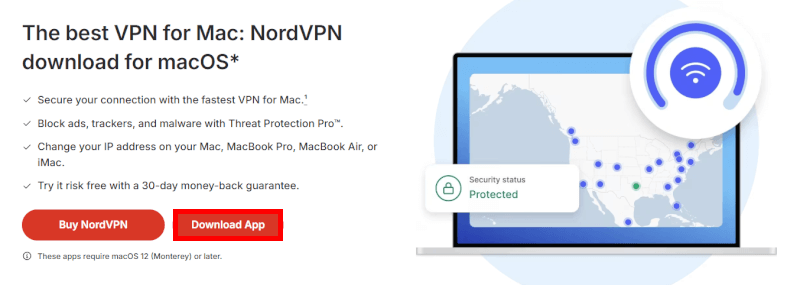
First, choose one of our top-rated providers from the list above. Always head straight to the official VPN website to download the app rather than using third-party mirror sites.
Install and grant necessary permissions
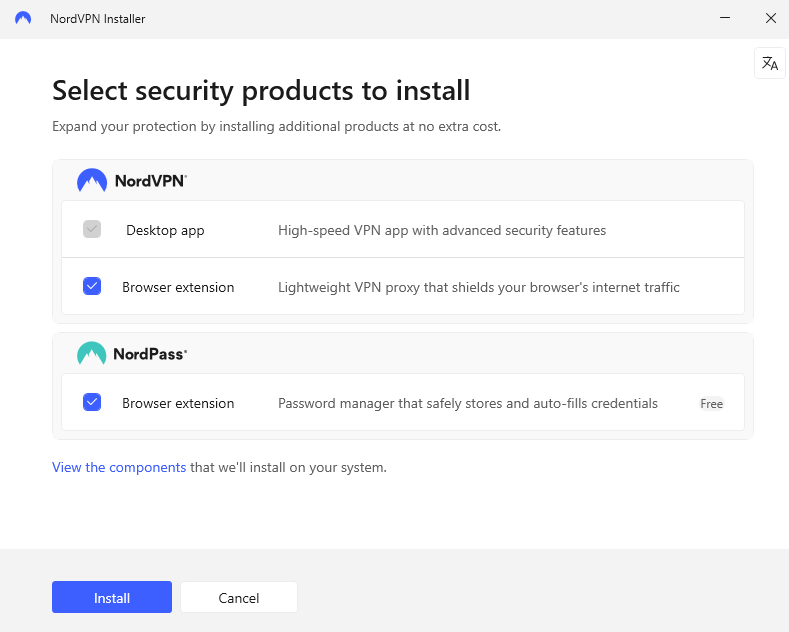
Open that .dmg file and drag the VPN icon into your applications folder like a pro. When you launch it for the first time, your Mac is going to get a little protective. It will ask for a few permissions:
- Network extensions: This lets the VPN build its secret tunnel.
- Keychain access: This keeps your login details safe so you don't have to type them every ten minutes.
- System notifications: Trust us, you want these so you know exactly when your “cloak” is active.
Connect to your preferred server
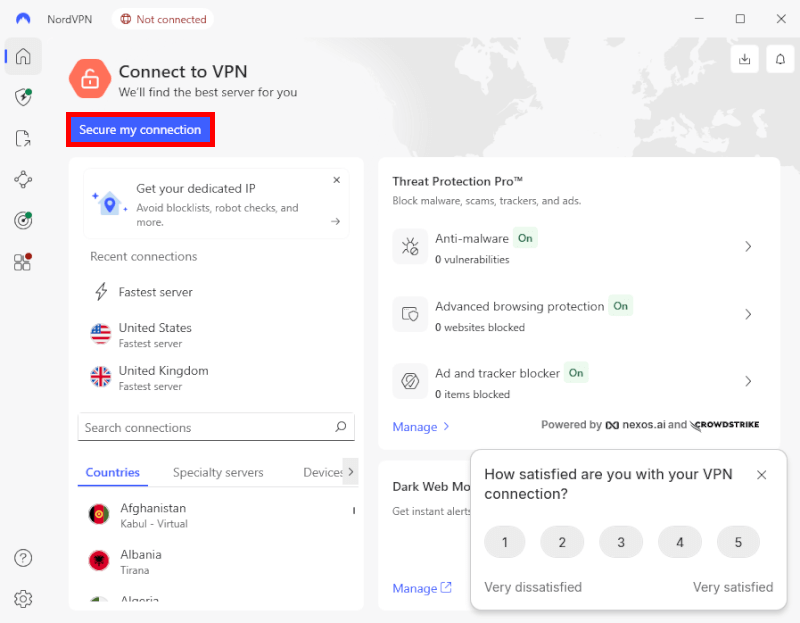
Log in with your new credentials and hit “Quick Connect.” The app will automatically find the fastest server near you.
- Feeling global? Manually pick a UK server for BBC iPlayer or a US server to unlock the massive Netflix US library.
- The “trust but verify” test: Once the light turns green, head over to WhatIsMyIP.com. If it says you’re currently chilling in Switzerland while you're actually on your couch in Jersey, congrats — you’re officially invisible!
Common Mac VPN issues and fixes
Even the most polished macOS apps can have a “Monday morning” moment. If your connection is spinning or your favorite streaming site just blocked you, don't toss your MacBook Pro out the window just yet. Most issues are fixed with a few clicks.
“VPN won’t connect” – Most likely culprits
Before you call tech support, run through this quick mental checklist. Nine times out of ten, one of these is the culprit:
- The “double check” rule: Is your actual internet working? Turn off the VPN and try to load a page. If your base Wi-Fi is down, the VPN can’t work its magic.
- Switch your tunnel: If WireGuard isn't connecting, duck into your app settings and try OpenVPN or IKEv2. Some restrictive networks (like at work or uni) block specific VPN protocols to stop people from bypassing firewalls.
- The “ghost” server: Sometimes a specific server goes down for a nap (maintenance). Simply pick a different city or hit the “Quick Connect” button again to jump to a fresh server.
- Update your gear: macOS moves fast. If you just updated to a new version of Sonoma or Ventura, your VPN app might need a patch to stay compatible. Check the “Updates” tab!
- DNS tug-of-war: If you’ve manually tinkered with your DNS settings in System Settings > Network, your VPN might be getting confused. Set your DNS back to “Automatic” and let the VPN handle the routing.
Resolving software conflicts with macOS firewall
It’s a great guard, but Apple’s built-in firewall can be a bit too strict at times. If your VPN is blocked, here’s how to give it a “VIP Pass”:
- Go to System Settings > Network > Firewall.
- Click Options.
- Look for your VPN app. If it’s not there, hit the “+” button and add it manually.
- If you use third-party tools like Little Snitch or LuLu, you’ll need to create a specific rule to let your VPN talk to the outside world.
How to completely uninstall an old VPN
Dragging an old VPN app to the Trash is like breaking up over text — it leaves a lot of messy baggage behind. VPNs leave “system extensions” and “launch agents” that can slow down your Mac or conflict with your new VPN. To truly move on:
- Use the uninstaller: Most pro VPNs (like Nord or Express) have an “Uninstall” option in their help menu. Use it! It’s much cleaner.
- The “system settings” scrub: Go to System Settings > VPN. If you see your old provider’s name still hanging around, hit the “i” and delete that configuration profile.
- The deep clean: Check your Login Items (System Settings > General > Login Items). If you see a helper app from your old VPN, toggle it off.
- The final reset: After uninstalling, restart your Mac. This clears out any lingering “kernel extensions” that were sitting in your Mac's brain.
How to get the fastest speeds on Mac
We’ve all been there… You click connect, and suddenly your gigabit fiber feels like 1990s dial-up. While a VPN will always add a tiny bit of weight to your connection, it shouldn't turn your MacBook into a paperweight.
Here is how to keep your speeds red-lined and your 4K streaming buffer-free:
Pick your protocol wisely
Think of a VPN protocol as the engine under the hood. If you're using an old one, you're driving a tractor; if you use a new one, you're in a Tesla. For 2026, the undisputed king is WireGuard (or its cousins like NordLynx and Lightway). It’s built with modern math that's incredibly light on your Mac's CPU, meaning faster downloads and way more battery life for your MacBook Air.
If WireGuard is acting up, your best backup is IKEv2. It’s actually built into macOS at the system level, making it rock-solid for switching between Wi-Fi and your iPhone’s hotspot. Save OpenVPN for the “emergency” pile — it’s super secure but tends to be the slowest of the bunch on Apple hardware.
The Apple Silicon advantage
If your Mac VPN feels sluggish, it might be living in the past. To get the best speeds on a Mac with an M-series chip, your VPN needs to speak “Apple Silicon.” If an app is still running through Rosetta 2 (Apple’s translation layer for old Intel apps), it’s going to hog your RAM and drain your battery.
You can check this in a heartbeat: Open Activity Monitor, click the CPU tab, and look at the “Kind” column for your VPN. If it says “Intel” instead of “Apple,” you’re leaving speed on the table. Head to your provider's site and download the Universal or Apple Silicon version immediately.
Swift hits for instant velocity
Sometimes the fix is simpler than you think. If things feel slow, try these “quick wins” before you start digging into the settings:
- The geography rule: Distance is the enemy of speed. If you just want privacy, connect to the closest possible server. Routing your data from New York to Singapore and back just to check your email is a recipe for lag.
- Check the “load” meter: Most premium Mac apps show a percentage next to the server. If it’s over 75%, it’s crowded. Pick a “quieter” server for a much smoother ride.
- The baseline test: Run a speed test without the Mac VPN first. If your ISP is having a bad day, no amount of VPN optimization is going to save you.
- The fresh start: Fully quitting the app and restarting it (or your Mac) clears out the “digital cobwebs” that occasionally slow down your encrypted tunnel.
Advanced features for tech-savvy users
If you’re the type of person who stays in the terminal or has a perfectly curated “Pro” setup, you aren’t just looking for a “Connect” button. You want to bend your network to your will. Modern macOS VPNs have some secret weapons, but because of Apple’s tight security, they don't always work as they do on Windows.
The split tunneling struggle (Mac edition)
Split tunneling is the dream: You route your “risky” browsing through the VPN while keeping your Plex server or wireless printer on your local connection so they don't lose touch. On Windows, it’s easy. On Mac? It’s a bit of a battle.
Apple’s “sandboxing” rules make it tough for apps to split your internet traffic. Here is the deal:
- The app store trap: If you download your VPN from the Mac App Store, split tunneling is almost certainly missing.
- The direct download fix: Providers like Private Internet Access (PIA) and Surfshark offer better split tunneling, but usually only in the version you download directly from their websites.
- The alternative: If your VPN doesn't support app-based splitting, look for browser Extensions. You can run the VPN inside Chrome for your research while keeping Safari on your local ISP connection.
Double VPN (multi-hop)
Need to be invisible? double VPN (or multi-hop) sends your data through two servers in two different countries. Your Mac talks to a server in Switzerland, which then talks to a server in Iceland, which then talks to the site you're visiting.
- The perk: Even if one server were somehow compromised, your real IP is still hidden behind the other one. It’s a favorite for journalists and activists.
- The trade-off: Since you’re encrypting everything twice and traveling double the distance, your speeds will take a hit. It’s perfect for secure messaging, but overkill (and too slow) for watching The Morning Show in 4K.
Mastering the kill switch
A VPN without a kill switch is like a car without brakes. If your Wi-Fi flickers for a split second, your Mac will instinctively try to reconnect using your real, public IP address. A kill switch stops that instantly by “killing” your internet until the VPN tunnel is back up.
- System-level: Blocks everything on your Mac. ExpressVPN’s “Network Lock” and NordVPN are masters of this.
- App-level: Only kills specific apps, like your Torrent client, while letting your Slack or Zoom stay active. NordVPN offers this granular control on its macOS app.
Other VPNs for macOS worth considering
While our top 5 are the heavy hitters, the macOS VPN world is a big place. So, whether you’re a total beginner who wants a guided experience or a privacy radical who wants to stay off the grid, these contenders might just be your perfect match.
| CyberGhost – Offers one-click access to streaming-optimized servers in its Mac app, backed by a generous 45-day money-back guarantee, making it ideal for complete beginners. |
| Mullvad – Stands out with its no-email signup and randomly generated account IDs, making it a top choice for absolute anonymity. |
| Private Internet Access – Delivers advanced features like split tunneling and port forwarding on macOS, making it best suited for power users. |
CyberGhost: The “training wheels” champion
If the thought of picking a server based on “latency” or “load” gives you a headache, CyberGhost is your aspirin. Their Mac app is genius: It literally labels its servers by what they do best. Want to watch Netflix US? There’s a button for that. Want to download a massive file? Click the “Torrenting” tab.
With over 11,000 servers, they have one of the biggest fleets in the game. While it’s a tiny bit slower than NordVPN, CyberGhost gives you a massive 45-day money-back guarantee (the longest in the industry), so you can really take it for a long test drive on your MacBook.
Mullvad: The privacy purist’s dream
Mullvad is the “anti-corporate” Mac VPN. They don't want your name, your email, or even your password. When you sign up, they give you a random number, and that’s it — you’re in. You can even pay with cash in an envelope or crypto to stay truly off the map.
The Mac app is lean, mean, and strictly open-source. It uses a rock-solid WireGuard implementation that is incredibly light on your Mac's CPU. They don't do “sales” or “Black Friday deals”; it’s a flat €5 per month forever. If you distrust big tech and want a VPN that acts like a ghost, Mullvad is the one.
Private Internet Access: The tinkerer’s toolkit
If you like to see exactly what’s happening under the hood of your macOS network, PIA is a dream. It offers some of the most granular settings available on Mac, including the ability to switch between AES-128 and AES-256 encryption to balance speed and security.
It is also one of the few providers that still offers functional split tunneling on macOS, allowing you to exclude specific apps from the VPN tunnel. With a massive server count and a proven no-logs policy in court, it's a powerhouse for those who aren't afraid of a few extra menus.
Free VPNs for Mac
We get it, “free” is an attractive price tag. But in the VPN world, if you aren't paying for the product, you usually are the product. While your Mac stays shiny and secure, a shady free VPN can be a literal open door for data harvesters.
Before you hit “Install” on that random freebie in the App Store, here is the 2026 reality check on what you’re actually signing up for:
- The data hunger: Many free VPNs stay in business by logging your browsing habits and selling that “anonymous” data to advertisers. It defeats the entire purpose of a VPN.
- The “buffer” wheel of doom: To nudge you toward a paid plan, free tiers often throttle your speeds. Forget 4K streaming; you’ll be lucky to load a 720p YouTube video without the spinning circle.
- The tiny data cap: Most free Mac VPNs give you a measly 2GB to 10GB per month. On a modern MacBook, you can burn through that in a single afternoon of Zoom calls or Netflix.
- The “proxy” trap: Beware of built-in VPNs like the one in the Opera browser. These are often just proxies — they hide your IP in the browser but don't encrypt your Mail, Slack, or system updates.
- Security features and gaps: Free services rarely invest in high-end features like kill switches or post-quantum encryption, leaving your Mac vulnerable the second your Wi-Fi flickers.
Final verdict: Which Mac VPN should you pick?
After grueling tests on everything from the ultra-portable MacBook Air to the powerhouse Mac Studio, the results are in. Mac is a fortress, but these five VPNs are the “invisible cloaks” that complete your security setup.
Here is the quick-fire breakdown to help you pick your winner:
- The best overall: NordVPN is our #1 pick for 2026. It strikes the perfect balance of Apple-esque design, native M-series chip speed, and a massive server network.
- The best value: Surfshark is the undisputed king for families. With unlimited simultaneous connections and a price tag that’s cheaper than a latte, it secures every Mac, iPhone, and iPad in your house for one low price.
- The best for speed: ExpressVPN is the concierge pick. Its custom Lightway protocol is a speed demon, making it the most reliable choice for travelers who need to unblock Netflix or Disney+ from a hotel Wi-Fi.
- The best for privacy: Proton VPN is for the transparency purists. With Swiss-based servers, open-source apps, and Secure Core architecture, it’s the ultimate high-security vault for your digital life.
- The best for automation: IPVanish is the choice for the mobile pro. If you want a VPN that automatically guards your MacBook the second you join a coffee shop Wi-Fi, IPVanish’s “on-demand” rules are unbeatable.
Don't just take our word for it. Every provider on this list offers a 30-day money-back guarantee, and you can use our special NordVPN coupon below to get started for less:
NordVPN's Cyber Deal is live:
Get 75% Off NordVPN with the coupon below + 3 months extra:
(Coupon is applied automatically; 30-day money-back guarantee.)
Best VPN for Mac FAQs
Does macOS have a built-in VPN?
Technically, your Mac has the “plumbing” for a VPN, but not the service itself. You can find VPN settings in System Settings > Network, but you still need a subscription from a provider like NordVPN or ExpressVPN to make it work. Apple’s iCloud Private Relay is a nice privacy bonus, but it only protects Safari and won't help you watch international Netflix.
Will a VPN slow down my MacBook's internet?
Yes, but if you’re using a top-tier provider, you’ll barely notice. Think of it like a small “speed tax” for your privacy. Using modern VPN protocols like WireGuard, you can expect a minor 5–15% drop on local servers. If your speeds plunge by 55% or more, you’re likely on a crowded server or using an outdated “free” VPN.
Is it legal to use a VPN on a Mac?
In the US, UK, Canada, and most of the world: Absolutely. VPNs are essential tools for privacy and business. However, they aren't a “get out of jail free” card — illegal acts (like hacking or fraud) are still illegal whether you're behind a VPN or not. A few countries, like China and Russia heavily restrict them, so check local laws if you're traveling.
Is iCloud Private Relay the same as a VPN?
Not even close. Private Relay is like “VPN lite”; it only protects your browsing in Safari. Your Mail app, Spotify, Zoom calls, and system updates are all left out in the cold. If you want whole-Mac protection and the ability to change your location to watch sports or movies, you need a full-featured VPN service.

Leave a Reply