
In the upcoming iOS 26.3 update, Apple is introducing a new privacy setting that restricts how precisely cellular networks can track a user’s location.
The feature, called Limit Precise Location, is part of a broader move to enhance hardware-level privacy protections without affecting user experience or emergency functionality.
The capability, which first appeared in iOS 26.3 Beta 3, is expected to become publicly available in early February. According to Apple, this setting reduces the granularity of location data that mobile carriers can access, limiting them to neighborhood-level accuracy rather than pinpointing users at the street or building level. It does not interfere with device signal quality, app-based location services, or location sharing via apps like Find My.
The Limit Precise Location feature is designed to restrict the location data carriers traditionally derive from cell tower triangulation and modem-level metadata. When enabled, the setting prevents the carrier from obtaining fine-grained geolocation data that might otherwise be used for network diagnostics, user analytics, or commercial profiling. Emergency call services remain unaffected by this restriction, preserving full access to accurate location when needed most.
Apple’s move marks a significant shift in how mobile devices handle location privacy at the hardware level. While mobile apps have long required user permission to access GPS data, carriers have historically received passive, yet detailed, location information through the network stack.
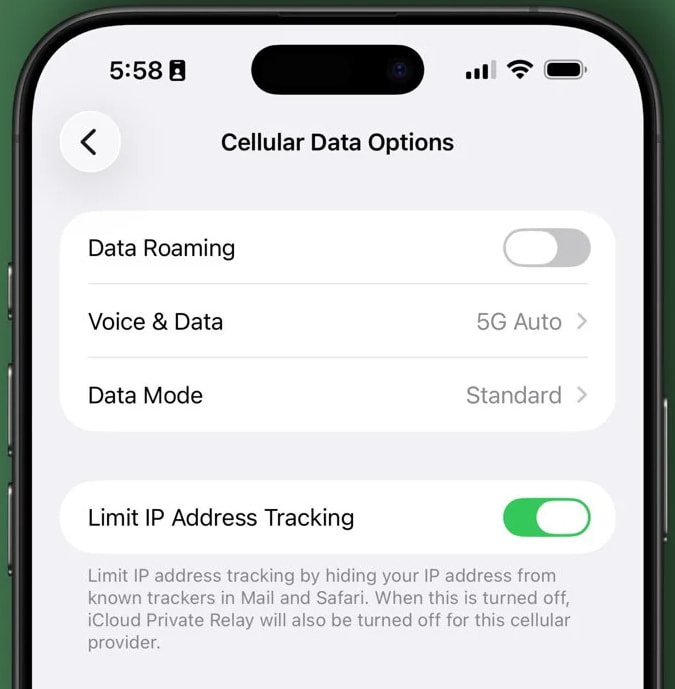
The setting can be found under Settings > Cellular > Cellular Data Options > Limit Precise Location and may require a device restart after activation.
Zeera Wireless
This new setting is only available on select hardware models equipped with Apple’s latest baseband modem chipsets, specifically the iPhone Air, iPhone 16e, and iPad Pro (M5) Wi-Fi + Cellular. These devices use Apple’s in-house C1 or C1X baseband silicon, which supports advanced privacy controls at the modem layer. Devices with older modem hardware will not support the feature.
Additionally, carrier support is required for the setting to be functional. Initial compatibility is limited to:
- United States: Boost Mobile
- United Kingdom: EE and BT
- Germany: Telekom
- Thailand: AIS and True
Users on unsupported networks may see the toggle greyed out, even if they have compatible hardware.
Other updates in Beta 3 include a reworked Share Sheet interface and the discovery of a new Transfer to Android migration tool, hinting at ongoing collaboration between Apple and Google for smoother cross-platform transitions.



Leave a Reply