

OpenAI’s advertising infrastructure can link activity on third-party advertiser websites to a user’s ChatGPT account through a cross-site cookie called __obi.
The mechanism resembles established ad-tech tracking systems, but its use around an AI assistant raises additional privacy questions because ChatGPT conversations can be highly sensitive.
Independent researcher ‘Buchodi’ reproduced the behavior on Chrome for Android using two independent traffic-capture methods and compared the results with several months of observed traffic covering 936 advertiser pixels across 1,029 hostnames.
The process begins on ChatGPT, where the client generates a random identifier and requests a short-lived signed token from OpenAI. That token contains both the identifier and a subject representing either a logged-in account or an anonymous device. ChatGPT then sends the token to bzr.openai.com, which sets __obi as a .openai.com cookie with a one-year lifespan and SameSite=None; Secure, allowing browsers that permit third-party cookies to send it during cross-site requests.
Advertisers buying ChatGPT ads can place OpenAI’s tracking SDK on their websites. When those pages load resources from OpenAI or submit conversion events to bzr.openai.com, the browser can automatically attach __obi. The researcher observed the cookie being transmitted from sites including Chewy, Wayfair, ThriftBooks, Eventbrite, HelloFresh, Coursera and SeatGeek.
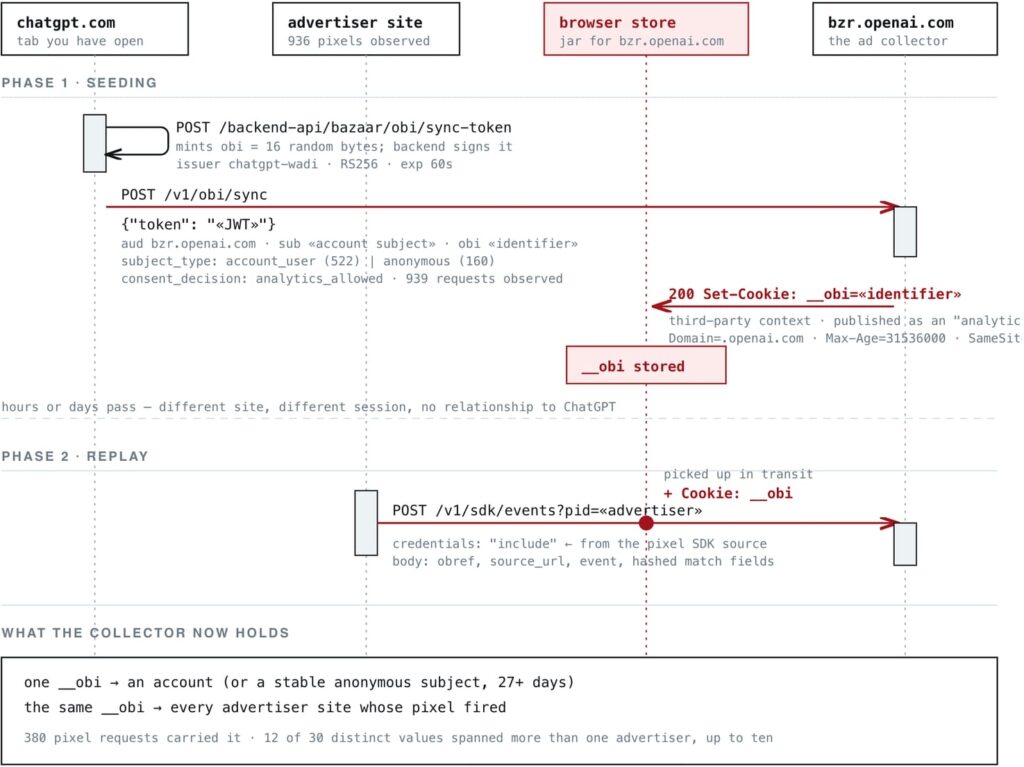
OpenAI operates ChatGPT and a broader portfolio of AI services used by consumers and businesses worldwide. Its move into advertising introduces infrastructure similar to tracking systems long operated by companies such as Google and Meta, including advertiser-side pixels used for conversion measurement.
The report also found that OpenAI’s SDK can collect information from advertiser pages beyond basic conversion events. Data sources included values supplied directly by advertisers, form fields, rendered page content and tag-manager data layers. Email addresses, phone numbers and names were reportedly SHA-256 hashed before transmission, while location fields such as city, region and postal code could be sent in plaintext.
URLs were stripped of query strings, but page paths remained visible. Observed paths reportedly included references to medical conditions, debt services and litigation intake pages. The SDK also contains a denylist intended to exclude sensitive fields such as passwords, payment-card numbers, Social Security numbers, medical history and diagnoses.
The researcher noted that __obi is listed in OpenAI’s cookie policy as an analytics cookie and said all examined synchronization tokens referenced analytics consent. OpenAI Support acknowledged questions submitted on September 14 about that classification and the interaction between analytics and marketing consent, but according to the report did not provide substantive answers.
It is important to note that testing was performed on Chrome for Android, while Safari’s tracking protections block the described third-party-cookie mechanism. The researcher also did not directly observe OpenAI joining collected advertiser events to individual accounts server-side, although the cookie and signed-token design appeared structured to enable such a link.
Users concerned about cross-site tracking can block third-party cookies, use browsers with stronger tracking prevention, review ChatGPT cookie and consent settings, and consider browser privacy tools that restrict third-party advertising and analytics requests.



Leave a Reply