
iodéOS is a privacy-oriented Android operating system developed by the French company iodé, based on the Android Open Source Project (AOSP). The project focuses on reducing user tracking and dependence on Google services while still maintaining broad Android app compatibility and an experience familiar to mainstream users.
Unlike more security-centric Android alternatives that primarily target advanced users, iodéOS positions itself as a practical privacy-first mobile platform for everyday consumers. Its core differentiator is the integration of a system-wide tracker and ad blocking directly into the operating system through a built-in network filtering layer.
The company’s business model appears to revolve around selling refurbished and pre-installed smartphones, alongside optional subscription services tied to advanced privacy features and customization. That refurbished-device approach is notable on its own, as it extends the lifespan of existing hardware and reduces electronic waste instead of encouraging constant hardware replacement cycles.
The iodéOS team sent us a refurbished Pixel 6 review unit to test the operating system firsthand. We did not receive monetary compensation for this review, and this article is not sponsored advertising for the product.
Although we extensively explored the system and tested many of its privacy features in daily use, we did not conduct deep network traffic analysis or packet inspection. As such, this review should be viewed as a practical, user-focused evaluation rather than a formal security audit or verification of the platform’s suitability for mission-critical environments.
A smooth and frictionless setup
Getting started with iodéOS is refreshingly straightforward. The system boots quickly, asks for no mandatory accounts during setup, and avoids the usual onboarding clutter common on many Android phones.
One particularly useful touch appears early in the installation process: users are shown categories of pre-installed applications and can choose which to remove immediately. Everything is installed by default, but the process makes cleanup simple without requiring technical knowledge. All of the pre-installed apps are privacy-conscious, and there’s no trace of Google software.

CyberInsider
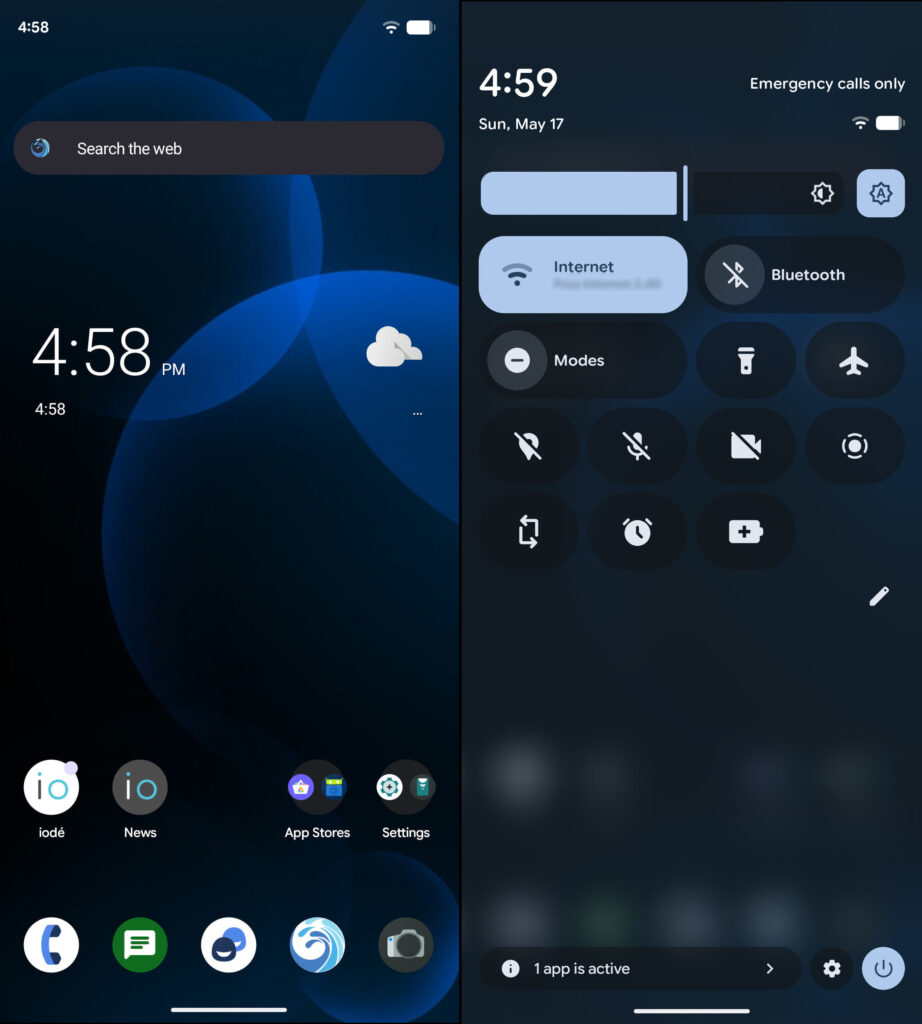
Once setup is complete, the experience feels instantly familiar. The interface remains very Android-like, which is probably the right choice for a privacy-focused operating system targeting mainstream users rather than enthusiasts alone. Nothing feels alien or experimental.
CyberInsider
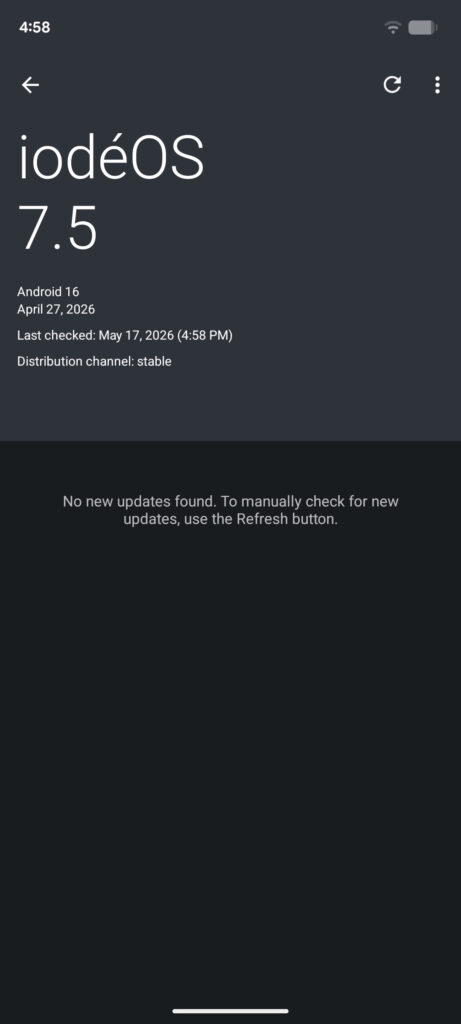
We updated the review device using the built-in “Updater” application, which fetched iodéOS 7.5 based on Android 16, with a build date of April 27, 2026. The updater did not clearly specify the Android security patch level, though the software itself appeared reasonably up to date.
Performance also felt normal throughout use. App launches, animations, scrolling responsiveness, and general system latency were all in line with what you would expect from a modern Android device.
System-wide tracker blocking you can actually understand
The defining feature of iodéOS is its integrated privacy protection layer, which comes enabled by default.
Rather than relying solely on browser-level filtering, iodéOS uses a DNS-based blocking approach similar in concept to tools like Blokada or RethinkDNS. This allows the system to monitor and block advertising, tracking, telemetry, and suspicious connections across all applications installed on the device.
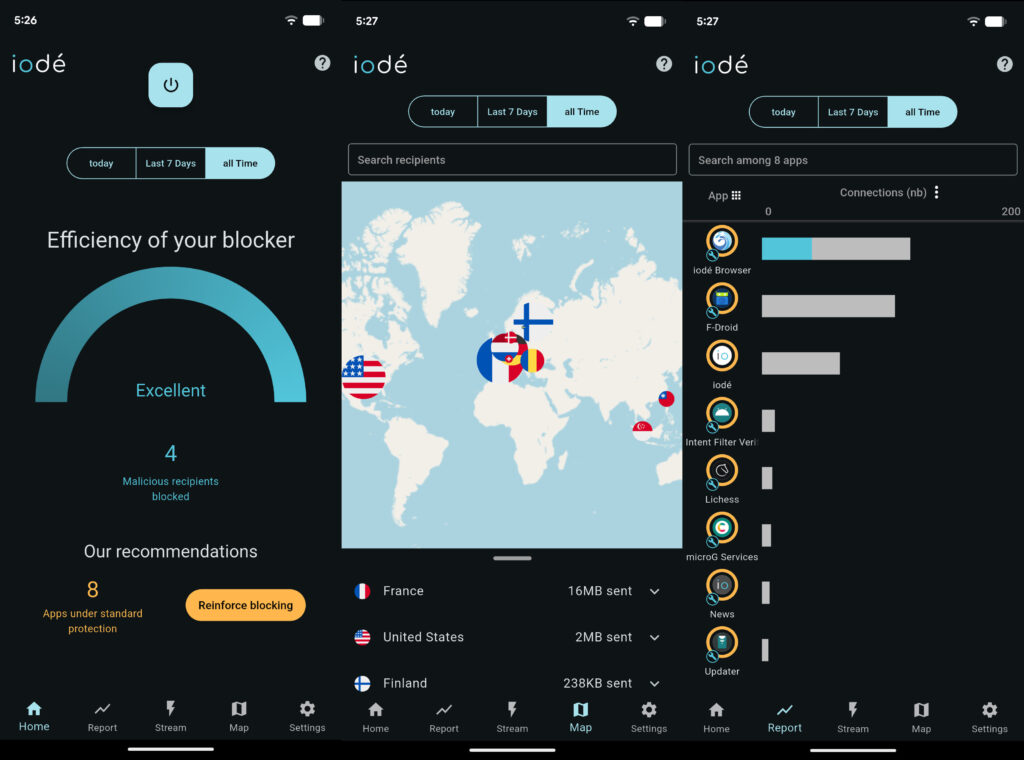
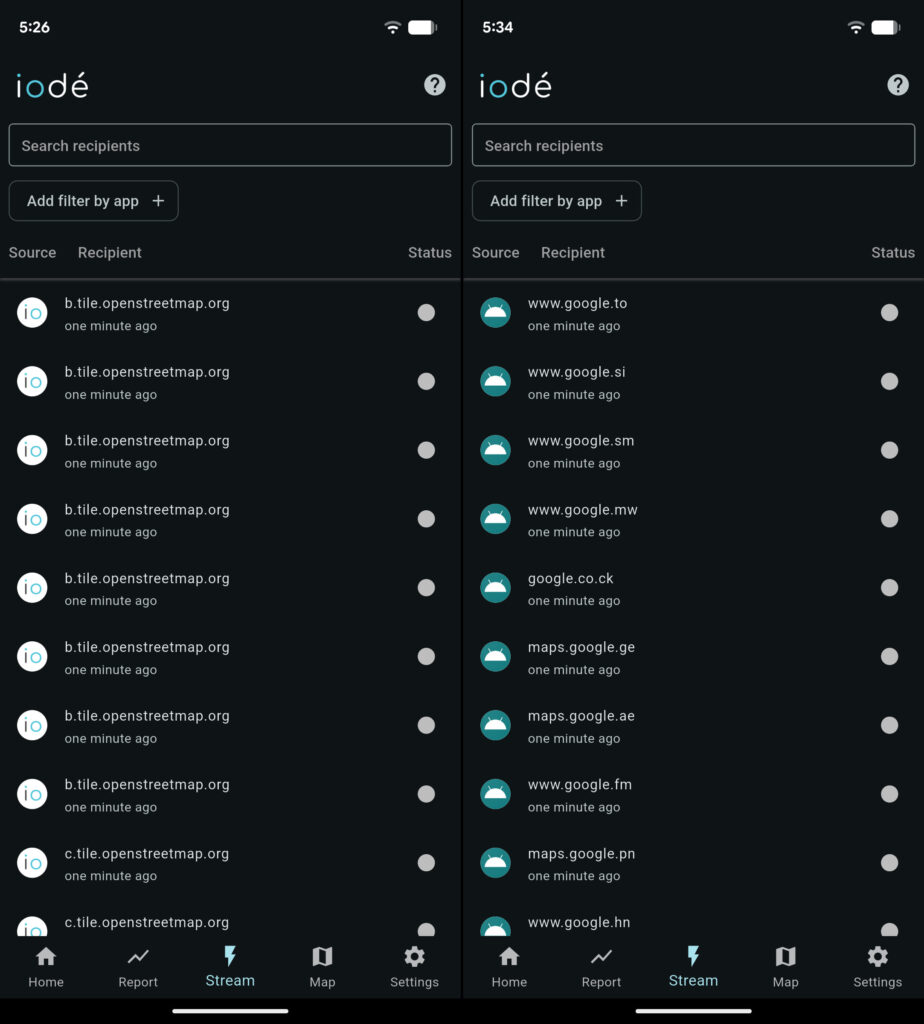
Importantly, this is not hidden behind technical menus. The operating system exposes detailed telemetry and connection statistics directly to users through the built-in iodé application.
CyberInsider
During testing, the reporting system felt more meaningful than cosmetic. Users can see which applications are generating network requests, where traffic is being sent geographically, and which domains are being blocked. Recipient names were generally readable and understandable, rather than cryptic hashes or obscure identifiers, making the information accessible even to non-technical users.
The reporting interface also provides actionable visibility. For example, users can identify apps making excessive connections or contacting questionable domains and adjust permissions or blocking behavior accordingly.
CyberInsider
At the same time, iodéOS avoids becoming overwhelming. There are no constant pop-up warnings or intrusive alerts. The blocker runs quietly in the background with only a persistent notification indicating that protection is active. Users can inspect details when desired without being bombarded by warnings throughout the day.
The permission model is also notably strict by default. Camera, microphone, and location access are initially blocked system-wide. When an application requests access, users are prompted to allow it each time. Even opening the camera app itself requires explicitly enabling camera access before taking a photo.
For privacy-conscious users, this default-deny approach is likely a major selling point.
Living without Google is easier than expected
On the surface, iodéOS is thoroughly de-Googled. Google applications and services are absent from the default installation, replaced instead with privacy-oriented alternatives and independent app distribution platforms.
The two primary stores included are Aurora Store and F-Droid.
F-Droid is a repository focused entirely on free and open-source Android applications, while Aurora Store acts as an anonymous front-end for accessing Google Play Store applications without requiring a Google account on the device.
Neither store requires users to sign in, though app availability naturally differs from the official Play Store ecosystem.
In practice, however, compatibility appeared better than expected.
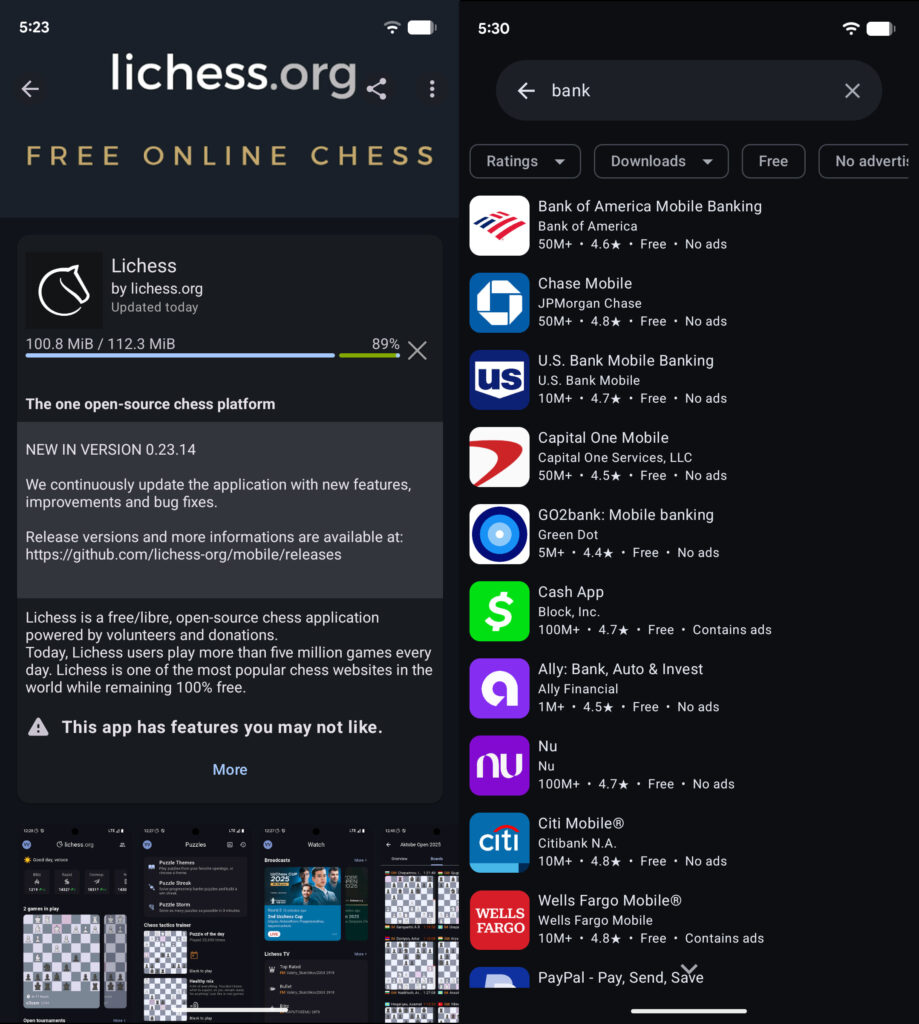
Aurora Store successfully surfaced banking applications, payment apps, social media clients, streaming services, and navigation tools during testing. While we could not exhaustively validate every category, the applications we tested functioned normally.
CyberInsider
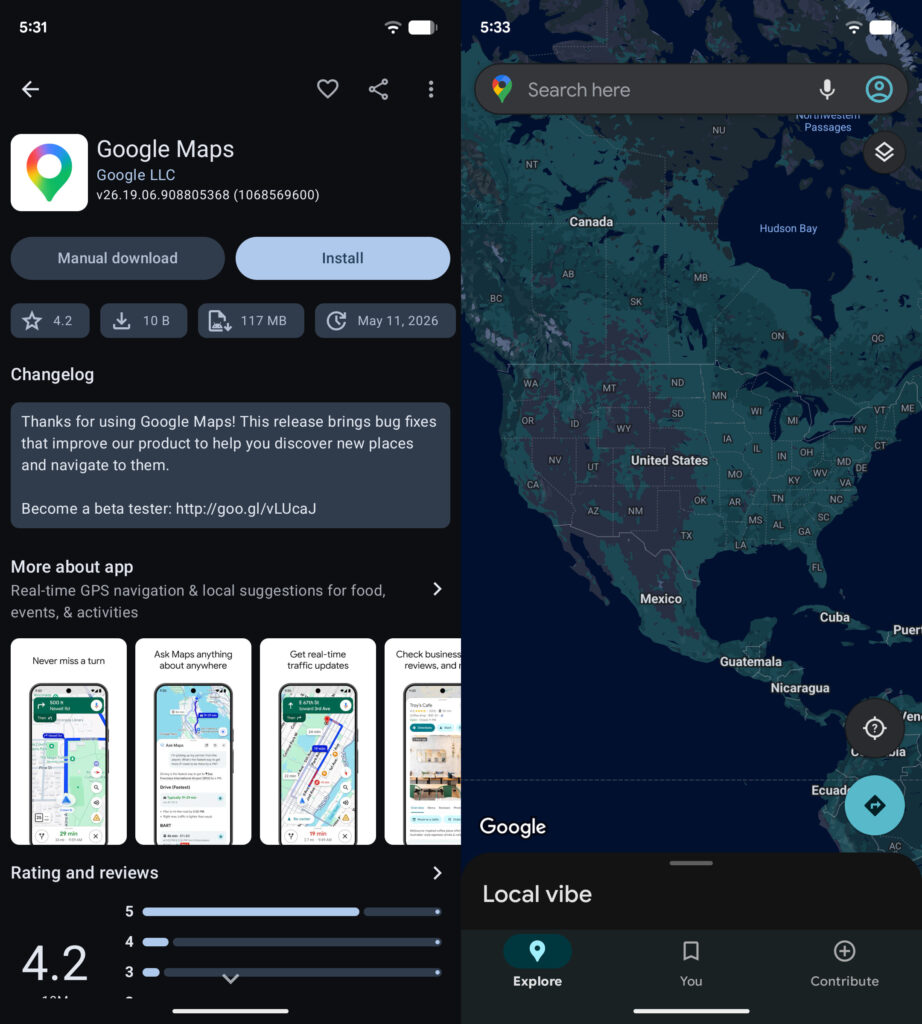
Google Maps, for example, installed and ran without issue even without signing into a Google account. That flexibility is important because it allows users to selectively reintroduce Google services when necessary rather than forcing an all-or-nothing approach.
CyberInsider
The biggest usability compromise we encountered involved the camera experience.
The included camera application does not match the computational photography quality users typically get from Google’s stock Pixel camera software. Image processing, HDR behavior, and post-processing enhancements are visibly weaker. This is likely true across other supported devices as well, since many OEM camera optimizations rely heavily on proprietary software components unavailable in de-Googled environments.
Regarding Pixel devices, the Pixel Camera is available via Aurora, though whether it comes with model-specific configurations remains unclear. Also, to view images captured with the Pixel Camera, the user must download the Google Photos app, which makes the slippery slope easy to fall into.
Battery life, thermals, and subsystem performance were not rigorously benchmarked, so definitive conclusions are not possible; however, nothing during testing suggested abnormal behavior or instability.
Privacy for regular people
In conclusion, we can say that iodéOS occupies an interesting middle ground in the Android privacy ecosystem.
GrapheneOS remains stronger from a pure security-hardening perspective, particularly regarding low-level protections and advanced exploit mitigations. iodéOS does not appear to pursue the same aggressive hardening philosophy, though that should not be interpreted as meaning the platform is insecure.
Instead, iodéOS seems focused on balancing privacy protections, usability, compatibility, and accessibility for ordinary users who want less tracking without dramatically changing how they use their phones.
That positioning arguably makes it easier to recommend to a wider audience.
Users uncomfortable with command-line tools, sandboxing concepts, or highly restrictive operating systems may find iodéOS substantially easier to adopt while still gaining meaningful privacy improvements over stock Android.
We previously reviewed the Fairphone 4 running /e/OS back in 2023, and there are clear conceptual similarities between the projects. However, three years have passed since then, and the privacy landscape in Android has evolved considerably.
What stands out most about iodéOS is that it generally avoids feeling burdensome. The operating system surfaces useful information without overwhelming users, blocks trackers without constantly interrupting workflows, and maintains compatibility with mainstream Android applications surprisingly well.
The company’s emphasis on refurbished hardware is also worth highlighting. Extending the lifespan of existing devices through refurbished sales is environmentally meaningful and increasingly important in a market heavily driven by upgrade cycles and electronic waste.
Ultimately, iodéOS feels less like a “hardcore security OS” and more like a privacy-focused Android for regular people, and for many users, that may be exactly the right balance.



Thank you for the review! I’ve been using iodeOS since CalyxOS went under August 2025 (though it looks like Calyx may comeback later this year). I too have enjoyed iode as well. Battery life has been great. I’m a light user with my phone, and the battery is still in good shape, so I only charge the phone once or twice a week. My Pixel6 is several years old now, but I feel no need to upgrade because it feels very fast with iode.
My biggest gripe about iodeOS vs. CalyxOS (and even regular Google-Android) is that WiFi-Calling doesn’t work on iode. I did a bunch of research years ago on how/why that is, but it seems that most LineageOS-based systems just can’t pull off WiFi calling. Everything else about both CalyxOS and iodeOS has been great. They made the transition from a decade of iPhone use to de-googled life much easier than something like Graphene. And if it’s easy, people are more likely to stick with it.
That is a great review. And it doesn’t matter it’s not filled with benchmarks, specifics… it gives a general motion that iode is a viable alternative. It might be a jump into deep waters, without safety harness – so one may cough up his money, and see that his banking app or public transport app does not work as expected. One will adapt, another won’t.
But with todays motion towards EU-based hardware and software (gigaset phones, shiftos, sailfish os), is there anything that might stop expansion of such alternatives? Will it still be a niche, or will it become a small but visible part of european smartphone market?
Just FYI, there’s a way to use google camera without google photos. You can install an app written by the CalyxOS devs called “GCam Photos Preview.”
It pretends to be google photos and lets you preview the photos you’ve shot from within the Pixel Camera app.
https://calyxos.org/news/2021/09/30/gcam-photos-preview/
https://gitlab.com/CalyxOS/platform_external_calyx_GCamPhotosPreview
Thank you for this review, it was interesting.