
In the hours following reports of Nicolás Maduro’s capture by US forces on January 3rd, Proton VPN saw a staggering 12,500% spike in sign-ups from Venezuela between 6:00 and 8:00 AM local time.
This surge came amid widespread internet disruptions and censorship attempts, as Venezuelans scrambled to access uncensored international news and maintain online privacy during a period of extreme political volatility.
The surge in VPN adoption was disclosed by Proton VPN, a privacy-focused Swiss service, which further noted a 770% increase in sign-ups over the entire day. The dramatic uptick coincided with a critical time window in which limited, reliable information was available domestically regarding the US operation that led to Maduro’s extraction.
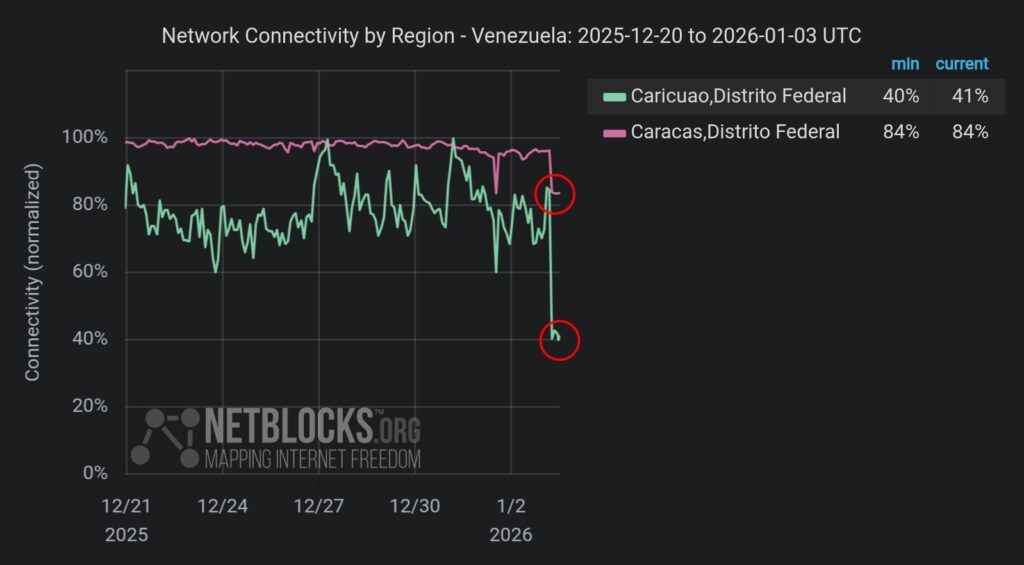
Simultaneously, NetBlocks, an internet observatory group, reported a measurable loss of connectivity in parts of Caracas that corresponded with rolling blackouts and network disruptions, likely resulting from the military activity.
While details around the operation remain opaque, the internet disruptions observed on January 3rd mirror previous patterns of targeted censorship in Venezuela during politically sensitive events. The country has a documented history of restricting access to tools that circumvent censorship, including DNS resolvers and VPNs. In January 2023, watchdog group VE Sin Filtro reported that Venezuelan authorities had blocked more than 40 DNS services and 21 VPN providers, including Proton VPN, Cloudflare WARP, NordVPN, and TunnelBear, across major ISPs such as CANTV, Movistar, and Digitel.
Proton VPN’s latest surge in use despite being previously targeted for blocking suggests that many users may have turned to its free service via workaround methods, such as using alternate app stores, Tor-based connections, or pre-configured devices. Social media discussions from Venezuelan forums and subreddits show that users are actively recommending Proton VPN and Cloudflare’s WARP as reliable options for regaining access to international news and social platforms during the outage.
Venezuela, a country with more than 28 million people, has long dealt with state-imposed internet restrictions, especially during elections, protests, and political crises. Government-aligned ISPs and network operators have repeatedly carried out DNS poisoning and IP filtering to restrict access to foreign news outlets, social media platforms, and anonymity tools. These tactics often escalate during moments when the regime faces external pressure or internal instability, leveraging connectivity as a tool of information control.
For Venezuelans, VPNs remain a lifeline in accessing the broader internet, despite sustained efforts to suppress their usage.



Leave a Reply