
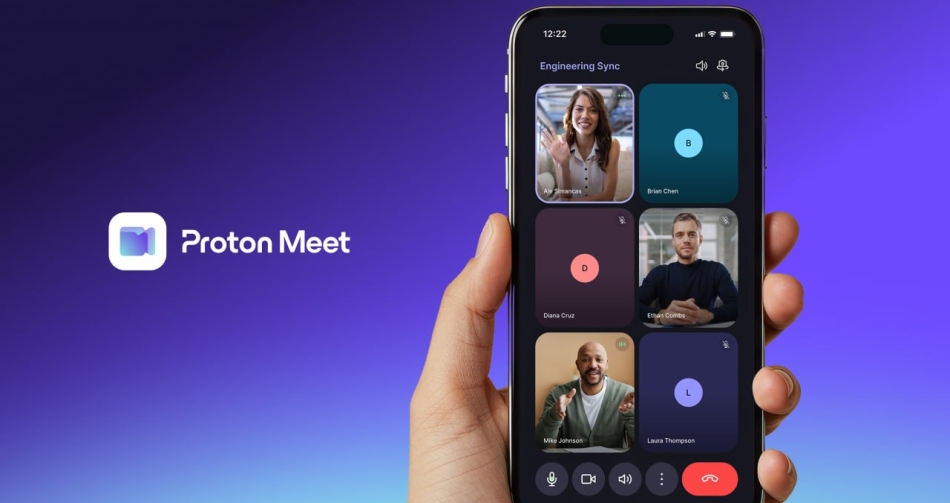
Proton has announced the launch of Proton Workspace, a bundled productivity suite, alongside Proton Meet, an end-to-end encrypted video conferencing service designed to compete with platforms like Google Workspace, Microsoft 365, and Zoom.
The company says the move reflects a growing demand among organizations for integrated platforms that prioritize data protection without relying on large US technology providers.
According to Proton founder and CEO Andy Yen, the new Workspace suite was developed in response to customer feedback indicating a shift away from standalone tools toward unified ecosystems. Proton reports that it now serves over 100,000 enterprise customers, many of whom have gradually adopted multiple Proton services, such as Mail, VPN, and Drive, before transitioning to a full-stack deployment.
Proton Workspace combines these services into a single subscription, including encrypted email (Proton Mail), calendar, file storage (Drive), document editing tools (Docs and Sheets), password management (Proton Pass), VPN access, and the company’s privacy-focused AI assistant, Lumo. The suite is offered in tiered plans with varying storage limits, collaboration features, and AI capabilities.
Proton Meet is a new video conferencing platform positioned as a privacy-centric alternative to Zoom and Google Meet. Proton states that all calls on Meet are secured using the Messaging Layer Security (MLS) protocol, enabling end-to-end encryption for video, audio, chat messages, and screen sharing. This design ensures that even Proton itself cannot access meeting content.

Unlike most competing services, Proton Meet does not require users to create an account to host or join calls. Meetings can be initiated via shareable links, and the platform does not retain logs, a feature Proton highlights as particularly relevant for journalists, activists, and users operating in high-risk environments.
Proton’s approach also addresses concerns about how large platforms increasingly process user communications to train AI systems. The company warns that audio, video, and chat data handled by mainstream providers could be reused in machine learning pipelines, potentially leading to sensitive information resurfacing in generated outputs. By contrast, Proton claims its encryption model prevents such access entirely.
The product launch timing reflects broader geopolitical and regulatory pressures shaping the cloud software market. Organizations subject to strict legal frameworks are increasingly scrutinizing where their data is stored and who can access it, while concerns about vendor lock-in and cross-border data exposure continue to rise.
Alongside adopting encrypted tools, users should also adopt good security practices, including enabling multi-factor authentication, regularly updating software, and carefully reviewing data-sharing policies of collaboration platforms.



Leave a Reply