
OpenAI has unveiled ChatGPT Health, a new feature within ChatGPT that creates a separate, privacy-hardened space for users to explore health and wellness topics grounded in their own medical data.
The experience is rolling out gradually to early users, emphasizing support for medical care.
Health-related questions are already among the most common uses of ChatGPT, with OpenAI estimating that over 230 million such queries are made per week. With ChatGPT Health, users can now integrate personal health data from sources such as Apple Health, MyFitnessPal, and US medical records via b.well, enabling more tailored, context-aware responses. The system is explicitly designed to help users interpret lab results, prepare for medical appointments, understand treatment options, and monitor wellness trends over time.
The introduction of ChatGPT Health reflects OpenAI's attempt to position itself more firmly within the growing consumer health tech space, while navigating the complexities of handling sensitive medical information. To that end, the company says it has implemented purpose-built encryption, data isolation, and compartmentalization mechanisms unique to the Health feature, separating it from standard ChatGPT usage.
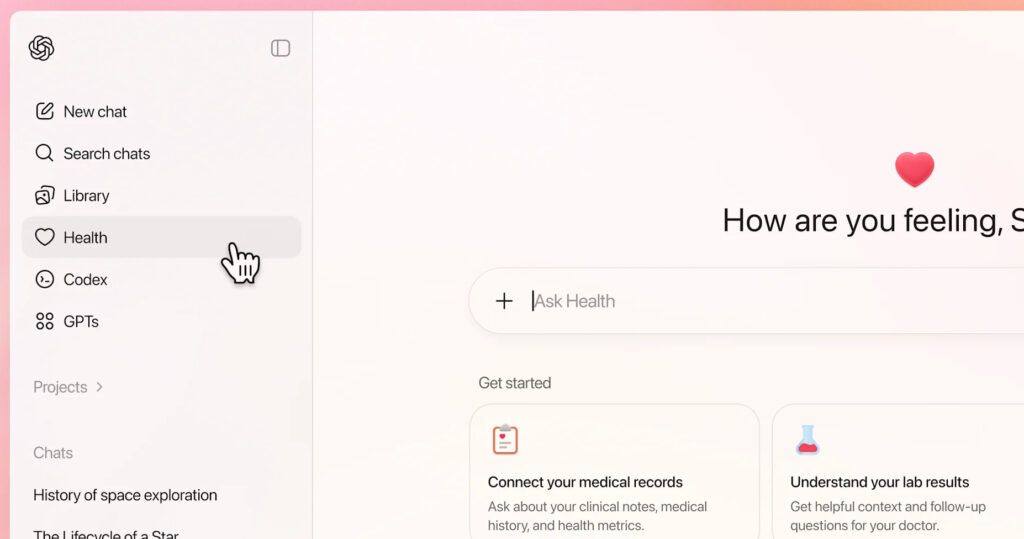
OpenAI notes that conversations conducted within Health are stored separately, are not used to train its foundational models, and remain inaccessible to ChatGPT's general chat functions. Cross-contamination between Health and non-Health chats is explicitly prevented, though non-sensitive context, like a user's recent move, may be used to enhance a Health conversation, if relevant. Users retain the ability to view, delete, or customize their Health memories at any time through a dedicated settings interface.
ChatGPT Health also introduces app-level data governance. Third-party wellness apps must undergo additional security reviews and adhere to strict data minimization practices before being approved for integration. No app can access health data without explicit user permission, and revoking access is designed to be immediate and final.
The medical data integration capability, currently limited to US users, relies on b.well, a health data aggregator that connects patients with their healthcare providers and records across systems. According to OpenAI, b.well operates under stringent security standards and supports secure access to clinical records such as visit summaries, test results, and medication history.
Health conversations and associated files are encrypted both at rest and in transit. For added security, OpenAI encourages users to enable multi-factor authentication and offers tools to manage or remove app access and personal data on demand.
The project was developed in close collaboration with a global network of over 260 physicians across 60 countries and dozens of specialties. These professionals contributed to shaping how the system communicates health information, prioritizing safety, urgency, clarity, and relevance. Responses are evaluated using HealthBench, OpenAI's proprietary assessment framework that mimics how physicians judge the quality of medical advice in real-world contexts.
At launch, ChatGPT Health supports interactions ranging from summarizing lab work and tracking health trends to providing nutrition guidance and helping users prepare questions for their doctor. While its outputs are never intended as a substitute for licensed medical care, the system is designed to empower users to take a more active, informed role in managing their health.
The Health feature is accessible via web and iOS for users with Free, Go, Plus, and Pro plans outside the European Economic Area, Switzerland, and the UK. A waitlist is now open, with broader availability expected in the coming weeks.



Leave a Reply