

A study by AdGuard has found that using an ad blocker can significantly reduce the time, bandwidth, and tracking exposure users face while browsing the web.
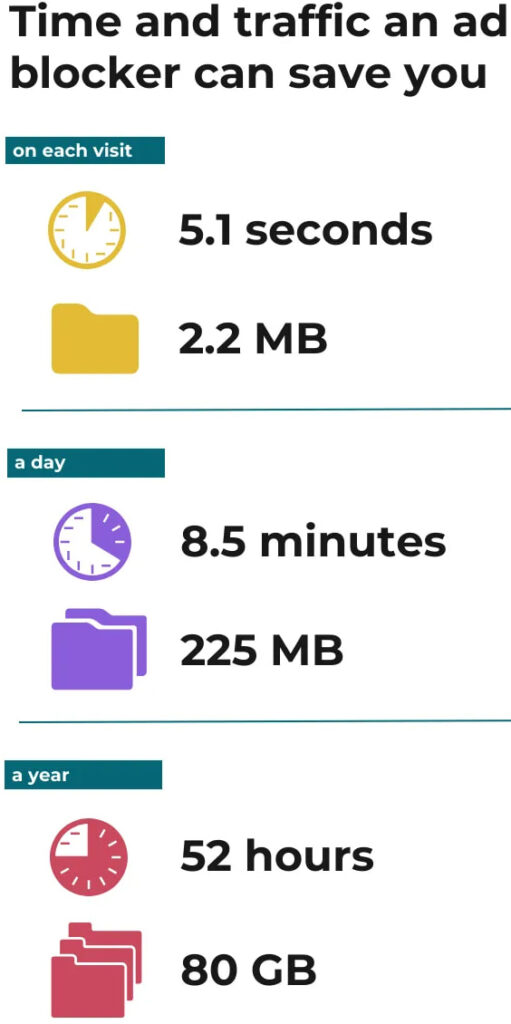
By testing 119 high-traffic US news sites, researchers found that browser-based ad blocking cuts average page load times by nearly half and reduces data usage by 39%. According to the report’s estimates, a user visiting around 100 websites daily would save 8.5 minutes of load time and 225 MB of data per day with an ad blocker. Over a year, that adds up to more than 52 hours, the equivalent of two full days, and roughly 80 GB of bandwidth saved.
The study used automated browser sessions to load each site under three conditions: no blocking, DNS filtering, and browser-based filtering via the AdGuard browser extension for Chrome. Cache and cookies were cleared before each test to simulate a first-time visit.
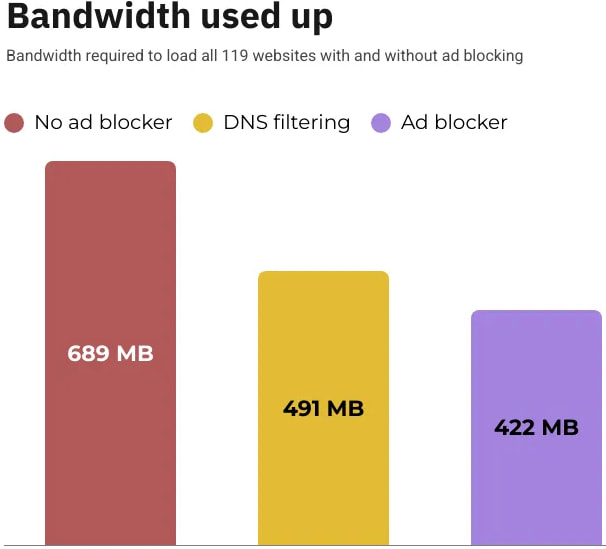
Without any filtering, the test set consumed 689 MB of bandwidth in total, averaging 5.79 MB per site. With browser-based ad blocking, that dropped by 267 MB, saving roughly 2.2 MB per site. DNS filtering was less effective, reducing usage by 198 MB. Load times followed a similar trend, with pages taking 11.3 seconds to load without blocking, 7.4 seconds with DNS filtering, and just 6.2 seconds with a browser extension.
AdGuard also measured the volume of web requests, which dropped from an average of 299 per page to 145 with browser blocking. Most of the eliminated requests were tied to ads and tracking scripts.
The report highlights the scale of third-party tracking across major news sites. In total, 276 unique trackers from 233 companies were detected, with Google services appearing on 97% of sites in some form. Domains like doubleclick.net, googletagmanager.com, and googlesyndication.com were among the most common. After applying browser-based filtering, only 73 companies and 364 tracking domains remained, down from 233 and 829, respectively.
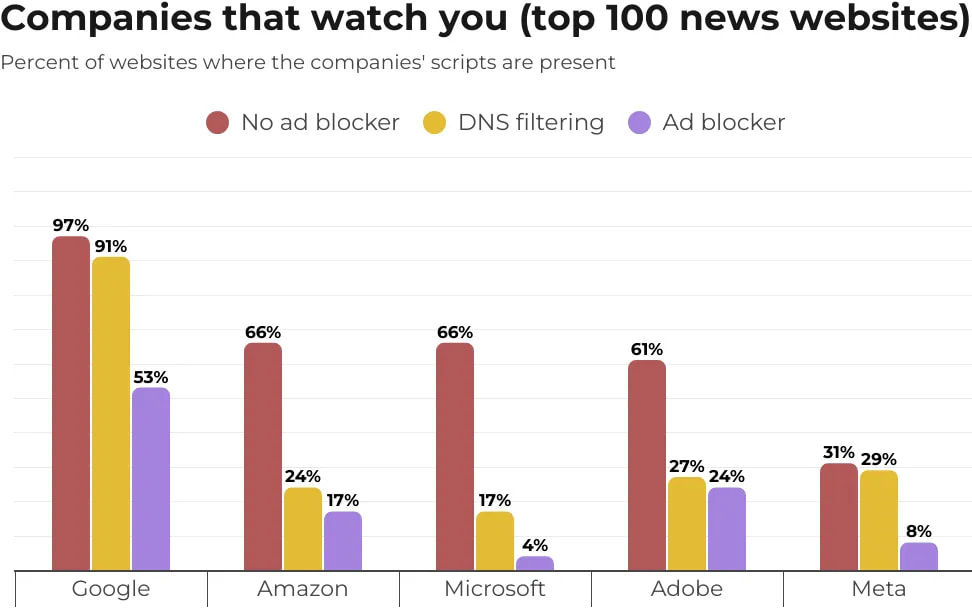
DNS filtering was partially effective at reducing tracker presence but lacked the precision of browser-based filtering. While it blocked entire domains, it could not selectively target specific scripts without breaking site functionality. In contrast, browser-based blocking allowed more granular control and better performance.
In parallel with the study on the impact of ad blockers, AdGuard released AdGuard Mini for Mac, a complete overhaul of its Safari extension. The new version adds real-time filter updates, a custom rule builder, a redesigned UI, and AdGuard Extra, a tool to defeat anti-adblock techniques used by sites like YouTube and Facebook. Despite the “Mini” name, it brings substantial performance improvements and features previously unavailable on Safari.
Apart from time and data savings, ad blockers provide crucial protection by blocking online ads, a major malware delivery channel. State spyware campaigns have used ad networks to deploy zero-click exploits, making ad blocking one of the simplest and most effective defenses against targeted attacks.



I’m waiting for a study that confirms water is wet. Seriously though, who funds these studies?
And to sugggest Pihole? Clearly a tiny niche group of egg-heads would so such a crazy thing.
DNS filtering on the router, Pihole etc and adblock plugins where you can use them.
Granular, layered filtering
Interesting stats. I had always been quite fine with ads in general to support a service I use, I understand the economics behind it. Recall the days where free OTA TV ruled the day! For myself, blocking spyware/trackers/malware is the use case, and if the ads go along with it, who am I to complain. All integrity lost long ago, with their overtly aggressive & nasty practices that quickly crossed the line from simply displaying ads to abhorrent tracking, spyware to sell & purpose our personal private data long ago.
Using NextDNS and my choices of filters, including no google, I see a whopping 60-75% of streaming TV box traffic filtered, and about 10% of my PC/phone based internet traffic. Nasty interweb out there, protect yourselves.
The mentioned AdGuard is also a very nice service,
Thanks for the article, a fun read.