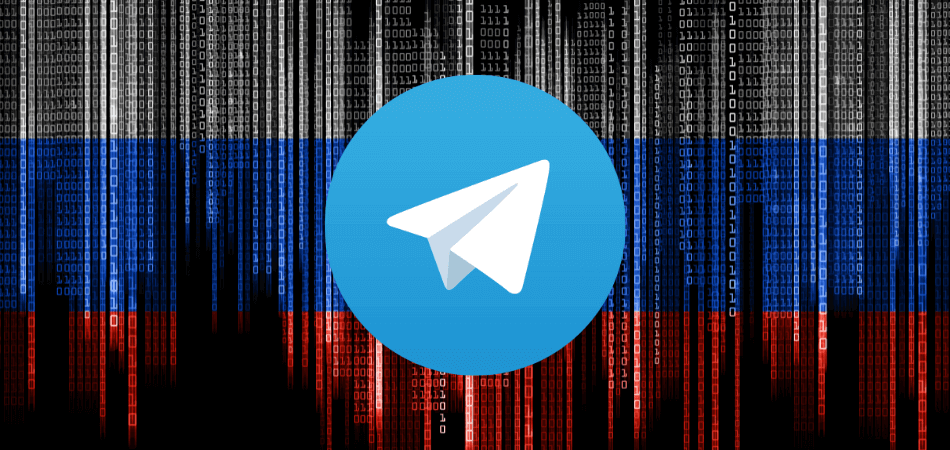
Russia’s state media regulator, Roskomnadzor, has intensified restrictions on Telegram, throttling the app’s performance nationwide in what appears to be part of a broader campaign to funnel users to the Kremlin-backed messaging app MAX.
The move follows months of sporadic disruptions reported by Telegram users in Russia since early January. However, between February 9 and 10, performance issues escalated significantly. Users across major cities such as Moscow and St. Petersburg reported slowdowns in media loading, including images, videos, and voice messages. While text messages remain mostly unaffected, many noted that the mobile version of the app is hit harder than the desktop variant.
Roskomnadzor formally acknowledged new restrictions on Tuesday, citing Telegram’s alleged failure to combat fraud, prevent its use by criminal groups, and adequately protect user data. The agency told Russian outlet RBC that it would “continue to introduce appropriate restrictions” to enforce compliance with Russian law. Though officials did not explicitly admit to throttling, sources close to the agency confirmed download speeds were being deliberately reduced.
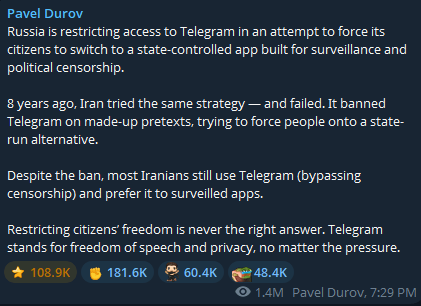
Telegram founder Pavel Durov responded publicly, accusing Russian authorities of attempting to coerce citizens into using the government’s surveillance-oriented MAX messenger. In a post shared on X and Telegram, Durov stated, “Russia is restricting access to Telegram to force its citizens onto a state-controlled app built for surveillance and political censorship. This authoritarian move won’t change our course. Telegram stands for freedom and privacy, no matter the pressure.”
Telegram is one of Russia’s most widely used messaging platforms, with over 93 million monthly active users as of late 2025, nearly matching WhatsApp’s 94.5 million. It serves not only as a private messaging tool but also as a major distribution channel for independent media, public figures, and even government agencies.
The state-favored alternative, MAX, is developed by VK (formerly Mail.ru Group), a tech conglomerate with close ties to the Kremlin. Since September 2025, all smartphones and tablets sold in Russia have been required to pre-install MAX, alongside other mandated apps such as the RuStore app marketplace and Lime HD TV. MAX integrates with state services via Gosuslugi and enforces restrictions, such as mandatory use of domestic phone numbers and optional, but likely to be mandatory, identity verification.
MAX reached 70 million monthly users by December 2025 but still trails significantly behind Telegram in user engagement and popularity. Despite the government push, its adoption has been largely driven by mandates rather than consumer preference.
The latest restrictions on Telegram are part of a broader digital policy shift in Russia, where authorities seek to assert sovereign control over communications infrastructure. In August 2025, Roskomnadzor also limited voice and video calling on both WhatsApp and Telegram, citing an anti-fraud initiative that tech companies widely criticized as a pretext for expanding surveillance. In October, it blocked new user registrations for the two platforms, and in December, it blocked Apple FaceTime and Snapchat too.
Durov noted that the Kremlin’s campaign resembles prior efforts in countries like Iran, where Telegram was banned under similar pretexts. The Telegram founder noted that such bans fail to fully displace the platform, as users resort to VPNs and other circumvention tools to retain access.
As of writing, outage monitoring services have shown spikes in user complaints, though some Russian users continue to access Telegram with minimal issues, particularly through desktop apps or VPNs. Nonetheless, the targeted throttling of media functions has already begun to impact workflows, as Telegram is widely used in Russia for professional communication.



Leave a Reply